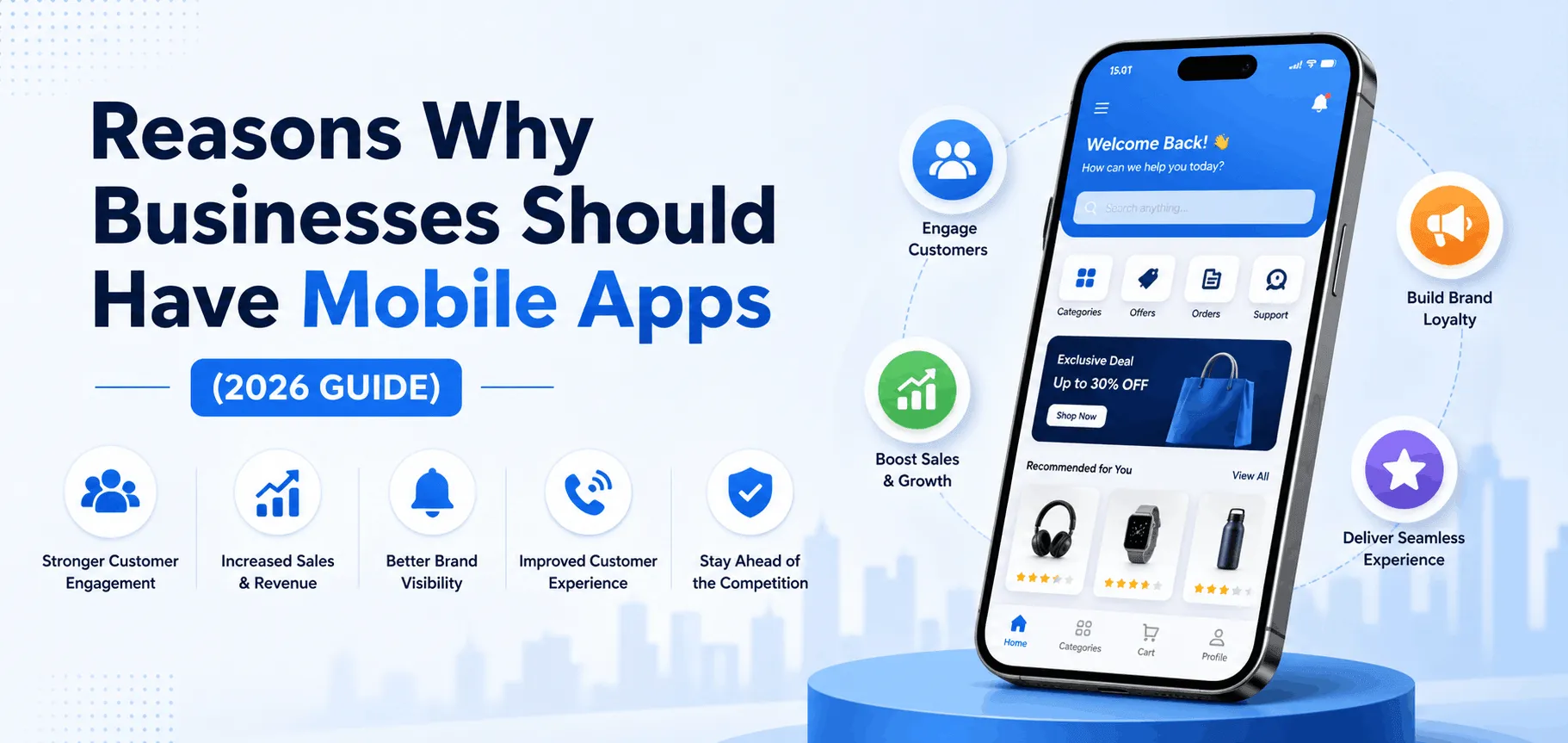
From shopping to booking services, people rely heavily on apps because they are faster and easier to use. If your business does not have a mobile app, you may be missing out on valuable opportunities to grow.
Mobile Usage is Growing Rapidly
Smartphones have become a part of daily life. People spend most of their time on mobile apps rather than websites, which means businesses need to be present where their customers are.
Apps provide a quicker and smoother experience compared to websites, making them the preferred choice for users.
Better Customer Engagement
Mobile apps make it easier to connect with your customers. Features like push notifications allow you to send updates, offers, and reminders directly to users.
This keeps your business active in their daily routine and helps build stronger relationships over time.
Improved Customer Experience
Apps are designed to be fast, simple, and user-friendly. They offer smooth navigation and quick access to services, which improves the overall experience.
A good user experience encourages customers to return and use your services regularly.
Increased Sales and Revenue

Mobile apps open new opportunities for generating revenue. Businesses can sell products, offer subscriptions, or promote special deals directly through the app.
They also make the buying process easier, which can lead to higher conversions and more sales.
Strong Brand Presence
Having a mobile app increases your brand visibility. Your app icon stays on the user’s phone, reminding them about your business every day.
This helps in building trust and makes your brand look more professional and reliable.
Better Customer Communication
Apps provide a direct way to communicate with customers. Features like chat support, notifications, and updates help businesses respond quickly and solve problems faster.
This improves customer satisfaction and builds long-term loyalty.
Access to Customer Data and Insights
Mobile apps allow businesses to collect valuable data about user behavior. This includes what users like, how they interact, and what they prefer.
These insights help in making better decisions and improving services based on real user needs.
Competitive Advantage
In a competitive market, having a mobile app gives you an edge. Businesses that adopt mobile apps early can attract more customers and stay ahead of competitors.
A mobile-first approach helps you adapt to changing customer expectations.
Conclusion
Mobile apps have become an essential tool for business growth. They help improve customer engagement, increase visibility, and provide a better user experience.
If you want your business to stay relevant and competitive in 2026, investing in a mobile app is a smart decision.
Frequently Asked Questions
Why should businesses have a mobile app?
Businesses should have a mobile app to improve customer engagement, increase visibility, and provide easy access to their services.
Are mobile apps better than websites?
Mobile apps are generally faster and more user-friendly, but both apps and websites work best when used together.
How do mobile apps increase sales?
Mobile apps make it easier for users to browse, purchase, and interact with your business, which leads to higher conversions.
Do small businesses need mobile apps?
Yes, even small businesses can benefit from mobile apps by improving customer communication and building stronger relationships.
Is mobile app development expensive?
With modern technologies, mobile app development has become more affordable and scalable for businesses of all sizes.