
A single security weakness can lead to financial losses, legal issues, and damage to your brand’s reputation. That’s why web application security should be a priority from the beginning of the development process.
In this guide, you’ll learn what web application security is, why it matters, the most common threats, and the best practices you can follow to protect your applications in 2026.
What is Web Application Security?
Web application security is the process of protecting websites and web applications from cyber attacks, unauthorized access, and data breaches. It involves implementing security measures during development, deployment, and ongoing maintenance to ensure applications remain safe against evolving threats.
Security is not just about adding a firewall or installing an SSL certificate. It includes secure coding practices, regular security testing, user authentication, data encryption, access control, and continuous monitoring.
Whether you’re building a small business website or a large enterprise platform, every web application should be designed with security in mind.
Why Web Application Security is Important
Ignoring security can have serious consequences for businesses of all sizes.
Some of the biggest reasons why web application security matters include:
- Protects sensitive customer information
- Prevents financial fraud and cyber attacks
- Reduces the risk of data breaches
- Builds customer trust
- Helps meet compliance requirements
- Prevents downtime caused by attacks
- Protects business reputation
- Improves overall application reliability
Customers expect their personal information to remain secure. Investing in strong security measures helps build confidence and supports long-term business growth.
Common Web Application Security Threats
Before implementing security measures, it’s important to understand the risks.
Some of the most common threats include:
SQL Injection
Attackers insert malicious SQL commands into database queries to access, modify, or delete sensitive information.
Cross-Site Scripting (XSS)
Hackers inject harmful scripts into web pages, allowing them to steal user data or hijack sessions.
Cross-Site Request Forgery (CSRF)
Attackers trick authenticated users into performing actions they didn’t intend, such as changing passwords or transferring funds.
Broken Authentication
Weak password policies, poor session management, or insecure login systems can allow attackers to access user accounts.
Security Misconfigurations
Improper server settings, outdated software, or exposed administrative panels create opportunities for cyber attacks.
API Security Risks
Modern applications rely heavily on APIs. Poorly secured APIs can expose sensitive business and customer data.
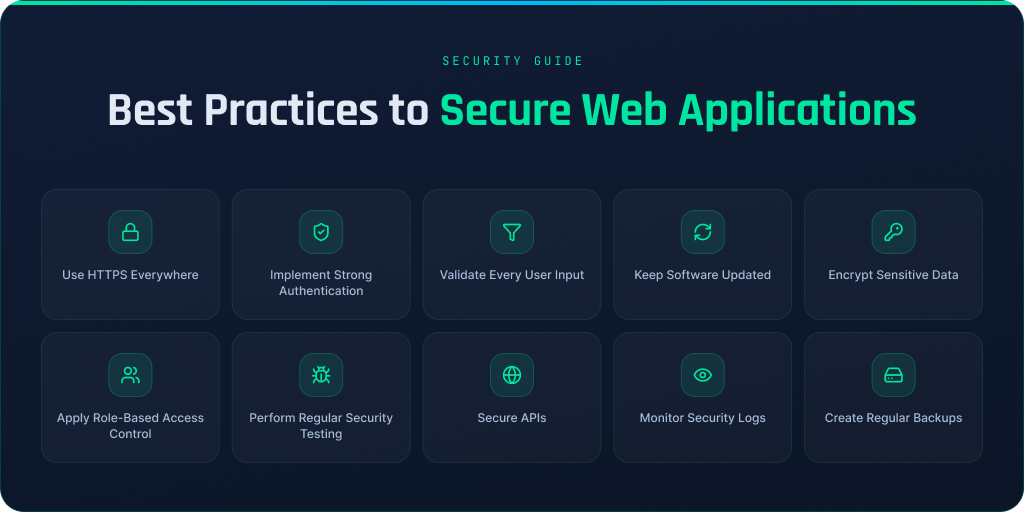
Best Practices to Secure Web Applications
1. Use HTTPS Everywhere
Always protect your website with SSL/TLS encryption. HTTPS encrypts communication between users and your server, making it difficult for attackers to intercept sensitive information.
2. Implement Strong Authentication
Require strong passwords, enable multi-factor authentication (MFA), and use secure password hashing algorithms to protect user accounts.
3. Validate Every User Input
Never trust user input. Validate and sanitize all data before processing it to reduce the risk of SQL injection and XSS attacks.
4. Keep Software Updated
Update frameworks, plugins, libraries, and server software regularly. Security patches fix vulnerabilities before attackers can exploit them.
5. Encrypt Sensitive Data
Encrypt passwords, payment information, and personal data both during transmission and while stored in databases.
6. Apply Role-Based Access Control
Only give users access to the information and features they need. Limiting permissions reduces the impact of compromised accounts.
7. Perform Regular Security Testing
Use penetration testing, vulnerability scanning, and code reviews to identify weaknesses before attackers do.
8. Secure APIs
Protect APIs with authentication tokens, rate limiting, encryption, and proper access controls.
9. Monitor Security Logs
Track login attempts, unusual activity, and application errors to detect potential attacks early.
10. Create Regular Backups
Maintain secure backups so your business can recover quickly in the event of ransomware attacks, accidental deletion, or server failures.
Final Thoughts
Web application security is an ongoing process rather than a one-time task. As cyber threats continue to evolve, businesses must regularly update their security strategies and adopt modern best practices.
By implementing secure coding standards, strong authentication, encryption, continuous monitoring, and regular security testing, you can significantly reduce security risks and protect both your business and your customers.
Investing in web application security today helps prevent costly breaches tomorrow while building trust with your users.