A well-planned development process helps teams build better products, reduce delays, improve collaboration, and respond faster to changing market demands. Whether you’re developing software, a mobile app, or a physical product, having the right strategy can make a significant difference.
In this guide, we’ll explain the product development lifecycle, why it matters, and practical ways to optimize every stage of the process.
What Is the Product Development Lifecycle?
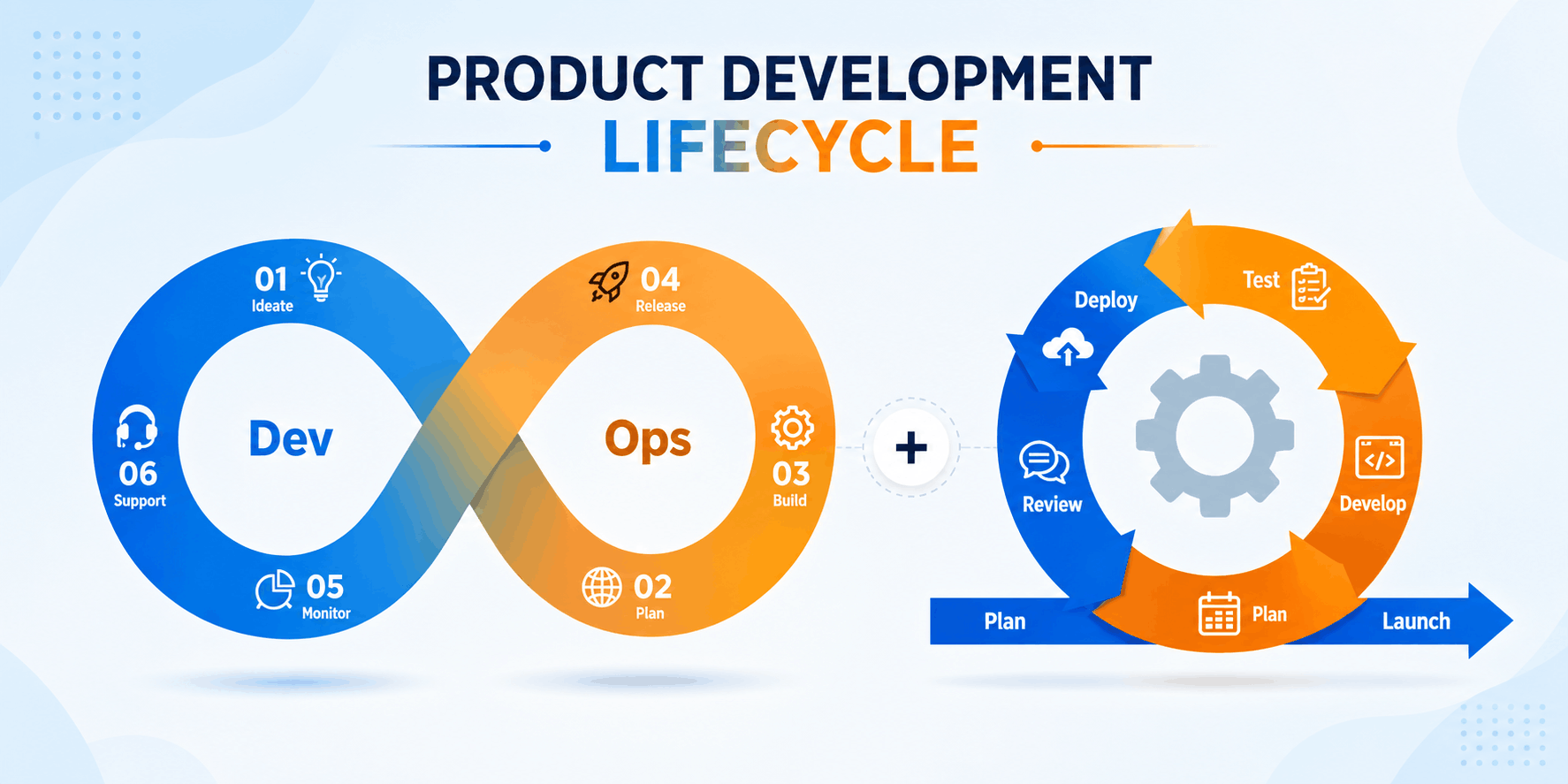
The product development lifecycle (PDLC) is the complete process of taking a product from an initial idea to launch and continuous improvement. It provides a structured framework that helps businesses plan, design, develop, test, and maintain products efficiently.
Unlike Product Lifecycle Management (PLM), which focuses on managing a product throughout its entire lifespan, the product development lifecycle focuses on creating and delivering the product successfully.
A typical product development lifecycle includes:
- Idea Generation
- Market Research
- Product Planning
- Design and Prototyping
- Development
- Testing and Quality Assurance
- Product Launch and Continuous Improvement
Each stage plays an important role in ensuring the final product meets customer expectations while supporting business goals.
Why Optimizing the Product Development Lifecycle Matters
Many projects fail because of poor planning, unclear goals, or communication gaps. Optimizing the development process helps businesses avoid these challenges while improving efficiency.
Some key benefits include:
- Faster time to market
- Lower development costs
- Better product quality
- Improved teamwork and collaboration
- Higher customer satisfaction
- Reduced project risks
- More efficient use of resources
A streamlined process allows teams to focus on innovation instead of spending time fixing avoidable problems.
12 Strategies to Optimize the Product Development Lifecycle
1. Start with Customer Research
Successful products solve real customer problems. Before development begins, conduct surveys, interviews, and competitor research to understand your target audience. Customer insights help you build features that deliver real value.
2. Define Clear Product Goals
Every project should begin with clear objectives. Outline the product vision, target users, business goals, timeline, and expected outcomes. Clear planning keeps everyone aligned throughout development.
3. Use Agile Development
Agile development divides projects into smaller sprints, allowing teams to release updates faster and respond to feedback quickly. This approach improves flexibility and reduces the risk of major project delays.
4. Build Cross-Functional Teams
A successful product requires collaboration between developers, designers, testers, marketers, and product managers. Strong communication helps solve problems faster and improves overall product quality.
5. Develop a Minimum Viable Product (MVP)
Instead of building every feature at once, launch a Minimum Viable Product (MVP) with the core functionality. Early user feedback helps validate ideas before investing more time and resources.
6. Automate Testing
Manual testing alone can slow down development. Automated testing identifies bugs quickly, improves software quality, and allows teams to release updates with greater confidence.
7. Implement Continuous Integration and Continuous Deployment (CI/CD)
CI/CD pipelines automate code integration, testing, and deployment. This reduces manual work, minimizes errors, and speeds up software delivery.
8. Use Product Analytics
Track user behavior using analytics tools to understand how customers interact with your product. Data-driven decisions help prioritize improvements and enhance the user experience.
9. Prioritize Features Wisely
Not every feature adds equal value. Focus on features that solve customer problems and support business goals. Prioritization frameworks such as MoSCoW or RICE can help teams make better decisions.
10. Encourage Continuous Feedback
Collect feedback from customers, stakeholders, and internal teams throughout the development process. Regular feedback helps identify improvement opportunities before they become costly issues.
11. Monitor Key Performance Indicators (KPIs)
Track metrics such as:
- Time to market
- Customer satisfaction
- Bug resolution time
- Sprint velocity
- Feature adoption
- User retention
Monitoring these KPIs helps teams measure progress and identify areas for improvement.
12. Continuously Improve After Launch
Product development doesn’t end after launch. Monitor performance, fix issues, release updates, and add new features based on customer feedback. Continuous improvement keeps products competitive and relevant.
Common Product Development Challenges
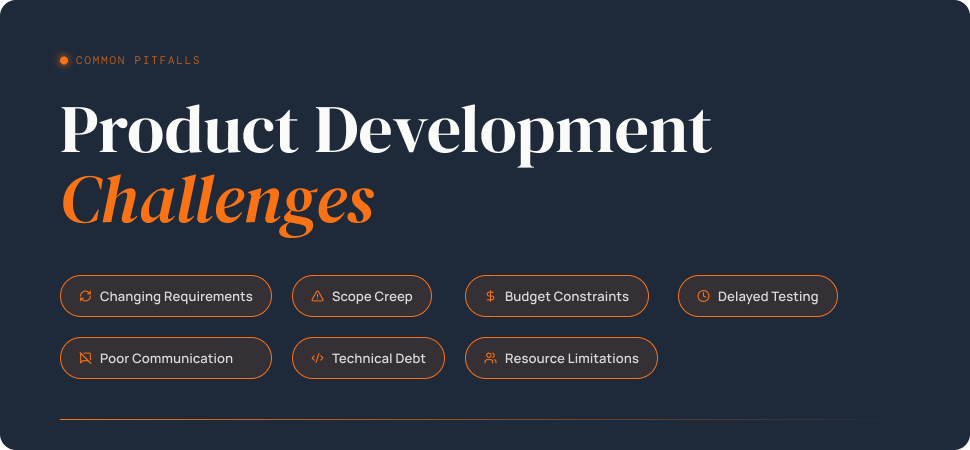
Even experienced teams face obstacles during product development. Some common challenges include:
- Changing customer requirements
- Scope creep
- Budget constraints
- Poor communication
- Delayed testing
- Technical debt
- Resource limitations
The best way to overcome these challenges is through better planning, regular communication, and continuous monitoring throughout the project lifecycle.
Best Tools for Product Development
Modern development teams rely on tools that improve collaboration and efficiency.
Some popular options include:
- Jira for project management
- Figma for UI and UX design
- GitHub for version control
- Slack for team communication
- ClickUp for task management
- Azure DevOps for development and deployment
- Trello for project tracking
Choosing the right tools depends on your team’s workflow, project size, and business requirements.
Future Trends in Product Development
Technology continues to reshape product development. Businesses that embrace innovation can improve efficiency and deliver better customer experiences.
Key trends include:
- Artificial Intelligence (AI) for faster development and testing
- Low-code and no-code platforms
- Cloud-native application development
- DevSecOps for built-in security
- Predictive analytics for smarter decision-making
- Automation across the development lifecycle
Companies that adopt these technologies can reduce development time while improving product quality.
Conclusion
Optimizing the product development lifecycle is about more than speeding up development. It’s about creating a structured process that improves collaboration, reduces costs, minimizes risks, and delivers products that customers truly value.
By following best practices such as customer research, Agile development, automation, continuous testing, and data-driven decision-making, businesses can build high-quality products while staying competitive in a rapidly changing market.
A successful product isn’t created by chance—it is the result of careful planning, efficient execution, and a commitment to continuous improvement. Investing in an optimized product development lifecycle will help your business deliver better products, satisfy customers, and achieve long-term growth.