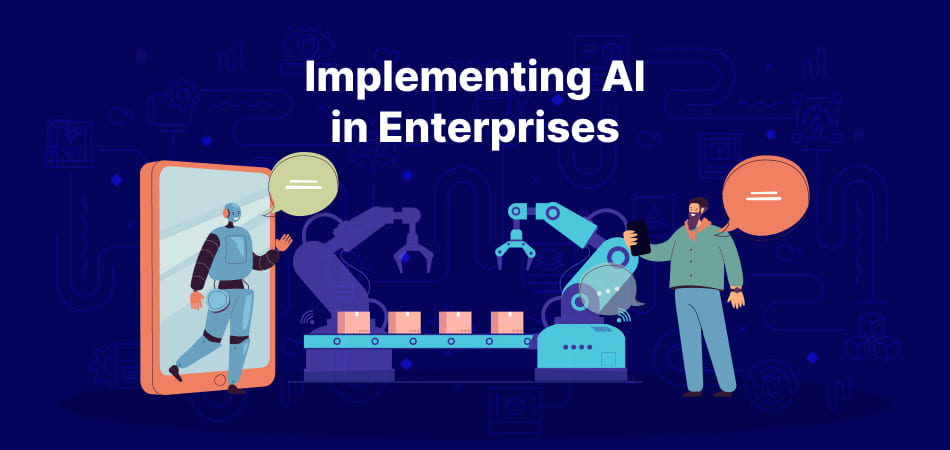
The warehouse of today is no longer a manual storage facility, it has evolved into a smart, automated, AI-powered operation driven by real-time data, intelligent robots, and machine learning algorithms. Businesses across e-commerce, retail, logistics, and manufacturing are rapidly adopting AI Warehouse Automation to increase accuracy, reduce costs, and accelerate fulfillment at scale.This guide explores how robots and AI algorithms work together to create intelligent, efficient, and fully optimized warehouse ecosystems.
Why AI Warehouse Automation Is Transforming Modern Logistics

Warehouse operations have become more demanding than ever. Customer expectations for fast delivery, fluctuating inventory needs, and persistent labor shortages make traditional warehouse management inefficient and costly.
AI Warehouse Automation solves these challenges by connecting systems, robots, and data to streamline operations and optimize workflows in real time.
Benefits include:
- 40–60% faster order fulfillment
- Over 99% picking accuracy
- Up to 30% reduction in operational costs
- 20–30% better space utilization
- 24/7 automated operation without downtime
Robots in an AI-Driven Warehouse
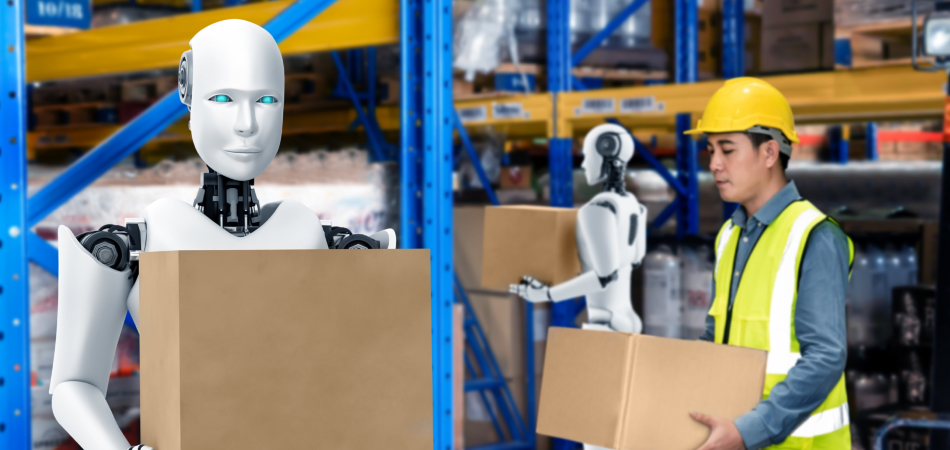
AI-powered robots handle the physical execution of repetitive warehouse tasks with speed and precision. Here are the most widely used robotic solutions:
Autonomous Mobile Robots (AMRs)
AMRs move items across warehouse floors using sensors, LiDAR, and AI navigation algorithms. They avoid obstacles, plan optimal paths, and relieve workers from long walking distances.
Robotic Picking and Sorting Systems
Using computer vision and machine learning, robotic arms can identify, pick, sort, and place products with high accuracy. They are ideal for e-commerce and retail environments with large SKU variations.
Automated Storage and Retrieval Systems (AS/RS)
These systems automate the placement and retrieval of items using shuttles, cranes, and lifts. They increase vertical storage density and significantly speed up order processing.
Collaborative Robots (Cobots)
Cobots work alongside human operators to support tasks such as packing, palletizing, and sorting. They reduce physical strain and improve workflow efficiency.
How AI Algorithms Power Smart Warehousing
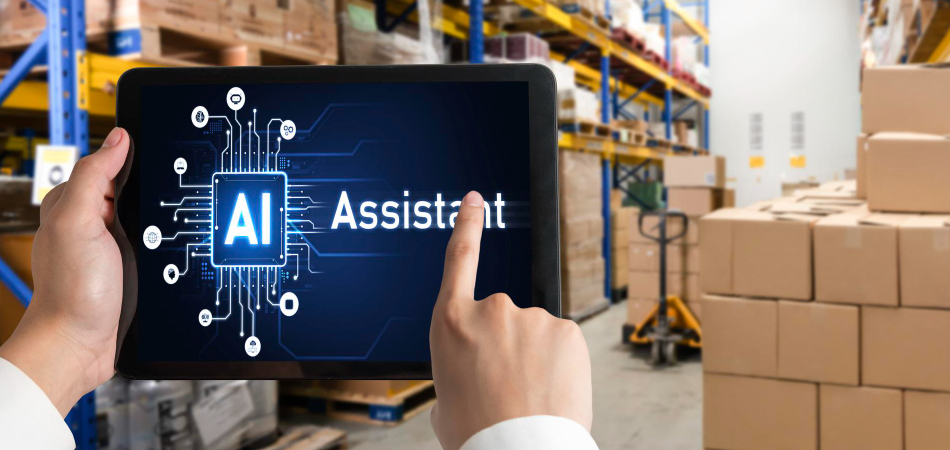
Robots execute physical tasks, but AI is responsible for analyzing data, making decisions, and optimizing warehouse operations.
Smart Inventory Forecasting
AI predicts demand using sales history, seasonality, market trends, and supplier performance. This enables accurate stock levels, reduces carrying costs, and eliminates stockouts.
Real-Time Workflow Optimization
AI continuously monitors warehouse operations to identify inefficiencies. It optimizes picking sequences, storage allocation, robot routing, and worker coordination.
Computer Vision for Accuracy
AI-driven vision systems inspect items, verify labels, detect damages, and track inventory automatically. This improves accuracy and dramatically reduces returns caused by human error.
Predictive Maintenance
AI monitors the health of warehouse equipment such as conveyors, forklifts, and robots. It predicts mechanical issues before they occur, reducing downtime and repair costs.
Benefits of AI-Driven Warehouse Automation
- Faster fulfillment speeds
- Higher order accuracy
- Reduced labor dependency
- Lower operational costs
- Improved space efficiency
- Ability to operate 24/7
Challenges and Solutions
Initial Investment
Start with modular automation and scale gradually.
Integration with Existing Systems
Use cloud-based WMS platforms with API compatibility.
Data Quality Issues
Implement data validation and cleaning workflows.
Need for Skilled Staff
Train employees through automation readiness programs.
The Future of AI Warehouse Automation
The next decade will bring even smarter, fully autonomous warehouse environments. Expect to see:
- Dark warehouses operating without human presence
- Robots with human-level dexterity
- Self-learning inventory systems
- End-to-end automated fulfillment pipelines
- IoT and blockchain-integrated tracking solutions
Warehouses will evolve into intelligent systems that think, adapt, and optimize themselves.
Frequently Asked Questions
What is AI Warehouse Automation?
It refers to using artificial intelligence, robots, and computer vision to automate warehouse tasks such as picking, sorting, storing, and inventory management.
How do warehouse robots work?
Robots use sensors, cameras, LiDAR, and AI algorithms to navigate, identify items, and complete tasks autonomously.
Is AI automation expensive for small warehouses?
No. Modular, cloud-based solutions make AI adoption affordable even for small and mid-sized businesses.
What industries benefit most from warehouse automation?
E-commerce, retail, 3PL, FMCG, manufacturing, and pharmaceuticals.
How does AI improve accuracy?
Through computer vision, data analysis, and automated decision-making that eliminates human error.
Conclusion
AI-driven warehouse automation is becoming essential for businesses that want to stay competitive. Robots handle physical tasks, AI manages smart decision-making, and together they create extremely efficient, scalable, and cost-effective warehouse environments.
Companies that adopt AI Warehouse Automation today will be better prepared for the fast, data-driven future of global logistics.