Artificial Intelligence has entered a new phase. In 2026, AI is no longer limited to automation or basic decision support. The rise of autonomous and agentic AI systems marks a major shift in AI that can think, act, plan, and adapt with minimal human involvement.
These systems are redefining how businesses operate, how decisions are made, and how humans collaborate with machines. In this blog, we explore what autonomous and agentic AI systems are, how they differ, where they stand in 2026, and what the future holds.
What Are Autonomous and Agentic AI Systems?
To understand their impact, it’s important to clarify these two closely related concepts.
Autonomous AI Systems
Autonomous AI systems are designed to operate independently once configured. They can analyze data, make decisions, and execute actions without continuous human supervision.
Key characteristics of autonomous AI:
- Operates with minimal human input
- Responds to real-time data
- Adjusts behavior based on outcomes
- Focuses on efficiency and optimization
Examples: self-driving vehicles, automated trading systems, smart logistics platforms.
Agentic AI Systems
Agentic AI systems represent a more advanced form of autonomy. These systems behave like intelligent agents with goals. They can decide what to do, how to do it, and when to take action.
Key characteristics of agentic AI:
- Goal-oriented behavior
- Multi-step planning and reasoning
- Tool usage (APIs, databases, software)
- Learning from feedback and results
In simple terms, agentic AI doesn’t just act—it strategizes.
Why Autonomous and Agentic AI Matter in 2026
By 2026, businesses face increasing complexity, tighter competition, and higher expectations for speed and accuracy. Autonomous and agentic AI systems help organizations meet these demands.
Key reasons they are critical in 2026:
- Faster decision-making at scale
- Reduced dependency on manual operations
- Improved operational efficiency
- Ability to manage complex workflows
- Continuous learning and optimization
AI is no longer just a tool—it’s becoming an active participant in business processes.
Real-World Applications of Autonomous and Agentic AI in 2026
Enterprise Operations and Workflow Automation
Agentic AI systems now manage entire business workflows—from task assignment to performance monitoring—without constant human oversight.
Customer Support and Experience
AI agents handle complete customer journeys, including:
- Understanding intent
- Resolving issues
- Executing follow-up actions
- Learning from interactions
This results in faster resolution times and improved customer satisfaction.
Healthcare and Life Sciences
Autonomous AI assists in diagnostics, patient monitoring, and treatment planning. Agentic AI systems adapt recommendations based on patient outcomes and evolving medical data.
Manufacturing and Supply Chain
Smart factories use AI agents to:
- Forecast demand
- Optimize production schedules
- Predict equipment failures
- Manage inventory in real time
Software Development and IT Operations
Agentic AI is increasingly used for:
- Code generation and testing
- Bug detection and resolution
- Infrastructure monitoring
- Automated incident response
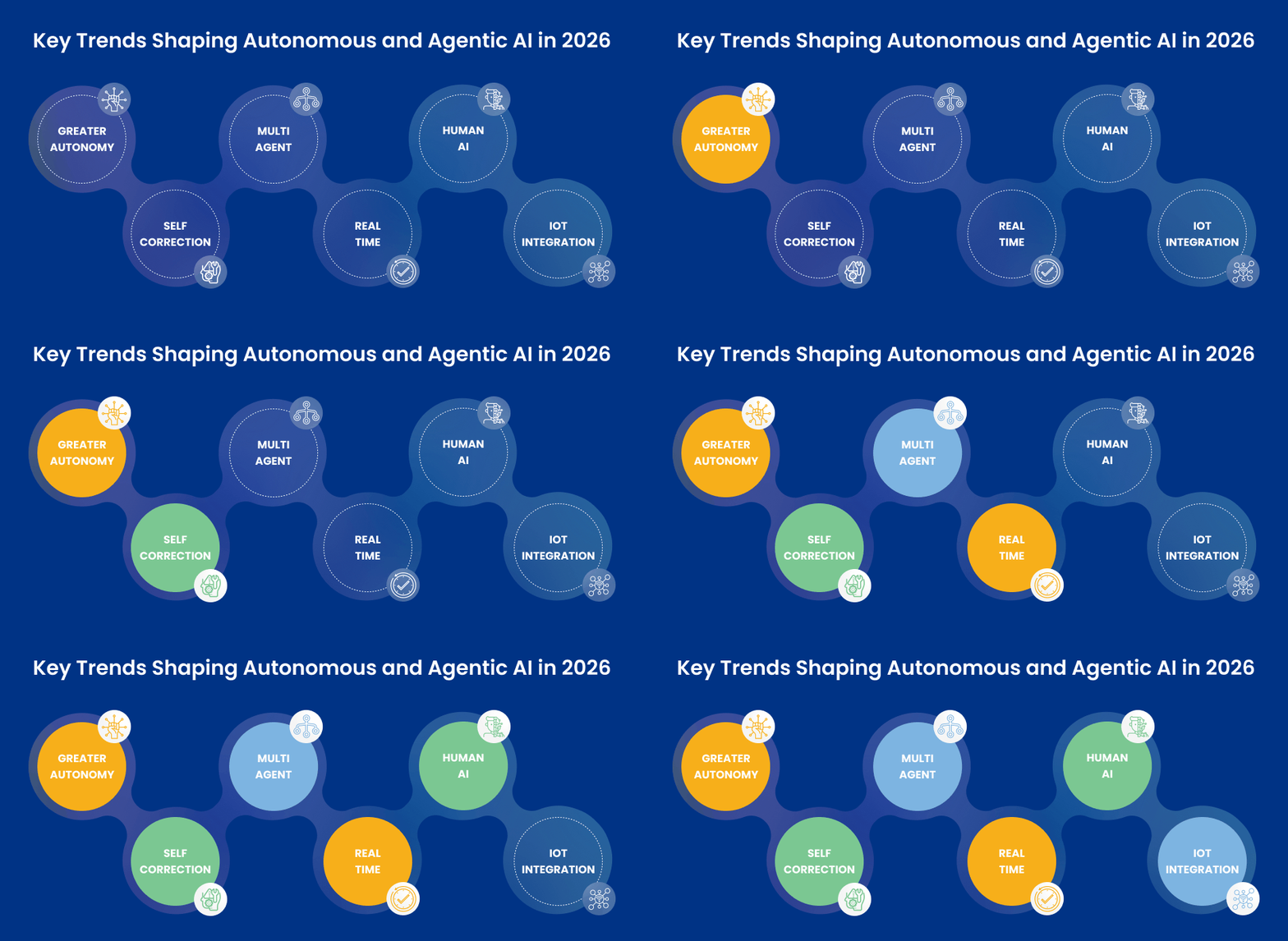
Key Trends Shaping Autonomous and Agentic AI in 2026

Smarter Decision-Making Models
Advances in large language models, reinforcement learning, and multi-modal AI have made AI systems more context-aware and reliable.
Tool-Enabled AI Agents
Modern agentic AI systems can interact with external tools, APIs, and enterprise software to complete complex tasks autonomously.
Human-in-the-Loop Design
Most organizations adopt a balanced approach, combining AI autonomy with human oversight to maintain control and accountability.
Stronger AI Governance and Ethics
As AI autonomy increases, organizations prioritize transparency, security, compliance, and responsible AI frameworks.
Challenges and Limitations to Address
Despite rapid progress, challenges remain:
- Ensuring predictable and safe AI behavior
- Preventing biased or incorrect decisions
- Managing accountability for autonomous actions
- Aligning AI goals with human values
Addressing these challenges is essential for long-term trust and adoption.
The Future of Autonomous and Agentic AI Beyond 2026
Looking ahead, we can expect:
- More collaborative AI agents working alongside humans
- Autonomous systems managing complex, multi-agent processes
- AI becoming a standard layer across industries
The focus will shift from building AI systems to orchestrating and governing AI responsibly.
Final Thoughts
Autonomous and agentic AI systems represent a fundamental shift in how intelligence is applied in the real world. In the 2026 AI landscape, these technologies are no longer experimental; they are practical, powerful, and essential for scalable growth.
Organizations that understand and adopt them strategically will gain a significant competitive advantage in the years ahead.
Frequently Asked Questions (FAQs)
What is the difference between autonomous AI and agentic AI?
Autonomous AI performs tasks independently based on rules or learned behavior. Agentic AI goes further by setting goals, planning actions, using tools, and adapting strategies over time.
Are agentic AI systems already used in 2026?
Yes, agentic AI systems are actively used in customer support, healthcare, enterprise automation, software development, and supply chain management.
Is agentic AI risky?
Agentic AI is not inherently risky, but it requires proper governance, monitoring, and ethical controls to ensure safe and responsible use.
Will autonomous AI replace human jobs?
Autonomous and agentic AI are more likely to augment human roles by handling repetitive tasks, allowing humans to focus on strategic and creative work.
Which industries benefit the most from agentic AI?
Industries such as healthcare, manufacturing, finance, e-commerce, logistics, and IT benefit significantly due to their complex workflows and data-heavy operations.
How can companies start adopting agentic AI?
Companies should begin by automating low-risk workflows, implementing human oversight, and gradually increasing AI autonomy as trust and performance improve.