The answer isn’t straightforward because every project has unique requirements. The total cost depends on factors such as application complexity, features, design, development team, integrations, cloud infrastructure, and ongoing maintenance.
In this guide, we’ll break down the key factors that influence .NET development costs, provide estimated pricing, and share practical tips to help you maximize your investment.
What Is .NET Application Development?
.NET is Microsoft’s open-source development platform used to create modern web applications, desktop software, APIs, cloud solutions, enterprise applications, and mobile backends. With frameworks like ASP.NET Core, developers can build high-performance applications that are secure, scalable, and compatible across Windows, Linux, and macOS.
Businesses choose .NET because it offers:
- High security and reliability
- Fast application performance
- Cross-platform development
- Easy cloud deployment with Microsoft Azure
- Seamless integration with Microsoft products
- Long-term scalability for growing businesses
From startups to Fortune 500 companies, .NET remains one of the most trusted technologies for business application development.
Average Cost of .NET Application Development
The cost of developing a .NET application varies depending on project size and complexity.
| Application Type | Estimated Cost |
| Basic Business Application | $5,000 – $15,000 |
| Medium Business Application | $15,000 – $50,000 |
| Enterprise Application | $50,000 – $150,000+ |
| Custom ERP/CRM Solution | $75,000 – $300,000+ |
| SaaS Platform | $40,000 – $250,000+ |
These estimates include design, development, testing, and deployment but may vary based on your business requirements.
Key Factors That Affect .NET Development Cost
Project Complexity
The complexity of your application has the biggest impact on development costs.
A simple application with basic functionality, user login, and a dashboard requires less time and fewer resources. On the other hand, enterprise software with advanced workflows, real-time communication, AI capabilities, and multiple integrations requires a larger team and longer development cycles.
The more complex your application, the higher the development cost.
Features and Functionality
Every feature added to your application increases development time and budget.
Some common features include:
- User authentication
- Role-based access
- Payment gateway integration
- Notifications
- Reporting dashboards
- File management
- Chat functionality
- API integrations
- AI-powered automation
- Multi-language support
- Advanced search filters
Instead of adding every feature from day one, many businesses launch a Minimum Viable Product (MVP) and expand based on user feedback.
UI/UX Design
An intuitive user interface improves customer experience and employee productivity.
Custom UI/UX design includes:
- Wireframes
- Interactive prototypes
- Responsive layouts
- Custom dashboards
- Mobile optimization
While custom design increases the initial investment, it often leads to higher user engagement and better business outcomes.
Development Team Location
The location of your development partner significantly affects project costs.
| Region | Average Hourly Rate |
| India | $20–$50 |
| Eastern Europe | $35–$80 |
| USA | $100–$250 |
| Canada | $90–$200 |
| Australia | $90–$180 |
Many global businesses choose Indian .NET development companies because they offer skilled developers, cost-effective pricing, and high-quality software development services.
Technology Stack and Integrations
Modern applications often require integration with third-party tools such as:
- Payment gateways
- CRM systems
- ERP software
- Microsoft 365
- Google Maps
- SMS and email services
- Cloud storage
- AI APIs
Each integration requires development, testing, and maintenance, which adds to the overall project cost.
Cloud Hosting and Infrastructure
Most modern .NET applications are hosted on cloud platforms like Microsoft Azure or AWS.
Cloud-related costs may include:
- Virtual servers
- Database hosting
- Storage
- Security services
- Monitoring
- Backup solutions
These are ongoing operational expenses that should be considered when planning your budget.
Testing and Quality Assurance
Testing is essential to ensure your application is secure, stable, and performs well under different conditions.
Quality assurance typically includes:
- Functional testing
- Performance testing
- Security testing
- API testing
- Cross-browser testing
- User acceptance testing
Skipping this stage may reduce initial costs but often leads to expensive issues after launch.
Hidden Costs You Should Consider
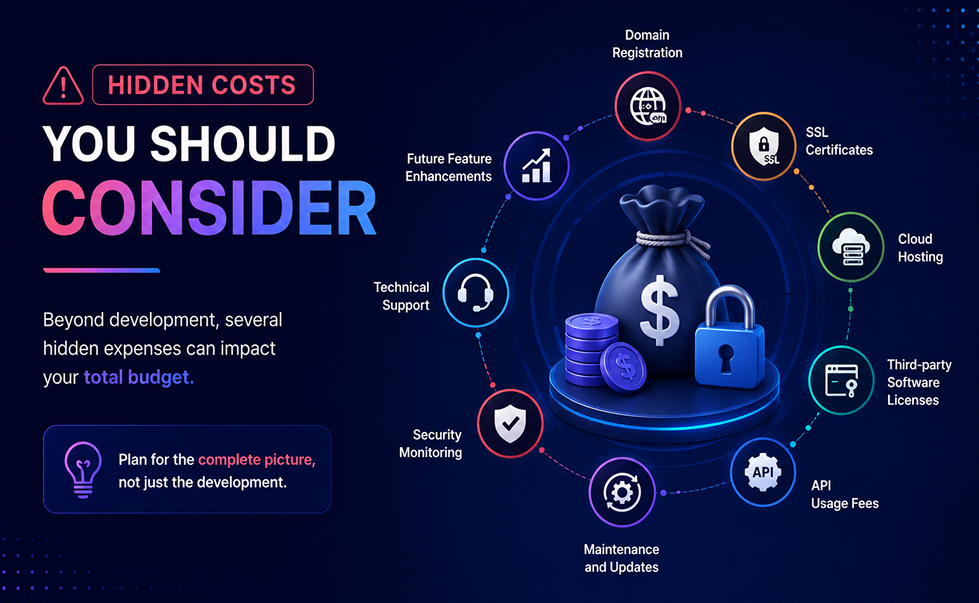
Many businesses only budget for development and overlook additional expenses.
Some hidden costs include:
- Domain registration
- SSL certificates
- Cloud hosting
- Third-party software licenses
- API usage fees
- Maintenance and updates
- Security monitoring
- Technical support
- Future feature enhancements
Planning for these costs helps avoid unexpected expenses later.
How to Reduce .NET Development Costs
Reducing costs doesn’t mean compromising on quality. Here are a few practical strategies:
Start with an MVP
Develop only the core features required for launch. Additional functionality can be added based on customer feedback and business growth.
Define Clear Requirements
A well-documented project scope reduces misunderstandings, minimizes revisions, and keeps the project on schedule.
Choose the Right Development Partner
An experienced .NET development company can deliver scalable, high-quality solutions while helping you avoid costly technical mistakes.
Use Agile Development
Agile methodology allows businesses to review progress regularly, prioritize features, and manage budgets more effectively.
Plan for Future Scalability
Building an application that can scale with your business reduces the need for major redevelopment in the future.
Why Invest in .NET Application Development?
Although custom software requires an upfront investment, it offers significant long-term benefits.
A .NET application can help businesses:
- Improve operational efficiency
- Automate repetitive tasks
- Enhance customer experience
- Strengthen data security
- Scale as the business grows
- Integrate with existing business systems
- Reduce manual errors
- Increase productivity
For organizations looking to build reliable and future-ready software, .NET remains one of the best technology choices.
Why Choose KIS Works for .NET Development?
At KIS Works, we specialize in building custom .NET applications that align with your business goals. Our team develops secure, scalable, and high-performance solutions for startups, SMEs, and enterprises across various industries.
Our .NET development services include:
- Custom .NET application development
- ASP.NET Core web development
- Enterprise software solutions
- API development and integration
- Legacy application modernization
- Azure cloud deployment
- AI-powered application integration
- Ongoing maintenance and technical support
With an agile development approach, transparent communication, and a focus on quality, we help businesses transform ideas into reliable digital solutions.
Frequently Asked Questions
How much does it cost to build a .NET application?
The cost can range from $5,000 for a basic application to $150,000 or more for enterprise-level software, depending on complexity and features.
How long does .NET application development take?
A small application may take 1–3 months, while enterprise applications can take 6–12 months or longer.
Is .NET suitable for startups?
Yes. .NET is ideal for startups because it supports rapid development, strong security, and easy scalability as the business grows.
Why do businesses outsource .NET development to India?
India offers experienced developers, competitive pricing, and high-quality software development, making it a preferred outsourcing destination.
Does .NET support cloud applications?
Yes. .NET integrates seamlessly with Microsoft Azure and other cloud platforms, making it an excellent choice for cloud-native applications.
Final Thoughts
The cost of .NET application development depends on your business objectives, application complexity, feature requirements, technology stack, and long-term maintenance needs. While development costs can vary, investing in a well-designed .NET application delivers lasting value through improved efficiency, stronger security, better scalability, and enhanced customer experiences.
If you’re planning to build a custom .NET application, partnering with an experienced development company like KIS Works can help you optimize costs, reduce development risks, and create a solution that supports your business growth for years to come. With the right strategy and technology partner, your investment in .NET can become a powerful driver of digital transformation and long-term success.