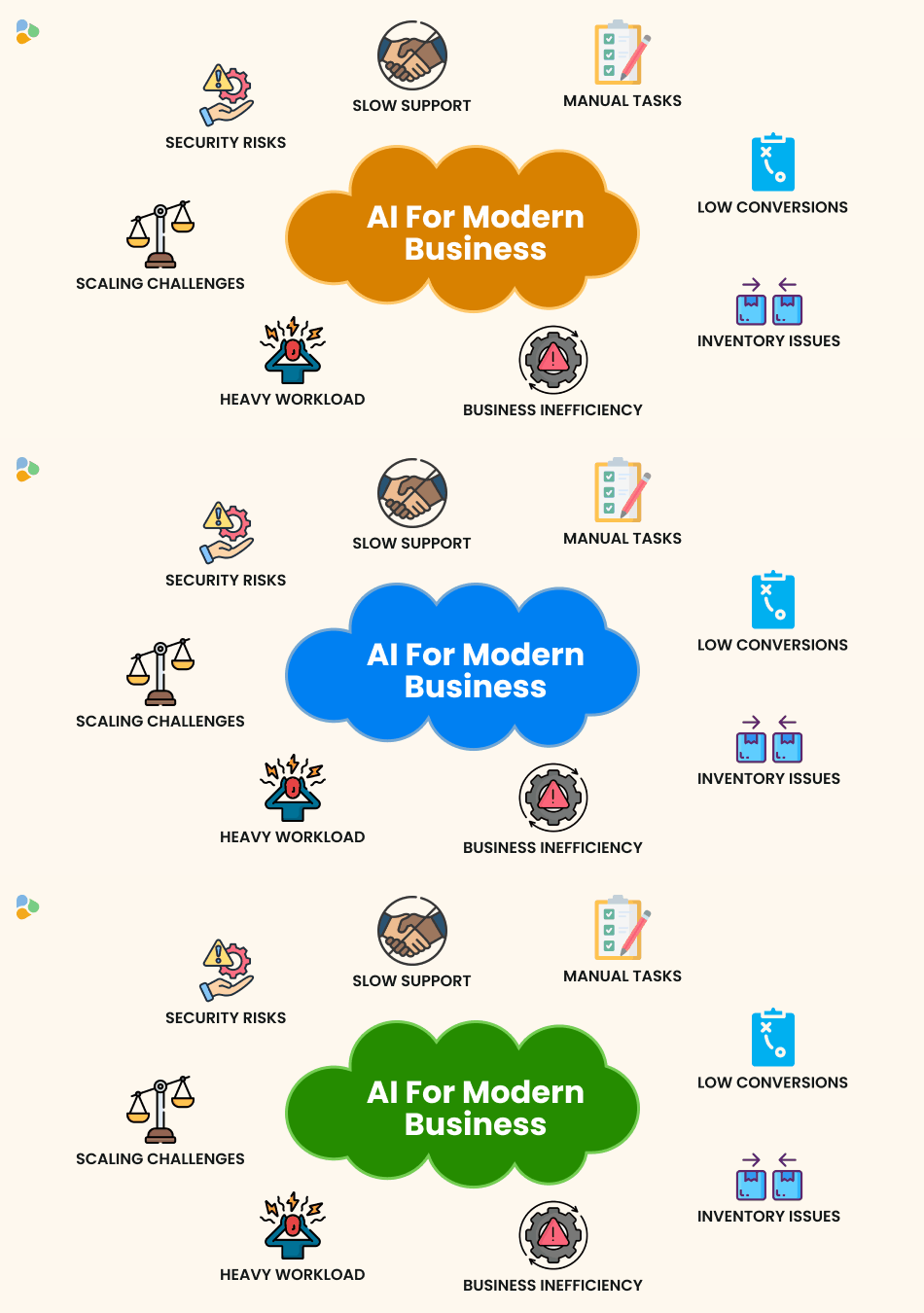
Many business owners think AI is only about chatbots or robots, but its capabilities go much further. AI can analyze large amounts of data, predict future trends, automate routine tasks, improve security, and support employees in their daily work. Instead of replacing people, AI helps teams work more efficiently by allowing them to focus on tasks that require creativity, strategy, and problem solving.
If your business is facing operational challenges or looking for new ways to grow, here are ten real business problems AI can solve today.
1. Slow Customer Support
Customers expect quick answers, whether they are asking about a product, requesting a quote, or tracking an order. When support teams are overwhelmed, response times increase, leading to frustration and lost opportunities. AI powered chatbots and virtual assistants can answer common questions instantly, provide updates, and guide customers to the right solutions at any time of the day. This improves customer satisfaction while allowing support teams to focus on more complex issues that require human attention.
2. Repetitive Manual Tasks
Many businesses still spend hours entering data, processing invoices, updating spreadsheets, or organizing documents. These repetitive activities consume valuable time and increase the chances of human error. AI can automate these routine processes by extracting information from documents, organizing records, and updating business systems automatically. Employees become more productive because they spend less time on administrative work and more time on tasks that create real business value.
3. Low Sales Conversions
Generating leads is only the first step in the sales process. The real challenge is identifying which prospects are most likely to become customers. AI analyzes customer behavior, website visits, email interactions, and previous purchases to identify high quality leads. Sales teams can then prioritize the right opportunities instead of spending time on prospects who are unlikely to convert. This leads to better sales performance and improved return on investment.
4. Poor Inventory Management
Running out of stock can disappoint customers, while overstocking increases storage costs and ties up capital. AI helps businesses forecast demand by analyzing historical sales, seasonal patterns, and market trends. With accurate predictions, companies can maintain the right inventory levels, reduce waste, and improve supply chain efficiency. This is especially valuable for retailers, manufacturers, and ecommerce businesses.
5. Inefficient Business Operations
As businesses grow, manual workflows often become slow and difficult to manage. Tasks such as approvals, employee onboarding, document sharing, and project tracking can create unnecessary delays. AI automates these workflows by connecting with existing business systems and handling repetitive processes without constant human involvement. Faster operations allow teams to work more efficiently and deliver better results.
6. Difficulty Understanding Business Data
Businesses collect huge amounts of data every day, but turning that information into meaningful insights is often challenging. AI can analyze sales reports, customer behavior, financial records, and operational data in real time to identify trends and opportunities. Instead of relying on guesswork, business leaders can make informed decisions based on accurate insights, helping them reduce risks and improve long term planning.
7. High Employee Workload
Employees often spend a large portion of their day handling repetitive administrative work instead of focusing on strategic responsibilities. AI assistants can schedule meetings, summarize documents, organize emails, generate reports, and manage routine tasks automatically. This reduces stress, improves productivity, and allows employees to contribute more effectively to business growth.
8. Fraud and Security Risks
Cybersecurity threats and financial fraud continue to grow across every industry. AI helps businesses detect unusual activities by monitoring transactions, login attempts, and user behavior in real time. Instead of waiting until damage has occurred, AI identifies suspicious patterns early and alerts security teams immediately. This improves data protection and reduces financial losses.
9. Ineffective Marketing Campaigns
Marketing decisions are often based on assumptions rather than accurate customer data. AI analyzes user behavior across websites, social media, email campaigns, and advertising platforms to identify what works best. Businesses can create personalized campaigns, improve customer targeting, and optimize their marketing budgets for better results. This leads to higher engagement, stronger customer relationships, and increased conversions.
10. Difficulty Scaling the Business
Growth brings new challenges, including increased workloads, higher operational costs, and more complex processes. Hiring additional staff for every new task is not always practical or affordable. AI helps businesses scale by automating customer service, reporting, workflow management, and other daily operations. Companies can expand without sacrificing efficiency, allowing them to grow faster while keeping costs under control.
The Power of AI Today
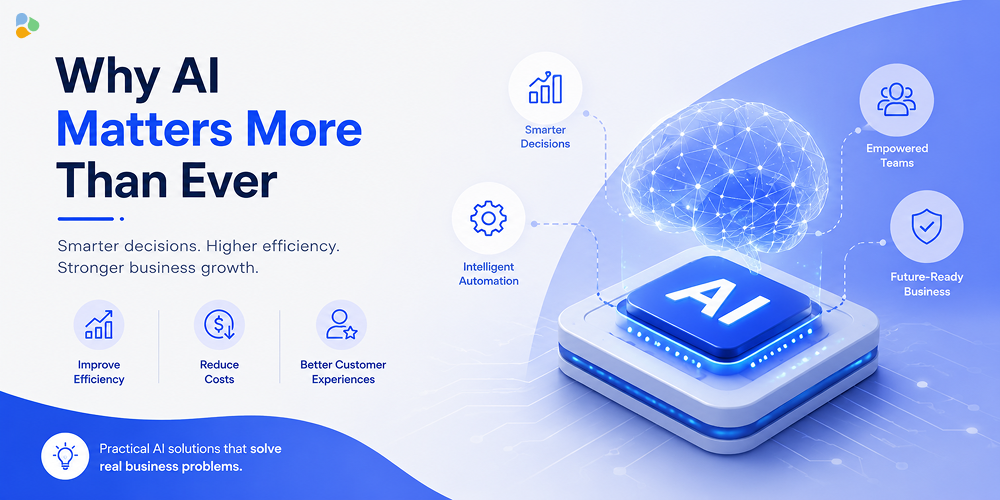
Businesses that adopt AI today are preparing themselves for a more competitive future. AI is not about replacing employees but empowering them with better tools to work smarter and make faster decisions. Whether you operate in healthcare, manufacturing, logistics, retail, finance, or professional services, AI can improve efficiency, reduce costs, and create better experiences for both customers and employees.
At KIS Works, we help businesses transform their ideas into practical AI solutions. From AI development and intelligent automation to custom software integration and AI agent development, our team builds solutions that solve real business challenges and support long term growth.
Final Thoughts
Artificial Intelligence is no longer a technology of the future. It is solving real business problems every day by improving customer service, streamlining operations, strengthening security, and helping organizations make smarter decisions. The businesses that embrace AI today will be better positioned to innovate, compete, and grow in the years ahead.
If your organization is ready to improve efficiency and unlock new opportunities, now is the perfect time to explore how AI can transform your business. With the right technology partner, AI becomes more than just a tool—it becomes a competitive advantage that drives lasting success.
Frequently Asked Questions (FAQs)
1. What business problems can AI solve?
AI can solve many everyday business challenges, including slow customer support, repetitive manual tasks, poor sales conversions, inventory management issues, inefficient workflows, fraud detection, data analysis, and marketing optimization. It helps businesses improve productivity, reduce costs, and make faster decisions.
2. Is AI only suitable for large businesses?
No. AI solutions are now affordable and scalable for startups, small businesses, and large enterprises. Many AI tools can be customized based on your business size, industry, and budget, making them accessible to organizations of all types.
3. How does AI improve customer service?
AI improves customer service through chatbots, virtual assistants, and automated support systems that provide instant responses, answer common questions, track orders, and assist customers 24/7. This reduces response times and increases customer satisfaction.
4. Can AI work with my existing business software?
Yes. Modern AI solutions can integrate with existing business systems such as CRM, ERP, HRMS, accounting software, and ecommerce platforms. This allows businesses to automate workflows without replacing their current software.
5. Which industries benefit the most from AI?
AI is widely used across industries, including healthcare, manufacturing, logistics, retail, ecommerce, finance, education, and real estate. Any business that wants to automate processes, improve decision making, or enhance customer experiences can benefit from AI.
6. Will AI replace employees?
AI is designed to assist employees rather than replace them. It automates repetitive and time-consuming tasks, allowing teams to focus on strategic work, creativity, customer relationships, and business growth.
7. How can AI help increase sales?
AI analyzes customer behavior, identifies high-quality leads, personalizes marketing campaigns, and provides product recommendations. These capabilities help businesses improve lead conversion rates, customer engagement, and overall sales performance.
8. How do I get started with AI for my business?
Start by identifying a business process that is repetitive, time-consuming, or inefficient. Partner with an experienced AI development company to assess your requirements, choose the right AI solution, and integrate it with your existing systems. Beginning with one use case and expanding gradually is often the most successful approach.