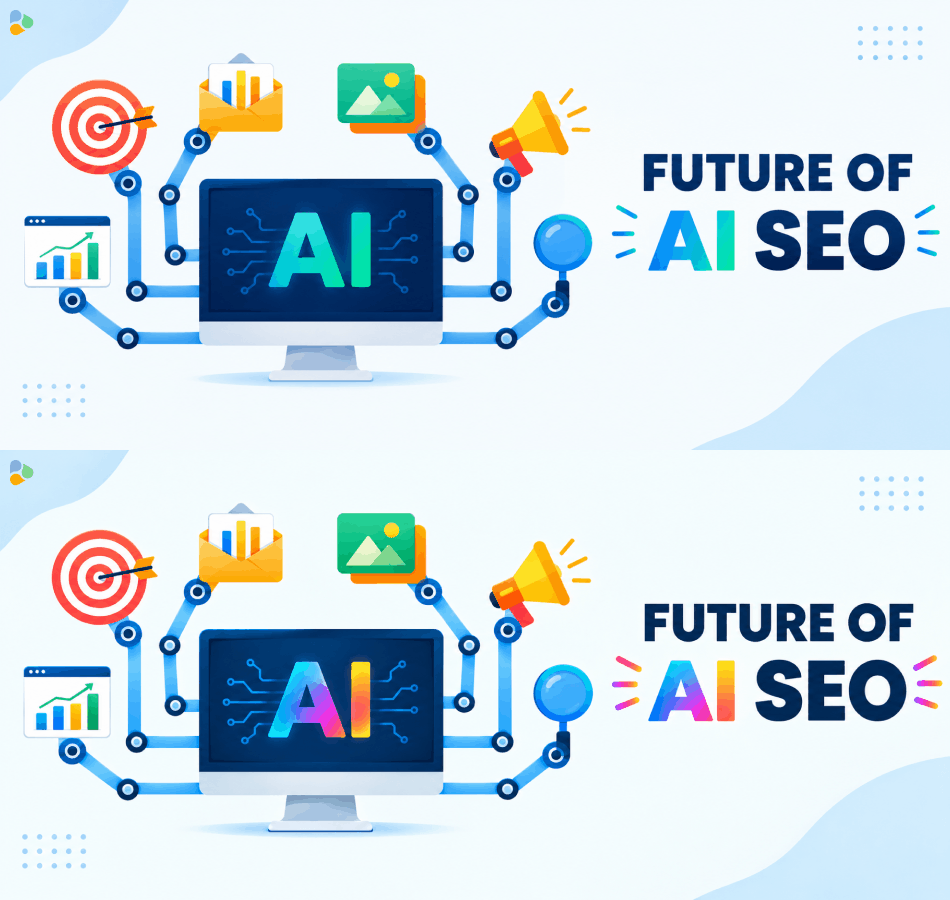
Search engine optimization is changing faster than ever.
For years, SEO mainly focused on keywords, backlinks, technical optimization, content, and Google rankings. These fundamentals still matter, but the way people search for information is changing.
Today, users can search through traditional Google results, AI Overviews, Google AI Mode, ChatGPT, Gemini, Perplexity, and other AI-powered platforms. This means businesses now need to think beyond traditional rankings and focus on how their brand and content appear across different search experiences.
AI is also changing how SEO professionals do their daily work. Tasks such as keyword research, content analysis, competitor research, technical audits, content optimization, reporting, and search visibility tracking can now be completed much faster with the help of AI.
However, AI does not replace SEO strategy. Instead, it helps SEO teams analyze more data, automate repetitive work, and make better decisions.
In this article, we look at seven AI-powered SEO tools that are shaping modern search and explain how businesses can use them as part of their SEO strategy.
How AI Is Changing SEO
AI is becoming part of almost every stage of the SEO process.
SEO professionals can use AI to discover keyword opportunities, understand search intent, identify content gaps, analyze competitors, improve existing content, generate ideas, monitor technical issues, and track brand visibility in AI-generated answers.
The focus is also moving from simply ranking for individual keywords to building strong topical coverage and becoming a trusted source of information.
Google’s search experience itself is becoming more AI-driven. AI Overviews and AI Mode can provide users with answers and sources directly within the search experience. Google also continues to expand Search Console reporting around generative and multimodal search.
This creates a new opportunity for businesses: optimize not only for search rankings, but also for visibility within AI-generated results.
1. Semrush
Semrush has developed from a traditional SEO platform into a broader search and AI visibility platform.
It can help marketers with keyword research, competitor analysis, technical SEO, content optimization, backlinks, and AI visibility.
One of the important developments is its focus on tracking how brands appear across AI platforms. Semrush provides AI visibility features that can help businesses understand brand mentions, competitor visibility, cited pages, and visibility gaps across AI-powered search experiences.
How businesses can use Semrush
Businesses can use Semrush to:
- Research keywords and search intent
- Analyze competitors
- Identify content opportunities
- Audit technical SEO issues
- Monitor backlinks
- Track brand visibility in AI-generated answers
- Find content gaps
- Monitor traditional and AI search performance
For larger marketing teams, this can help bring multiple SEO activities into one workflow.
2. Ahrefs
Ahrefs remains widely used for keyword research, competitor analysis, backlink analysis, content research, and SEO auditing.
The platform is also adding more AI-powered features to its existing SEO workflow. Its AI capabilities include keyword suggestions, search intent analysis, content assistance, AI-based site audit features, reporting, and brand visibility monitoring.
Ahrefs is also moving toward AI-assisted SEO workflows where marketers can use AI to analyze SEO data and automate repetitive tasks.
How businesses can use Ahrefs
Ahrefs can help with:
- Keyword research
- Competitor analysis
- Backlink research
- Content gap analysis
- Search intent analysis
- Content optimization
- Technical SEO
- Brand and AI visibility tracking
For businesses that already have a strong SEO process, AI features can make research and analysis faster without removing human decision-making.
3. Surfer
Surfer focuses heavily on content optimization.
Instead of simply generating an article, the platform analyzes search results and provides recommendations for improving content relevance, structure, topic coverage, and on-page optimization.
Its current tools also focus on visibility in AI-powered search experiences, including AI Overviews and AI assistants.
How businesses can use Surfer
Content teams can use Surfer to:
- Analyze competing pages
- Build content briefs
- Identify important topics and terms
- Improve content coverage
- Optimize existing articles
- Build topical maps
- Monitor search and AI visibility
The important point is that content optimization should not become a process of simply adding more keywords. The goal should be to create useful, complete, and well-structured content that satisfies the user’s search intent.
4. ChatGPT
ChatGPT is not a traditional SEO platform, but it can be a powerful assistant for SEO professionals.
It can help with brainstorming, keyword clustering, content outlines, title ideas, FAQs, content refreshes, competitor research frameworks, technical explanations, schema drafts, and SEO reporting.
It can also help SEO teams analyze large amounts of information and turn complex data into understandable recommendations.
However, AI-generated content should not simply be published without review. Human research, fact checking, experience, editing, and brand knowledge remain important.
A 2026 Semrush survey found that keyword research was the most common AI SEO use case among the marketers surveyed, while fewer respondents reported using AI to draft complete SEO articles.
How businesses can use ChatGPT
ChatGPT can support:
- Keyword research ideas
- Content planning
- Blog outlines
- Content refreshes
- Meta title and description ideas
- FAQ generation
- Internal linking ideas
- SEO reporting
- Content analysis
- Technical SEO explanations

The best approach is to use AI as an assistant rather than treating it as a replacement for an SEO professional or content writer.
5. Google Search Console
Google Search Console is not an AI writing tool, but it is becoming increasingly important as search itself becomes more AI-driven.
Search Console provides first-party information about how a website performs in Google Search.
It can help businesses monitor search queries, impressions, clicks, click-through rates, indexing, technical issues, and search performance.
Google has also introduced reporting for generative AI features and, in September 2026, announced reporting for web multimodal searches such as Google Lens, Circle to Search, image uploads, and related experiences.
How businesses can use Search Console
SEO teams should regularly monitor:
- Search queries
- Organic clicks
- Impressions
- CTR
- Average position
- Indexing
- Core technical issues
- Search appearance
- Performance from emerging search experiences
Search Console should remain one of the primary sources of data for measuring organic search performance.
6. Claude
Claude can be useful for SEO teams that work with large amounts of text and detailed content analysis.
It can help review long documents, analyze content structures, develop content briefs, compare pages, organize research, and assist with editorial workflows.
For corporate marketing teams, this can be useful when content requires more context and detailed analysis before publication.
How businesses can use Claude
SEO and content teams can use it for:
- Long-form content analysis
- Content audits
- Content briefs
- Competitor content comparison
- Content restructuring
- Research organization
- Brand tone guidelines
- Editorial review
As with other generative AI tools, the final content should be reviewed by a human before publication.
7. AI SEO Agents and Automated SEO Platforms
One of the biggest developments in SEO is the move from AI assistants toward AI agents.
A traditional AI tool may give you recommendations. An AI agent can potentially take a larger part of the workflow by collecting information, analyzing it, deciding what needs to be done, and completing defined tasks.
For example, an AI SEO workflow could identify outdated pages, analyze their performance, suggest improvements, generate updated metadata, and prepare recommendations for human approval.
Ahrefs describes AI SEO agents as software that can perform SEO work rather than simply explaining how to perform it.
This does not mean businesses should completely automate SEO.
Human oversight remains important because SEO decisions can affect brand reputation, website quality, user experience, and business results.
What Does the Future of SEO Look Like?
The future of SEO is not simply about using more AI.
It is about combining AI with strong SEO fundamentals.
Businesses will need to focus on several areas.
1. Traditional SEO Will Still Matter
Keywords, technical SEO, internal linking, backlinks, page experience, structured data, and high-quality content remain important.
AI search does not remove the need for a technically healthy website.
2. AI Search Visibility Will Become More Important
Businesses will increasingly monitor how often their brand appears in AI-generated answers.
This means SEO teams may need to track more than rankings and traffic.
They may also need to understand:
- Where their brand is mentioned
- Which pages are cited
- Which competitors are appearing
- Which topics generate brand visibility
- Which questions the brand is missing from
3. Content Quality Will Matter More Than Content Volume
AI makes it easy to produce large amounts of content.
That makes low-value content easier to create and harder to differentiate.
Businesses should focus on original information, practical experience, expert insights, useful examples, clear explanations, and strong topical coverage.
4. SEO and Content Teams Will Work More Closely
SEO can no longer operate separately from content strategy.
Keyword research should influence content planning. Content should support business goals. Technical SEO should make information accessible to search engines. Brand authority should support both traditional and AI search visibility.
5. SEO Professionals Will Become More Strategic
AI can handle many repetitive activities, but businesses still need people who understand customers, markets, products, competitors, and business objectives.
The role of an SEO professional is therefore likely to move further toward strategy, analysis, quality control, experimentation, and decision-making.
Should Businesses Start Using AI for SEO?
Yes, but the focus should not be on using AI simply because it is popular.
Businesses should identify repetitive SEO tasks that consume time and determine where AI can improve the workflow.
A practical approach could look like this:
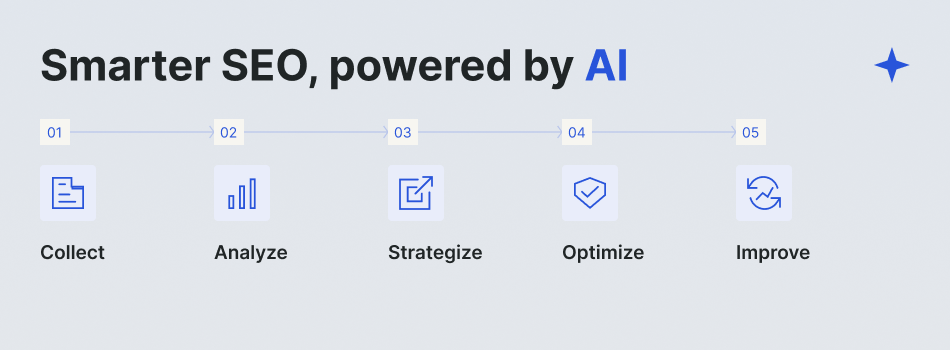
Step 1: Use SEO tools to collect reliable data.
Step 2: Use AI to analyze and organize the data.
Step 3: Create a strategy based on business goals and search intent.
Step 4: Use AI to support content and optimization work.
Step 5: Review with SEO experts, publish, monitor performance, and continuously improve.
This approach allows businesses to benefit from AI while maintaining quality and control.
Final Thoughts
The future of SEO is becoming increasingly connected with artificial intelligence.
Tools such as Semrush, Ahrefs, Surfer, ChatGPT, Google Search Console, Claude, and emerging AI SEO agents are changing how businesses research keywords, create content, analyze competitors, manage technical SEO, and monitor search visibility.
But technology alone will not create a successful SEO strategy.
The businesses that adapt effectively will be the ones that combine AI-powered tools with strong technical SEO, useful content, genuine expertise, reliable data, and human judgment.
SEO is not disappearing. It is evolving.
And as search becomes more conversational, visual, and AI-driven, businesses need to make sure their websites are not only optimized for search engines but also useful enough to become trusted sources of information.
The future of SEO will belong to businesses that can combine technology, content, data, and human expertise effectively.