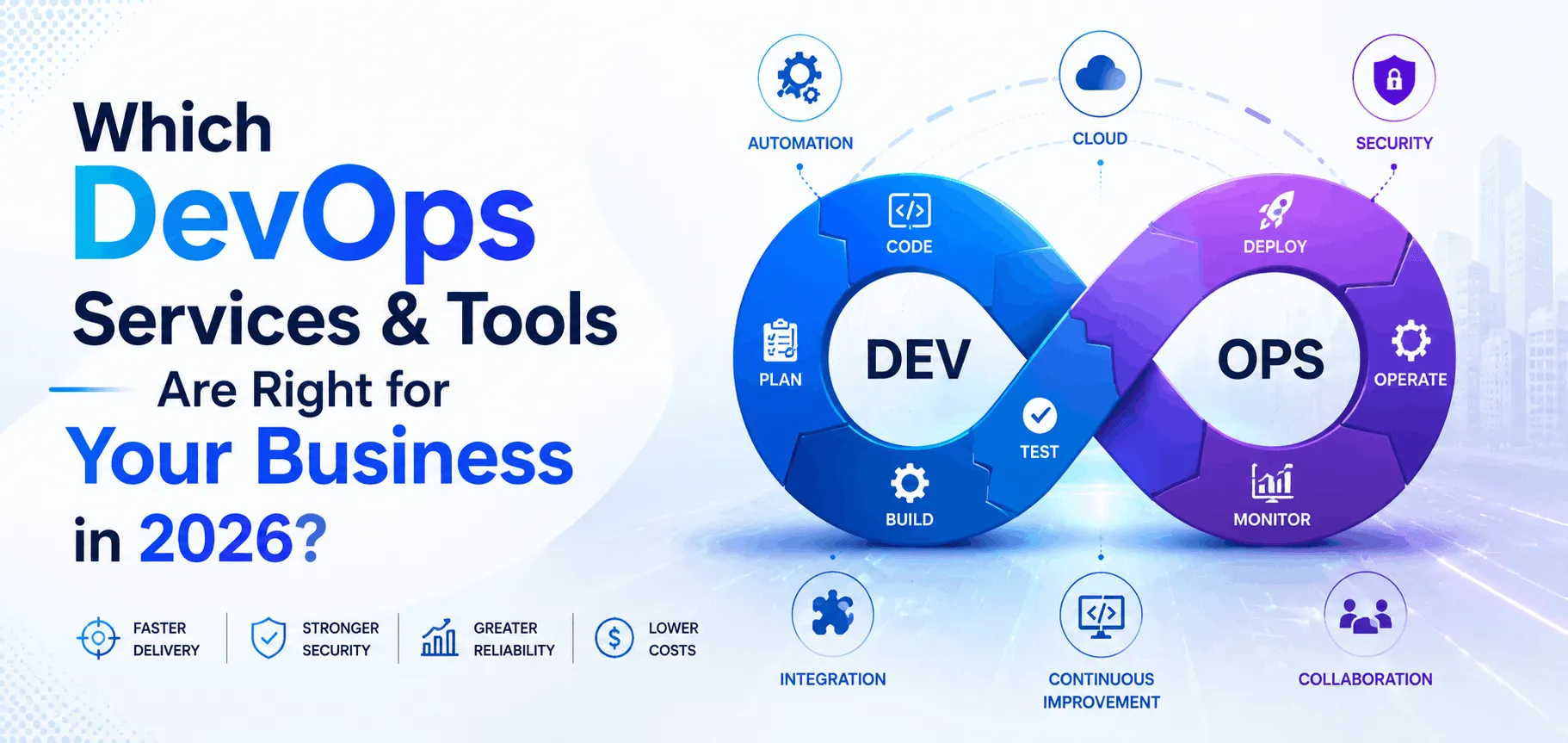
In today’s fast-moving digital world, businesses need faster software releases, reliable infrastructure, better security, and lower downtime. That is exactly why DevOps has become essential.
But many companies ask the same question:
Which DevOps services and tools are actually right for my business?
The answer depends on your goals, team size, infrastructure, budget, and growth plans.
In this guide, we’ll explain the best DevOps services, top tools in 2026, and how to choose the right DevOps setup for your business.
What is DevOps?
DevOps is a modern approach that combines development (Dev) and operations (Ops) to improve collaboration, automate workflows, and speed up software delivery.
The main goals of DevOps are:
- Faster releases
- Better product quality
- Automated deployment
- Improved security
- Reduced downtime
- Better team collaboration
Research literature commonly describes DevOps as combining automation, continuous delivery, and cross-functional collaboration to improve software reliability and speed.
Why Businesses Need DevOps in 2026
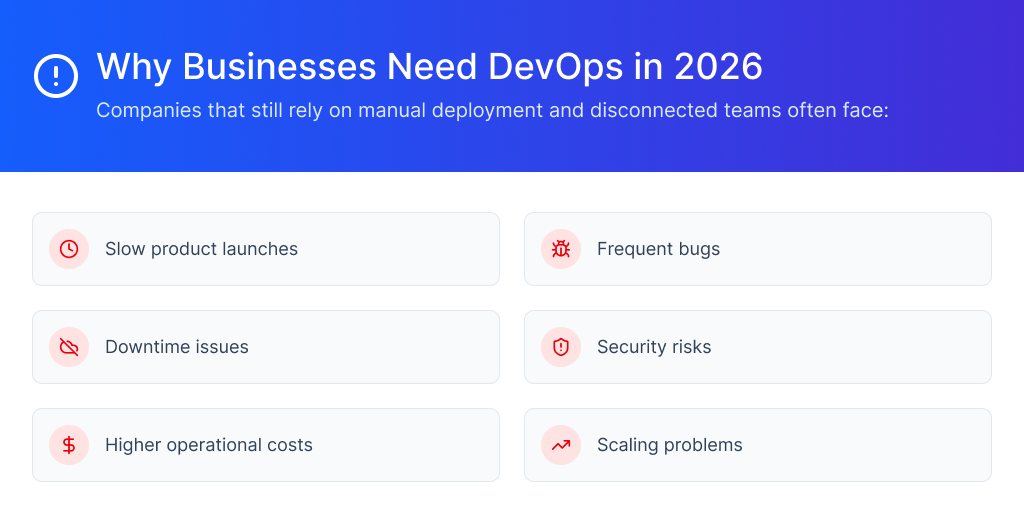
Companies that still rely on manual deployment and disconnected teams often face:
- Slow product launches
- Frequent bugs
- Downtime issues
- Security risks
- Higher operational costs
- Scaling problems
DevOps helps solve these challenges through automation and modern workflows.
Core DevOps Services Businesses Need
CI/CD Pipeline Setup
Continuous Integration and Continuous Deployment (CI/CD) automates testing and releases.
Best For:
- SaaS products
- Mobile apps
- Frequent software updates
Popular Tools:
- Jenkins
- GitHub Actions
- GitLab CI/CD
- CircleCI
Cloud Infrastructure Management
Modern businesses need scalable cloud infrastructure.
Best For:
- Growing startups
- Enterprise systems
- eCommerce platforms
Popular Platforms:
- AWS
- Microsoft Azure
- Google Cloud
Infrastructure as Code (IaC)
Infrastructure is managed using code instead of manual server setup.
Benefits:
- Faster provisioning
- Better consistency
- Easier scaling
Popular Tools:
- Terraform
- Ansible
- Puppet
- Chef
Containerization & Kubernetes
Containers package applications for reliable deployment across environments.
Best For:
- Microservices
- High-scale apps
- Modern cloud systems
Popular Tools:
- Docker
- Kubernetes
- OpenShift
- Amazon ECS
Monitoring & Performance Management
Businesses need real-time visibility into uptime, speed, and issues.
Popular Tools:
- Prometheus
- Grafana
- Datadog
- ELK Stack
DevSecOps & Security Automation
Security should be part of deployment pipelines.
Popular Tools:
- SonarQube
- Snyk
- Aqua Security
- HashiCorp Vault
Which DevOps Tools Are Right for Your Business?
For Startups
Choose tools that are affordable and fast to launch.
Recommended stack:
- GitHub Actions
- AWS
- Docker
- Terraform
- Grafana
For Growing SaaS Companies
Choose tools built for scale and automation.
Recommended stack:
- GitLab CI/CD
- Kubernetes
- Prometheus
- Vault
- Terraform
For Enterprises
Choose tools with compliance, governance, and advanced monitoring.
Recommended stack:
- Azure DevOps
- Kubernetes
- Ansible
- Datadog
- SonarQube
For eCommerce Businesses
Choose tools focused on uptime and traffic spikes.
Recommended stack:
- AWS
- Docker
- Jenkins
- Cloud Monitoring
- Auto Scaling
How to Choose the Right DevOps Partner
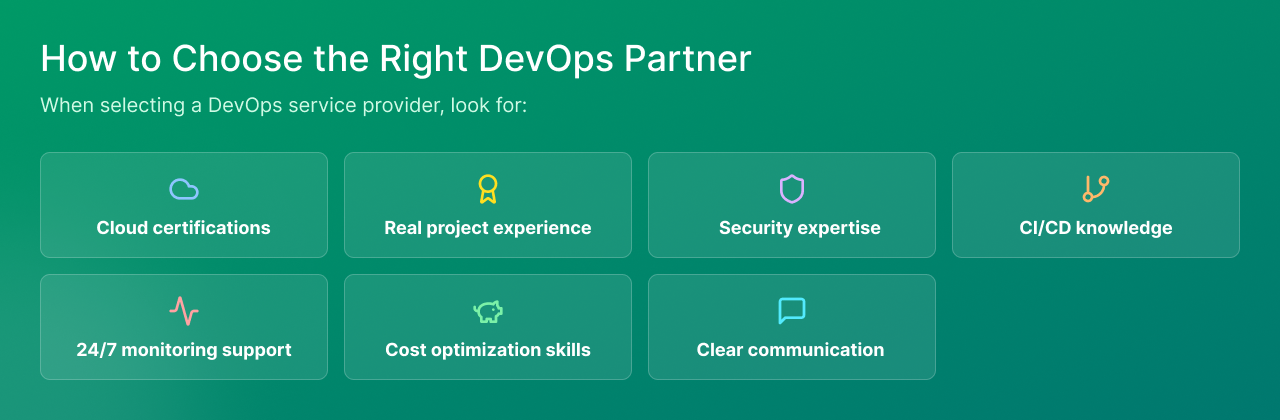
When selecting a DevOps service provider, look for:
- Cloud certifications
- Real project experience
- Security expertise
- CI/CD knowledge
- 24/7 monitoring support
- Cost optimization skills
- Clear communication
Common Mistakes Businesses Make
- Using too many tools at once
- Ignoring security
- No backup strategy
- Manual deployments
- No monitoring setup
- No cost control on cloud resources
Benefits of the Right DevOps Setup
A proper DevOps strategy can help your business:
- Release faster
- Reduce downtime
- Improve security
- Lower infrastructure cost
- Scale confidently
- Improve customer experience
Why Choose KIS Works for DevOps Services
At KIS Works, we help businesses modernize infrastructure and streamline software delivery with tailored DevOps solutions.
Our services include:
- CI/CD Pipeline Setup
- AWS / Azure DevOps
- Kubernetes Deployment
- Infrastructure as Code
- Cloud Migration
- Security Automation
- Monitoring & Optimization
Final Thoughts
There is no one-size-fits-all DevOps stack.
The right DevOps tools depend on your business model, product complexity, growth stage, and budget.
Start simple, automate the right processes, and scale gradually.
Businesses that invest in DevOps today move faster, innovate quicker, and stay more competitive.