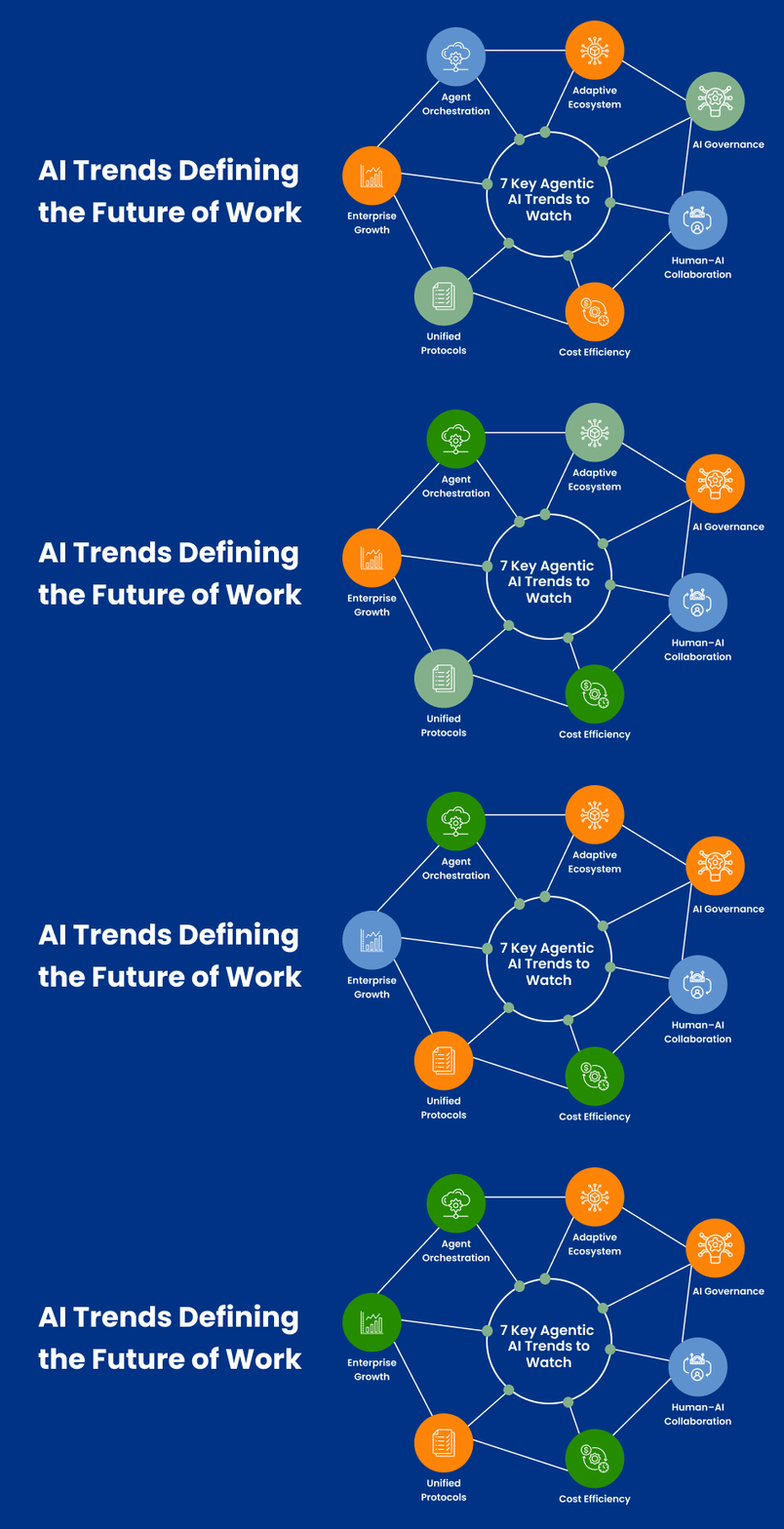
Artificial Intelligence in 2026 isn’t just a tech buzzword anymore it’s becoming a real work partner for businesses, teams, and professionals. From writing and research to customer support and automation, AI is changing how we work, how we communicate, and how fast we can execute tasks.The best part? You don’t need to be a developer to start using AI effectively.In this blog, we’ll explore the top AI trends defining 2026, how they’re shaping the future of work, and what you can do to stay ahead.
1. AI Model Performance Is Becoming More Similar in 2026
A few years ago, people were constantly comparing AI tools to find the “best one.” But in 2026, the performance gap between major AI models will become much smaller.
Most leading models can now generate high-quality content, analyze data, summarize documents, and support business tasks at a similar level. This means the real difference isn’t the tool, it’s the implementation.
What You Should Do Next
Choose an AI model based on your business needs, such as:
- pricing and scalability
- speed and output quality
- integrations (CRM, Google Workspace, email tools, etc.)
- security and data privacy
2. The AI Race Has Shifted from “Best Technology” to “Best Use Cases”
In 2026, AI companies are no longer competing only on technical power. The real competition is now about:
- trust
- adoption
- user experience
- real business outcomes
AI success today depends on how well it fits into your workflow, not just how advanced it looks.
What You Should Do Next
Instead of starting with “Let’s use AI,” start with:
“What problem do we want to solve?”
Then apply AI to improve that process—step by step.
3. AI Is Redefining Work by Automating Enterprise Workflows
One of the biggest AI trends shaping the future of work in 2026 is workflow automation. AI is no longer limited to content writing or chatbots; it’s now improving how businesses operate internally.
Organizations are using AI to:
- reduce manual workload
- speed up reporting and documentation
- cut errors in repetitive tasks
- improve customer support performance
AI isn’t replacing people—it’s helping people do more valuable work by removing repetitive tasks.
What You Should Do Next
Start with one workflow that feels slow or repetitive, such as:
- customer query replies
- follow-up emails
- lead qualification
- internal reporting
Test AI there first, measure results, then scale it.

4. AI Is Empowering Non-Technical Teams to Work Faster and Smarter
In 2026, AI is making work easier for everyone—not just technical professionals.
Marketing teams are creating better content faster. Sales teams are writing stronger outreach messages. HR teams are streamlining hiring tasks. Even small business owners are using AI like a productivity assistant.
What You Should Do Next
Train your team to use AI for everyday work like:
- emails and proposals
- social media content planning
- meeting summaries
- customer support templates
quick research and idea generation
5. Organized Data and AI “Lock-In” Will Decide Productivity
Here’s a simple truth: AI works best when your information is organized.
If your documents are scattered across WhatsApp, email, Google Drive, and random folders, AI can’t support your workflow properly. Poor file management slows everything down and reduces AI’s impact.
Businesses that organize their data will get faster and more accurate AI results.
What You Should Do Next
Build a basic structure for your business files:
- folders by department (Sales, HR, Marketing, Operations)
- clear file naming rules
- one central workspace
- monthly data clean-up
This small step can improve AI performance instantly.
6. AI in Advertising Is Becoming Trust-Based (And AI Is Expanding Beyond Software)

AI is changing marketing and advertising quickly. In 2026, businesses are using AI to:
- test ad creatives faster
- optimize targeting
- improve campaign reporting
- personalize content without sounding robotic
But consumers are also becoming smarter. People don’t trust “pushy ads” anymore. The future of AI advertising is shifting toward trust-first messaging, helpful content, and long-term brand value.
At the same time, AI is moving beyond screens and software. The world is getting closer to AI-powered automation systems and robotics that can improve safety, efficiency, and real-world operations.
That’s why responsible AI development and ethical AI use matter more than ever.
What You Should Do Next
If you’re using AI in marketing, keep it human:
- focus on value, not pressure
- build trust through proof (reviews, results, case studies)
- create content that helps, not just sells
- use AI to optimize, not to spam
Conclusion: AI in 2026 Is About Smart Implementation
AI is evolving fast, but success in 2026 won’t come from simply “using AI.” It will come from using it in a way that improves real workflows and creates real results.
The future of work belongs to businesses and professionals who:
- adopt AI early
- train teams properly
- organize data smartly
- focus on trust and real outcomes
FAQs: Artificial Intelligence Trends in 2026
What are the top AI trends defining 2026?
The biggest AI trends include AI model convergence, practical AI use cases, enterprise workflow automation, non-technical AI adoption, organized data management, and AI-driven advertising.
How is AI changing the future of work in 2026?
AI is reducing repetitive tasks, improving productivity, enabling faster decisions, and allowing teams to focus on high-value work instead of manual processes.
Which AI model is best in 2026?
Most AI models are now similar in performance. The best choice depends on pricing, integrations, ease of use, and your business needs.
Can non-technical teams use AI tools effectively?
Yes. In 2026, AI tools are designed to help marketers, sales teams, HR teams, and business owners work faster without coding knowledge.
How can businesses start implementing AI in 2026?
Start small by choosing one workflow to improve, test AI in that area, track results, and scale it across departments.
Ready to Implement AI for Your Business in 2026?
Ready to take the next step with AI in 2026? Book a Free AI Strategy Call with our team and discover how AI can actually fit into your business goals. Whether you want to get AI automation for your business to save time, reduce manual work, and improve productivity or you’re looking to build AI agents for your industry that can handle customer support, lead management, reporting, and operations we’ve got you covered. Let’s create a smart, scalable AI solution that delivers real results.