Today, people are becoming more comfortable asking complete questions. Instead of searching for “CRM software,” a business owner might ask, “What type of CRM should a small B2B company use if the sales team needs lead tracking, WhatsApp follow ups and simple reporting?” That question contains much more information about the user’s situation. It tells us what the person needs, what kind of business they have and what problem they are trying to solve.
The growth of ChatGPT, Gemini, Perplexity and Google’s AI search experiences has made this style of searching more common. People can ask a question, read an answer and continue with another question without starting the search from the beginning. Search is becoming more conversational, and this is changing the way businesses need to think about content.
Search Is Becoming More Conversational
Traditional search usually started with a few important words. Someone looking for software development services might type “software development company India.” Someone researching ERP might search for “ERP software for manufacturing.”
Now the same person may ask something much more specific.
“What should a small manufacturing company check before choosing an ERP system for inventory, production and finance?”
The second query provides considerably more context. A useful answer needs to understand manufacturing operations, explain the relevant ERP features and address the practical concerns involved in selecting a system.
This is where content quality becomes important. A page that repeatedly uses the phrase “ERP software for manufacturing” may technically target the keyword, but that alone does not make the page useful. A stronger article would explain how ERP works, what departments it can connect, what information businesses should prepare before implementation, what problems can occur and what questions should be asked before choosing a system.
The keyword is still useful. It simply becomes one part of a much larger picture.
Keywords Still Matter
There is a lot of discussion around the idea that AI search will make keywords irrelevant. That is not really the case.
Search engines still need to understand what a page is about. They still need to discover websites, interpret their content and determine which information is relevant to a particular search. Technical SEO, internal links, page structure, content quality and website accessibility continue to matter.
The bigger change is the amount of context surrounding a search.
Consider the phrase “AI integration.” It could mean adding an AI chatbot to a website. It could mean connecting an AI model with an existing CRM. It could involve adding AI capabilities to an ERP system or creating an internal assistant that can search company documents.
A single keyword cannot explain all these requirements.
Instead of creating one generic page and repeatedly using the same phrase, businesses can build useful content around the different problems connected with the topic. They could explain how AI can be integrated with existing CRM software, how AI APIs work with .NET applications, how company data can be protected and when an AI agent makes sense compared with a simple automated workflow.
This approach gives search engines more context and gives readers information they can actually use.
Search Intent Matters More Than Ever
Search intent has always been important in SEO. AI search makes it even more important because users can explain exactly what they want.
Someone searching for “website development company” may be looking for a service provider. Someone searching for “how much does it cost to build a business website in India” is researching pricing. Another person searching for “WordPress or custom website for a B2B company” is comparing two different approaches.
All three searches relate to website development, but the person behind each search needs a different type of information.
This is why content planning should start with the problem rather than just the keyword. Before creating an article, it is worth asking what the reader wants to know, what decision they are trying to make and what information could help them move forward.
When the content answers those questions properly, the article becomes useful beyond its ranking potential.

Understanding SEO, AEO and GEO
SEO stands for Search Engine Optimization. It covers the broader process of improving a website so search engines can discover, understand and rank its pages.
AEO stands for Answer Engine Optimization. It focuses more heavily on providing clear answers to questions that people ask through search.
GEO is commonly used for Generative Engine Optimization. It refers to improving the chances of a business or its content being understood and potentially referenced within AI generated search experiences.
These areas overlap considerably. A business does not necessarily need three completely different content strategies.
A well researched article with clear information, strong topical coverage, useful examples and good technical foundations can support traditional search as well as conversational and generative search.
The important part is not simply adding terms such as AEO or GEO to a content plan. The important part is creating information that can be understood by both people and search systems.
Give the Answer Early
The way an article begins can make a significant difference.
Many older articles spend several paragraphs introducing a subject before answering the question that brought the reader to the page. That approach is not always helpful when someone has a specific problem.
Imagine a reader asking, “Can AI be added to an existing CRM without replacing the CRM?”
The article should address that question early.
In many cases, AI can be added to an existing CRM without replacing the entire system. The actual method depends on the CRM’s API capabilities, available data, authentication methods, existing workflows and the AI functionality the business wants to introduce.
The rest of the article can then explain the different integration methods, security considerations, examples and possible limitations.
This structure is useful because the reader gets the main answer quickly and can continue reading when they need more detail.
Topical Depth Is More Useful Than Keyword Repetition
A good article should cover the important parts of the subject instead of repeating the same keyword in different sentences.
For example, an article about AI integration with an ERP system may need to discuss APIs, data access, authentication, user permissions, security, existing workflows, model selection, monitoring and cost.
There is no need to repeat “AI integration with ERP” in every paragraph.
Search systems are becoming better at understanding relationships between different concepts. When an article naturally discusses databases, APIs, security, employee permissions and business workflows, it gives more context about the subject.
Readers benefit from this as well. Someone considering an ERP integration will probably want to know what happens to existing data, who can access AI generated information and how employees remain involved in important decisions.
Those are the details that make an article worth reading.
Structured Data Still Has a Role
Structured data helps search engines understand what a webpage represents.
Depending on the type of content, a website may use Article, FAQPage, BreadcrumbList, Organization, Product or LocalBusiness structured data.
However, structured data should not be treated as a shortcut to AI visibility.
Adding FAQ schema does not guarantee that an AI system will mention a website. Adding Article schema does not automatically make an article rank better. Structured data supports the technical understanding of a page, but it cannot replace useful information.
The markup should also accurately represent the content visible on the page. Adding irrelevant information simply to create more structured data can create problems rather than solving them.
Technical SEO Still Matters
The growth of AI search does not make technical SEO less important.
If important pages cannot be crawled, if indexing is not working correctly, if canonical signals are confusing or if internal links make important pages difficult to discover, publishing more content will not fix the underlying problem.
Website performance also matters. Large images, unnecessary scripts, poor caching and inefficient website code can affect how quickly a page becomes usable.
This becomes even more important for larger websites with hundreds or thousands of pages. Search engines need a clear structure to discover and understand those pages.
AI search may change how information is presented, but it still needs accessible and understandable information sources.
Brand Authority Is Becoming More Important
AI search has also created another important consideration for businesses.
When an AI system creates an answer, it may combine information from several sources. A business therefore needs more than a single page targeting an important keyword.
For a software company, publishing one general article about artificial intelligence does not demonstrate much depth. A stronger content presence could include technical guides, implementation examples, case studies, documentation and detailed articles covering specific business problems.
Over time, these resources create a broader body of information around the company’s expertise.
There is no guarantee that an AI system will reference a particular business. Different platforms use different systems and their results can change. However, a company that consistently publishes useful and specific information has more opportunities to become a relevant source for questions related to its area of expertise.
Zero Click Searches Are Changing the Traffic Journey
AI generated answers have increased discussion around zero click searches. A user may receive enough information directly from a search experience and decide not to visit another website.
This can reduce traffic for some types of informational searches.
But not every search can be satisfied with a short answer.
Someone researching a software development company may still want to see its services, previous projects, technical capabilities, client information and contact options. Someone researching an ERP system may want to compare solutions, understand implementation requirements and speak with a provider.
This creates an important distinction for content teams.
Some content should provide quick answers. Other content should give people a reason to explore further.
A basic definition might be enough for a search result. A detailed implementation guide can encourage a serious reader to visit the website because the information requires more context.
The goal is not simply to avoid zero click searches. The goal is to create content that is useful at different stages of the buying journey.
Mistakes Businesses Should Avoid
One common mistake is taking an old SEO article, adding the word “AI” to the title and assuming that the content is now suitable for AI search.
Changing the title does not change the quality of the information.
Another problem is publishing a large number of shallow articles simply because AI tools make content production faster. Twenty articles that all provide almost the same information do not necessarily create more authority than a smaller collection of detailed resources.
Focusing too heavily on exact keyword matches can also limit the content strategy. People can describe the same problem in many different ways, particularly when they use conversational search.
There is also no reason to add an FAQ section to every page simply because FAQs are associated with AI search. Questions should be included when they genuinely help the reader.
Most importantly, businesses should not forget the person reading the page. Search technology keeps changing, but useful information, accurate explanations and practical advice remain valuable.
Building a Practical Strategy
A good AI search strategy can start with the website a business already has.
Review the pages that currently receive organic traffic. Look for content that has lost visibility, outdated information, weak explanations and subjects that are important to customers but poorly covered.
Then look beyond individual keywords.
For every major service or business topic, think about the questions a potential customer might ask before making a decision. A software development company, for example, may need content about technology selection, development costs, security, integrations, maintenance and implementation timelines.
Those questions can become a connected collection of useful resources.
Internal links can connect related articles and service pages. A technical guide can link to a relevant service page. A comparison article can link to supporting explanations. A case study can demonstrate how a particular problem was handled.
Over time, the website becomes more than a collection of pages created for individual keywords. It becomes a useful information source around the problems the business actually solves.
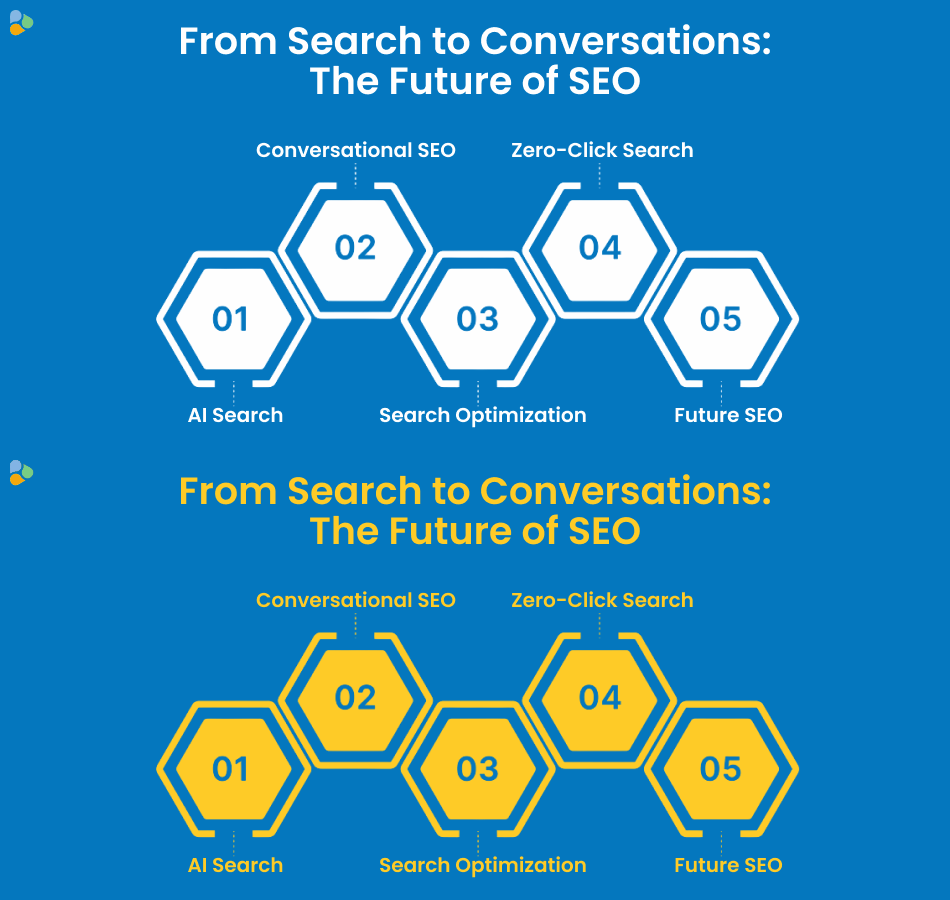
The Future of SEO Is More Conversational
The biggest change in SEO may not simply be the introduction of AI into search. It is the way people are becoming comfortable explaining what they want in normal language.
A person can describe a problem, provide additional details, ask a follow up question and compare possible solutions without starting a completely new search.
Content needs to work within that kind of journey.
Traditional SEO is not disappearing. Keywords still provide useful information. Technical SEO still matters. Internal links still help search engines discover content. Search rankings and organic traffic remain important business metrics.
What is changing is the level of context expected from useful content.
Businesses need to understand the questions behind the keywords. They need to explain subjects properly, provide specific examples, support important claims and create resources that answer real customer problems.
AI search may change the way people discover information, but it does not remove the need for good information.
The future of SEO is therefore not simply about moving from keywords to AI. It is about moving from isolated keyword targeting toward content that understands the conversation behind a search.
When businesses start creating content around real questions, real problems and real decisions, their websites become useful whether the visitor arrives through a traditional search result, an AI generated answer, a recommendation or a direct search for the brand.