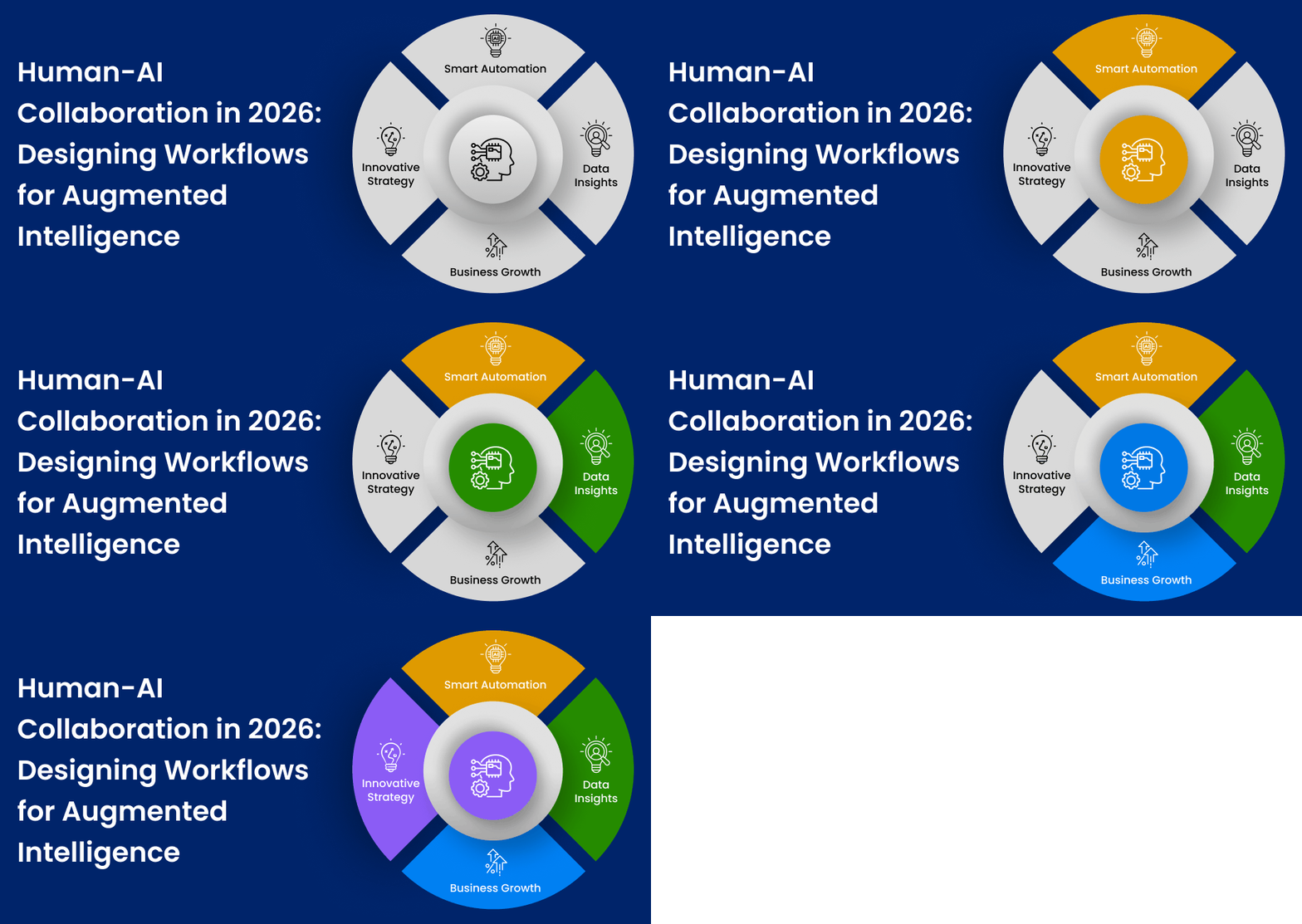
The future of work is not about humans vs machines, it’s about humans working with AI.
In 2026, businesses are rapidly shifting from automation-only systems to augmented intelligence, where human creativity and AI capabilities combine to deliver faster, smarter, and more scalable outcomes.
From marketing and healthcare to manufacturing and software development, Human-AI collaboration is redefining how workflows are designed, optimized, and executed.
In this blog, we’ll explore:
- What Human-AI collaboration means
- Why it matters in 2026
- How to design effective AI-powered workflows
- Real-world use cases
- Best practices for implementation
What is Human-AI Collaboration?
Human-AI collaboration refers to a working model where:
- Humans provide context, creativity, and decision-making
- AI provides data processing, automation, and predictive insights
Instead of replacing humans, AI enhances human capabilities, leading to better outcomes this is called augmented intelligence.
Why Human-AI Collaboration Matters in 2026
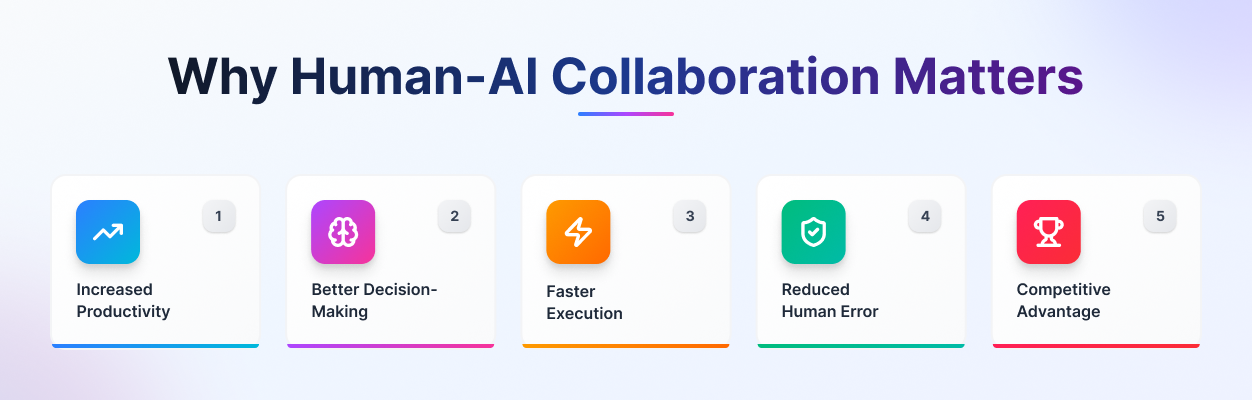
1. Increased Productivity
AI handles repetitive tasks, allowing teams to focus on high-value work.
2. Better Decision-Making
AI analyzes large datasets quickly, enabling data-driven decisions.
3. Faster Execution
Tasks that once took hours can now be completed in minutes.
4. Reduced Human Error
AI minimizes manual mistakes in data-heavy processes.
5. Competitive Advantage
Businesses adopting AI workflows are outperforming traditional competitors.
Key Components of Augmented Intelligence Workflows
Designing effective Human-AI workflows requires understanding these core components:
1. Data Layer
- Data collection from multiple sources
- Clean and structured datasets
- Real-time data processing
2. AI Layer
- Machine learning models
- Predictive analytics
- Natural language processing
3. Human Layer
- Strategic thinking
- Ethical decision-making
- Creativity and innovation
4. Interaction Layer
- Dashboards
- AI copilots
- Automation tools
How to Design Human-AI Workflows (Step-by-Step)
Step 1: Identify Repetitive Tasks
Start by analyzing workflows and identifying:
- Time-consuming processes
- Manual tasks
- Data-heavy operations
Step 2: Define Human vs AI Roles
Clearly assign responsibilities:
- AI → automation, analysis
- Human → decision-making, validation
Step 3: Choose the Right AI Tools
Select tools based on your needs:
- Chatbots for customer service
- Predictive analytics tools
- Workflow automation platforms
Step 4: Integrate AI into Existing Systems
Ensure seamless integration with:
- CRM systems
- ERP platforms
- Marketing tools
Step 5: Build Feedback Loops
Humans should continuously:
- Review AI outputs
- Provide corrections
- Improve system accuracy
Step 6: Monitor Optimize
Track performance using KPIs like:
- Efficiency gains
- Error reduction
- ROI
Real-World Use Cases of Human-AI Collaboration
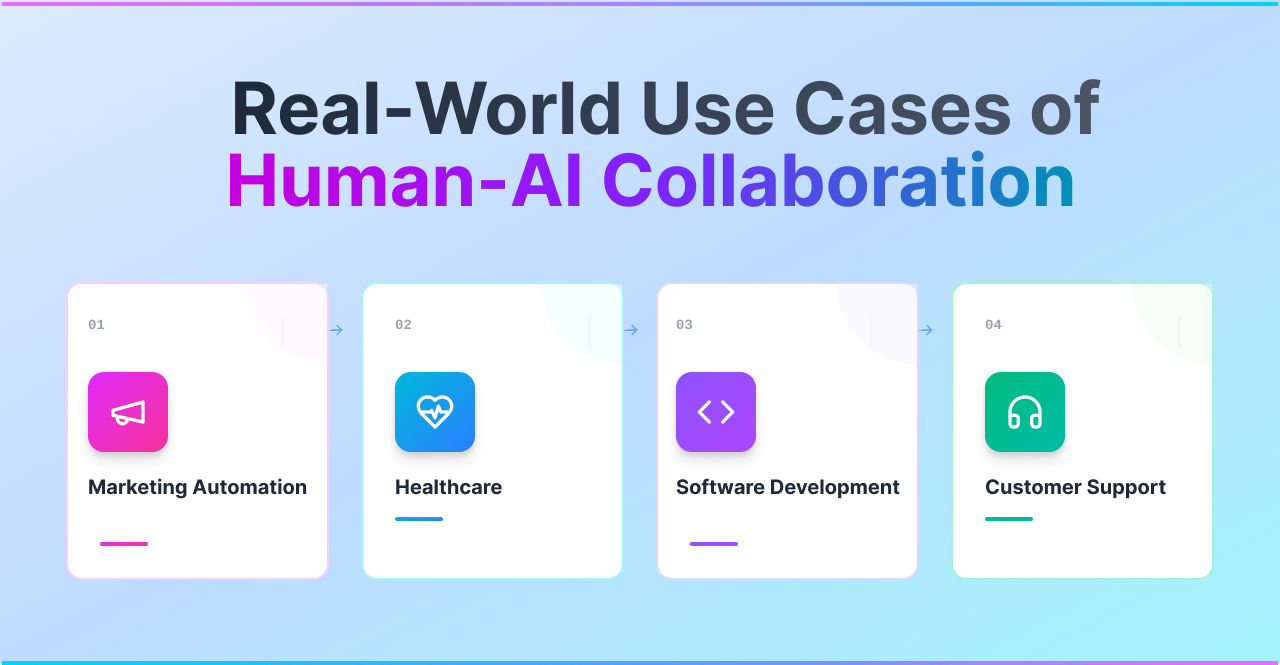
1. Marketing Automation
AI:
- Analyzes customer behavior
- Suggests content ideas
Humans:
- Create strategy
- Refine messaging
Healthcare
AI:
- Detects patterns in patient data
- Predicts diseases
Humans:
- Diagnose
- Provide treatment
Software Development
AI:
- Generates code snippets
- Detects bugs
Humans:
- Architect systems
- Ensure quality
Customer Support
AI:
- Handles FAQs
- Provides instant responses
Humans:
- Manage complex queries
- Build relationships
Challenges in Human-AI Collaboration
Despite its advantages, there are challenges:
1. Data Privacy Concerns
Handling sensitive data requires strict compliance.
2. Skill Gaps
Employees need training to work effectively with AI.
3. Over-Reliance on AI
Blind trust in AI can lead to poor decisions.
4. Integration Issues
Legacy systems may not support AI integration.
Best Practices for Successful Implementation
- Keep humans in the loop
- Start small and scale gradually
- Focus on user-friendly AI tools
- Ensure transparency in AI decisions
- Continuously train teams
Future Trends in Human-AI Collaboration
Looking ahead, we can expect:
- AI copilots in every business function
- Hyper-personalized customer experiences
- Real-time decision intelligence
- Increased adoption of generative AI
- Ethical AI governance frameworks
Conclusion
Human-AI collaboration in 2026 is not just a trend, it’s a necessity for businesses aiming to stay competitive.
By designing workflows that combine human intelligence with AI capabilities, organizations can unlock:
- Higher productivity
- Smarter decisions
- Scalable growth
At KIS Works, we help businesses design and implement AI-powered workflows tailored to their needs ensuring maximum ROI and long-term success.
FAQs (AEO Optimized)
1. What is augmented intelligence?
Augmented intelligence is a model where AI enhances human decision-making rather than replacing it.
How is AI used in workflows?
AI is used for automation, data analysis, predictions, and improving operational efficiency.
What industries benefit from Human-AI collaboration?
Industries like healthcare, marketing, finance, manufacturing, and IT benefit the most.
What are the risks of AI collaboration?
Risks include data privacy issues, over-reliance on AI, and lack of skilled workforce.
How can businesses start with AI workflows?
Start by identifying repetitive tasks, choosing the right tools, and gradually integrating AI into existing systems.