What Is an AI-Optimized Supply Chain?
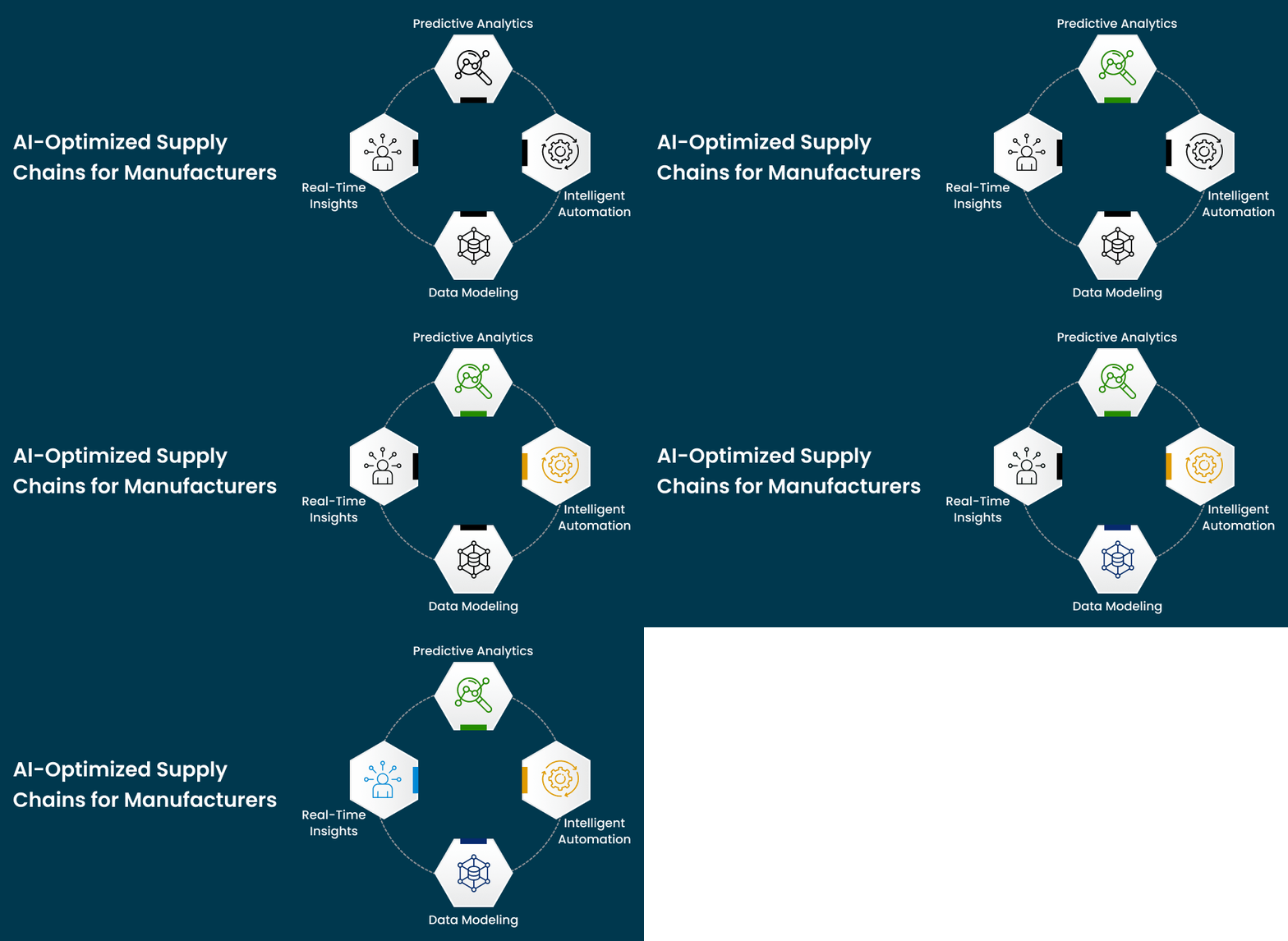
An AI-optimized supply chain uses advanced technologies such as:
- Machine Learning
- Predictive Analytics
- Intelligent Automation
- Data Modeling
- IoT Integration
These technologies analyze large volumes of data from production lines, warehouses, suppliers, and logistics networks to improve planning and execution.
Instead of reacting to problems, AI systems anticipate disruptions and recommend the best possible actions.
Why Manufacturers Are Turning to AI
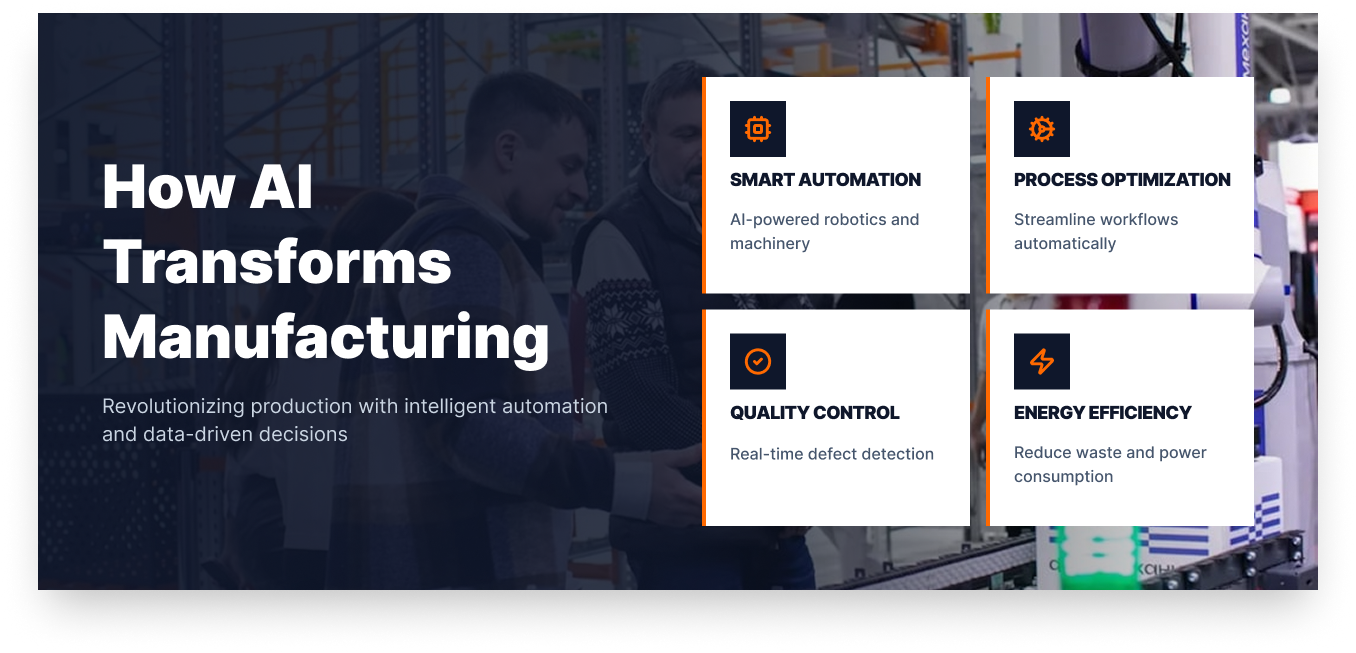
Traditional supply chains rely heavily on manual planning and historical data. In today’s volatile environment, that approach is no longer sufficient.
Manufacturers often struggle with:
- Inaccurate demand forecasts
- Excess or insufficient inventory
- Supplier disruptions
- Production downtime
- Limited operational visibility
AI helps convert raw data into actionable insights, enabling faster and more accurate decisions.
Key Areas Where AI Creates Impact
1. Accurate Demand Forecasting
AI analyzes historical sales, seasonal patterns, market trends, and external factors to improve forecast accuracy.
Benefits:
- Reduced stockouts
- Minimized overproduction
- Better production scheduling
Intelligent Inventory Management
Maintaining optimal inventory levels is critical for cost control and customer satisfaction.
AI systems help:
- Predict optimal stock levels
- Automate replenishment
- Reduce excess inventory
- Lower carrying costs
This supports lean and efficient operations.
Predictive Maintenance
Unexpected equipment failure can disrupt production and delay deliveries.
AI monitors machine data to detect early warning signs of potential failures, allowing proactive maintenance scheduling.
Outcome:
- Reduced downtime
- Lower maintenance expenses
- Improved production reliability
Supplier Risk Monitoring
AI continuously evaluates supplier performance and external risk factors.
This enables manufacturers to identify potential disruptions early and take preventive action.
Logistics and Route Optimization
Transportation significantly affects overall supply chain cost.
AI improves logistics by:
- Optimizing delivery routes
- Reducing fuel consumption
- Improving shipment scheduling
- Enhancing delivery reliability
Business Benefits of AI-Driven Supply Chains
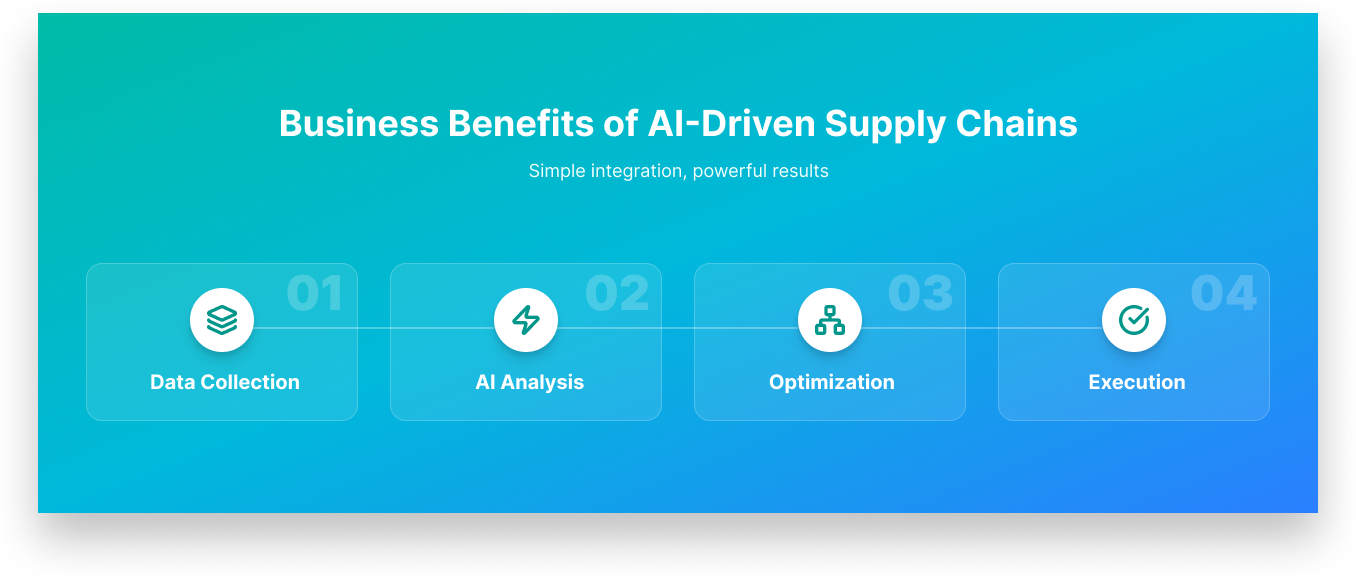
Manufacturers implementing AI solutions often experience:
- Reduced operational costs
- Improved forecasting accuracy
- Better on-time delivery performance
- Increased supply chain transparency
- Greater resilience during disruptions
AI not only reduces costs but also strengthens long-term competitiveness.
How to Start Implementing AI
A practical approach includes:
- Identifying high-impact areas such as forecasting or inventory
- Cleaning and centralizing supply chain data
- Starting with pilot projects
- Integrating AI with existing ERP systems
- Training teams for adoption
Gradual implementation ensures smoother transformation and measurable ROI.
The Future of Manufacturing Supply Chains
AI will continue to evolve supply chains into:
- Highly automated systems
- Self-adjusting planning environments
- Real-time risk management networks
- Sustainable and optimized ecosystems
Manufacturers who invest early in AI-driven supply chains will gain long-term operational and competitive advantages.
Frequently Asked Questions (FAQs)
1. What is AI in supply chain management?
AI in supply chain management refers to the use of artificial intelligence technologies to improve forecasting, inventory planning, logistics, supplier management, and overall operational efficiency through data-driven insights.
How does AI improve demand forecasting?
AI analyzes historical data along with real-time market signals, seasonal trends, and external factors. This improves forecast accuracy and reduces errors compared to traditional forecasting methods.
Is AI implementation expensive for manufacturers?
The initial investment may vary depending on scale and complexity. However, many manufacturers see strong ROI through reduced inventory costs, improved efficiency, and lower operational risks.
Can small and mid-sized manufacturers adopt AI?
Yes. AI solutions can be implemented in phases, starting with high-impact areas like forecasting or inventory management. Scalable platforms make AI accessible to businesses of all sizes.
How long does it take to implement AI in supply chains?
Implementation timelines depend on the scope of the project. Pilot projects can deliver measurable results within a few months, while full-scale transformation may take longer.
Does AI replace supply chain professionals?
No. AI supports decision-making by providing insights and automation. Human expertise remains essential for strategy, oversight, and complex decision-making.
Conclusion
AI-optimized supply chains are no longer a future concept — they are a strategic necessity for modern manufacturers.
By leveraging AI, businesses can improve accuracy, reduce costs, minimize risks, and build a more resilient supply chain.
The manufacturers that embrace intelligent transformation today will lead the industry tomorrow.