The retail industry is ever-changing and with this can come changes to customer buying habits, shopping trends, seasonal demands and market conditions. One of the largest issues for retailers is to manage stock and meet customer demand.
Too much stock can cause a problem as businesses can over buy and not have enough sales. Alternatively, not enough stock can leave you missing out on sales and leave customers unhappy.
Traditional methods of managing stock can involve using manual calculations and looking at previous sales reports. This can become complicated for retailers who manage thousands of products across multiple locations.
AI can help retailers analyse sales, predict customer demand, track stock and make smarter purchase decisions.
In this blog we’ll look at how AI can help retailers with forecasting demand and managing their stock, how it can be used, what benefits there are and how it can be used in the future.
What is AI Based Demand Forecasting uses AI and Machine Learning to predict how many products customers are likely to buy.
Unlike traditional methods, AI can analyse various factors including previous sales, customer behaviour, seasonal trends, promotions and market conditions.
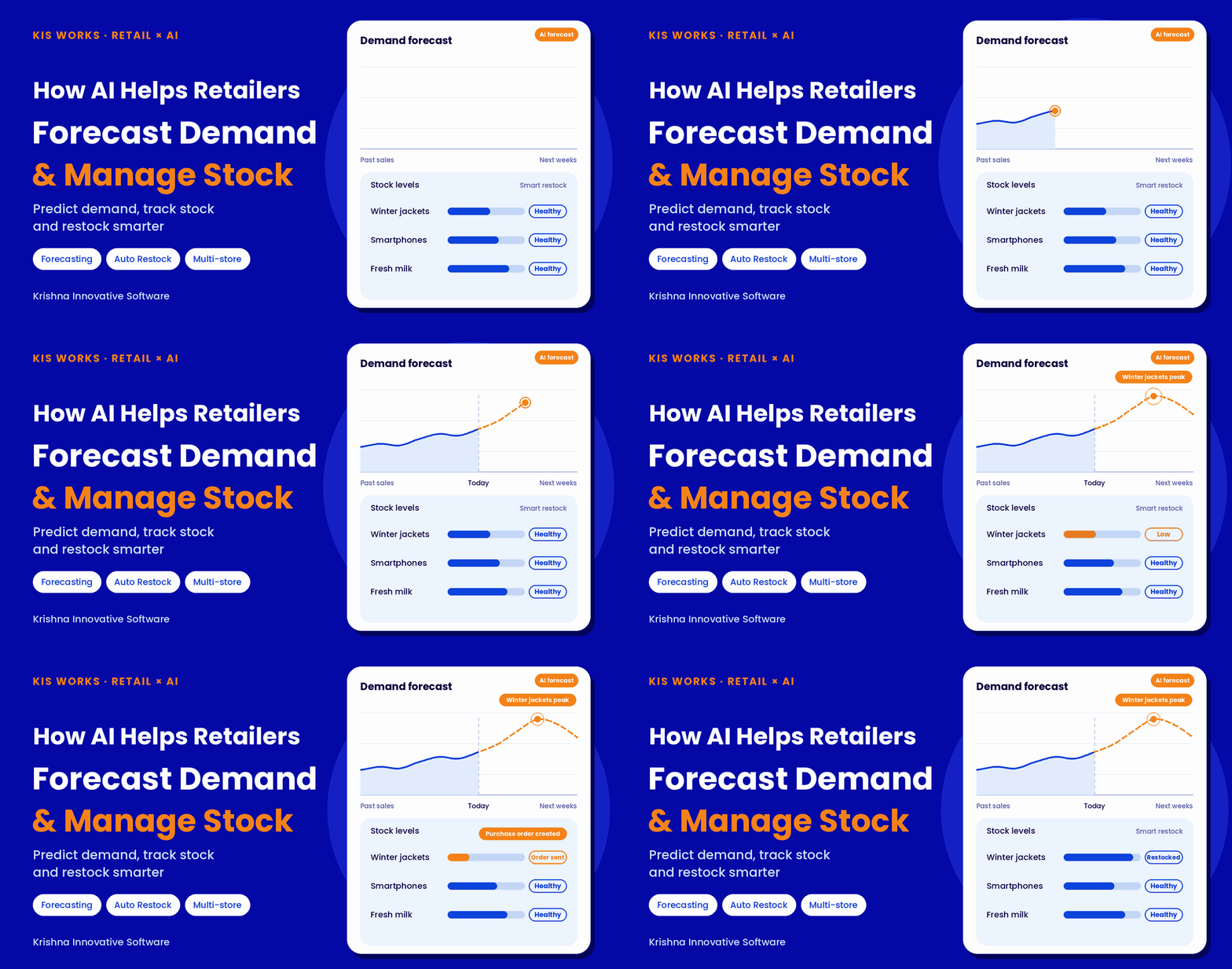
For example, an online clothing store can look at previous sales in the winter period and current shopping trends to help estimate how many jackets they should have in stock.
This will help retailers plan their stock and make smarter purchase decisions.
How AI Can Help Retailers Forecast Customer Demand
AI can help retailers understand what customers want and predict products that could see increased demand.
Identify Trends Using Previous Sales Data
AI will look at previous sales to see what trends are happening.
For example, a supermarket might find that some products sell more at the weekend. AI can pick up on these trends and help retailers to predict what sales will be like.
This can help plan stock.
Predict Seasonal Demand
Customer demand can often increase during festival periods, holidays and different seasons of the year.
For example, demand for Air Conditioners will increase during the summer and demand for winter clothing will increase during the colder months.
Using previous seasonal sales, current trends and external factors, AI can predict what the demand will be. This can help retailers plan their stock in advance.
Understand Customer Buying Behaviour
AI can look at customers purchase history, what they’ve browsed, searched for and purchased. This will help understand what they like to buy.
For example an online fashion retailer might find out that customers who buy formal shirts are also interested in formal trousers and shoes for work.
This can help businesses understand what products are popular and make smarter stock decisions.
Analyse Market Trends
Customer demand can change based on weather, competitor prices, market trends and customer preferences.
AI can look at external information and combine this with sales data to identify if there could be any changes to demand.
For example, if there is increased interest in fitness products then this could be an opportunity for retailers to plan extra stock.
This means businesses can make informed decisions.
How AI Can Help Retailers Manage Stock Efficiently
Forecasting demand can help retailers understand what they’ll need for customers in the future. AI can help manage stock by analysing stock, restocking and distributing products.
Keep Stock Levels Right
Having too much stock can increase your storage costs. However, not having enough stock can cause you to miss out on sales.
AI can analyse product demand, current stock levels and sales to recommend the right amount of stock.
For example, a grocery retailer can use AI to estimate how soon they’re likely to run out of a popular product and plan when to purchase.
Automate Restocking
Stock management systems powered by AI can analyse stock levels and identify any products that will need restocking.
For example, if the stock of a popular Smartphone in a retail store drops to a certain level then the system can alert the purchasing team or suggest they should place a new order.
Depending on the system, some of the restocking can be automated.
Reduce Over/Understocking
Overstocking can cause unnecessary storage costs. Understocking can cause you to miss out on sales.
AI can look at demand forecasting and stock information to identify products that may need more or less stock.
For example, if demand for a specific Laptop has dropped then AI can suggest reducing the amount they purchase in the future. Alternatively, if there is increased demand for another product then this may indicate they should have more stock.
Manage Stock Across Multiple Stores
Many retail businesses have multiple stores and can struggle with keeping stock levels even.
They may not have a product in one store but have too much stock in another.
AI can look at stock levels and demand in each store and suggest moving stock from one location to another rather than purchasing extra.
This will help businesses distribute their products.
Improve Stock Visibility
AI powered stock systems can work with barcodes, RFID and integrated software. For example, when a product is sold, integrated systems will automatically update the stock levels.
AI can analyse this information and identify any unusual changes in stock levels or potential issues with stock.
Real World Examples of Using AI to Manage Stock
Various types of retail businesses can use AI to help forecast demand and manage their stocks.
Grocery Stores/Supermarkets
Grocery stores have hundreds of products including fruit, vegetables, dairy products and pre-packed foods. AI can look at daily sales, expiry dates and seasonal demand to help estimate future demand.
Supermarkets can predict demand for milk, bread and fresh vegetables at the weekend. This can help reduce wastage.
Fashion & Clothing Retailers
Fashion trends and customer preferences change frequently. AI can look at previous sales, online searches and customer preferences to predict what designs, colours and sizes could be popular.
This can help clothing retailers make smarter purchase decisions and reduce leftover stock.
Electronics Retailers
Demand for Smartphones, Laptops and Televisions can change when new models are released or promotions are available. AI can look at previous sales, product releases and customer interest to estimate future demand.
Retailers can use this information to plan when to purchase.
E-Commerce Businesses
Online retailers have large amounts of products and receive orders from customers in different locations. AI can look at website traffic, customer searches, browsing behaviour and previous orders to identify products with increased demand.
This can help e-commerce businesses manage their warehouse stock.
Benefits of Using AI for Demand Forecasting and Stock Management
There are many benefits to implementing AI.
Improved Demand Forecasting
AI can identify sales trends and analyse various data sources to help make informed predictions about demand.
Reduce Stock Costs
AI can help prevent unnecessary purchases and reduce storage costs by suggesting the right amount of stock.
Reduce Stockouts
AI can identify products that may run out of stock and help retailers plan when to restock.
Increased Customer Satisfaction
Having more products available can help customers find what they need and make shopping easier.
Fast Decision Making
AI can quickly analyse large amounts of business data. This can help retailers make faster purchase and stock decisions.
Improved Warehouse Management
AI can help businesses understand how products are moving, where stock should be and what stock they’ll need. This can help make the warehouse more organised.
How AI Demand Forecasting and Stock Management Systems Work
AI driven solutions for retail often follow 5 key steps:
Collect Data
The system will collect data from sales, stock, customer purchases and supplier information.
Analyse Data
The AI algorithms will analyse the data to identify trends in purchases, seasonal trends and product performance.
Predict Demand
The system will estimate how much demand there will be for products within a specific timeframe, store and category.
Suggest Stock
The AI will compare the predicted demand with current stock and suggest restocking.
Continuously Update
As new sales information becomes available the predictions will be updated to help retailers plan their stock.
Things to Consider When Implementing AI
There are a few things to consider when implementing AI.
Data
If there is incomplete or inaccurate data then this could impact the forecast.
Integration
AI solutions should integrate well with your sales, accounts and stock systems.
Cost
There may be costs involved in building, setting up and maintaining the system.
Human Oversight
Retail managers should check the suggestions made by AI before making important purchase decisions.
Growth
The solution should help your business grow in the future. This could include more products, stores and warehouses.
Considering these factors will help you implement AI.
The Future of AI in Demand Forecasting & Stock Management
AI will continue to play an important role in the retail industry as businesses use more advanced digital solutions.
In the future, stock management systems will help predict demand in Real Time, automate purchasing, have intelligent warehousing and improve visibility of your supply chain.
AI agents can help retailers analyse sales reports, identify low stock products, suggest purchases and create summaries of their stock.
By combining AI with IoT devices, smart shelves and RFID you can improve the tracking of your stock and ensure products are available.
This will help reduce any manual tasks, improve efficiency and make smarter business decisions.
Conclusion
Managing demand and stock is an essential part of any retail business. Too much stock can increase costs and too little can cause you to miss out on sales and leave customers unhappy.
AI can help retailers overcome these issues by predicting demand, analysing customer behaviour, monitoring stock and suggesting restocking.
Many different types of retailers including supermarkets, fashion brands, electronics and e-commerce can use AI solutions to help manage their stock and improve everyday operations.
If you have accurate business data, the systems integrate well and you use the correct AI technology then you can move towards smarter stock management, improved customer experiences and more efficient business processes.
FAQs
How can AI help retailers predict demand?
AI can analyse previous sales, customer behaviour, seasonal trends and market conditions to predict how much demand there will be for products. This can help retailers plan their stock.
How can AI help retailers manage stock?
AI can monitor stock, predict demand, identify low stock products and suggest restocking. This will help keep the right amount of stock.
Can AI help reduce over and understocking?
Yes. AI can analyse sales trends and current stock to suggest the right amount of stock. This can help reduce overstocking and low stock.
Can small retailers use AI for stock management?
Yes. Small retailers can use AI solutions to monitor stock, analyse sales, predict demand and make smarter purchase decisions.
What data does AI use to predict demand for retailers?
AI can analyse previous sales, customer purchase history, product availability, website traffic, seasonal trends, promotions and supplier information.
Can AI automate restocking?
Yes. AI can identify products that need restocking, suggest how much to purchase and depending on the system some of the purchase orders can be automated.
What is the future of AI in stock management for retailers?
The future of AI will include Real Time demand forecasting, intelligent warehousing, AI agents, predictive analytics and IoT integration. This will help improve stock visibility and improve efficiency.