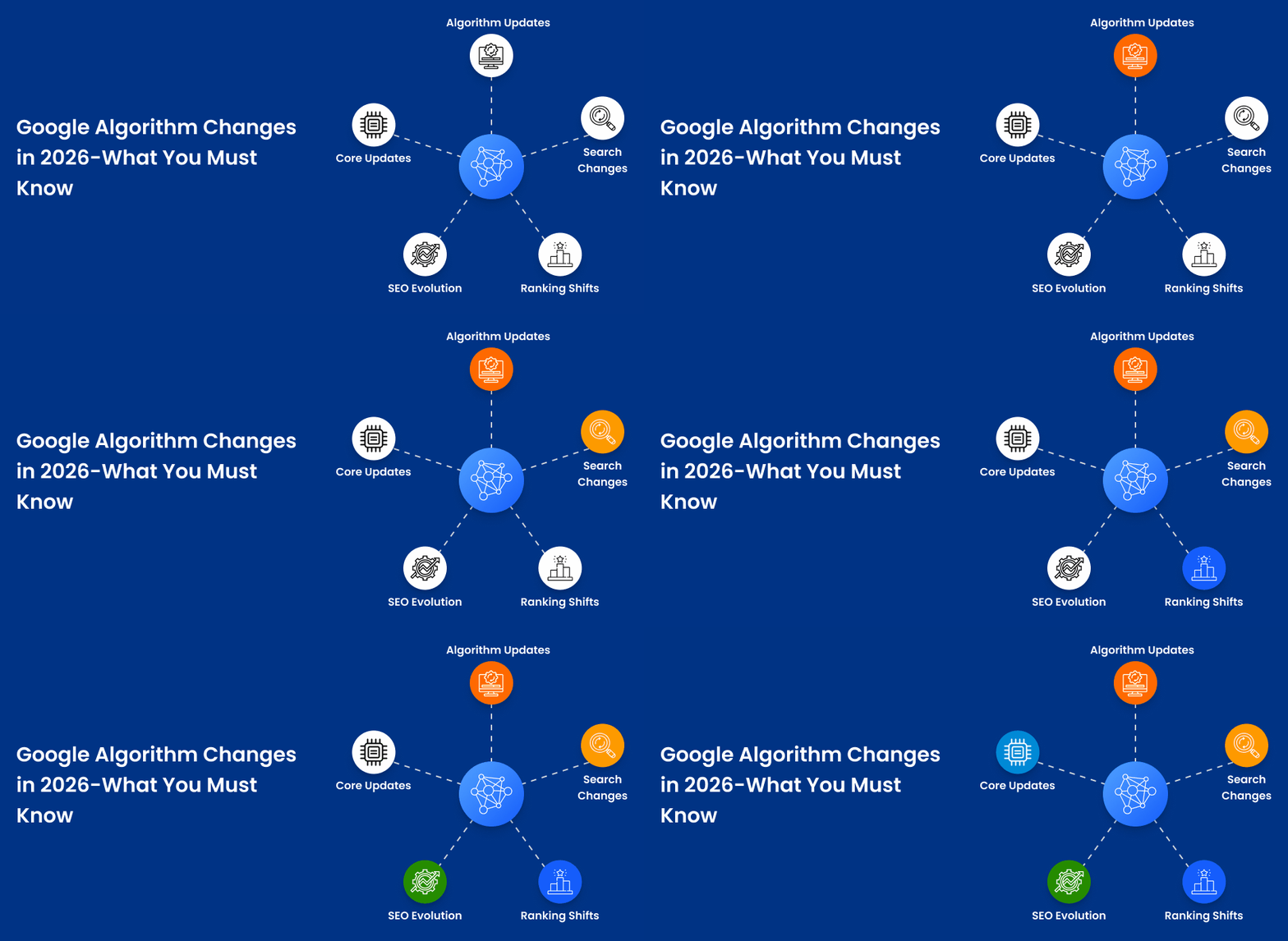
This complete guide will help you understand what changed, why it matters, and how to optimize your website for SEO, AEO (Answer Engine Optimization), and GEO (Generative Engine Optimization).
Understanding Google’s 2026 Algorithm Evolution
In 2026, Google continues to refine its AI-powered ranking systems. Search is becoming more conversational, predictive, and context-aware.
With the expansion of Google Search Generative Experience (SGE), users now receive AI-generated summaries directly on the search results page. Instead of clicking multiple links, users often find structured answers instantly.
This shift means your content must:
- Answer questions clearly
- Be factually accurate
- Demonstrate expertise
- Provide real value
Visibility now depends on quality and structure, not just keywords.
Major Google Algorithm Changes in 2026
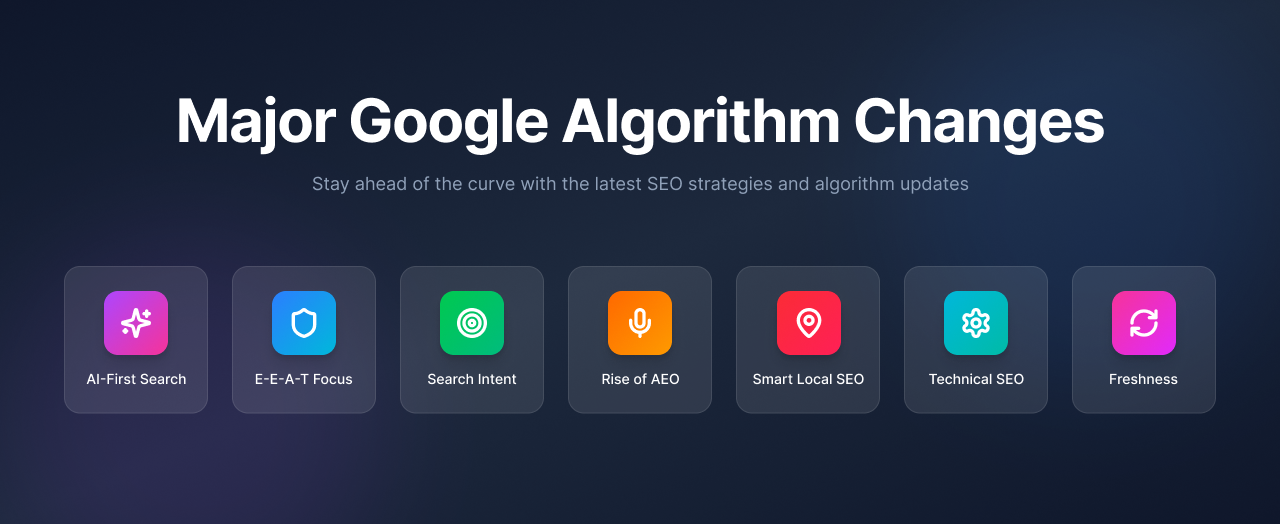
1. AI-First Search Results
AI summaries are becoming standard. Google pulls information from trusted, well-structured sources and displays direct responses.
What this means for websites:
- Clear headings improve visibility.
- Short, direct answers perform better.
- Well-organized content increases AI citations.
- Schema markup helps Google understand context.
Content that is confusing or unstructured struggles to appear in AI-driven results.
2. Stronger Focus on E-E-A-T
Experience, Expertise, Authoritativeness, and Trustworthiness (E-E-A-T) are stronger ranking signals in 2026.
Google evaluates:
- Does the content show real experience?
- Is the author credible?
- Is the information accurate and updated?
- Is the website trustworthy?
Generic AI-written content without insights or depth performs poorly. Real-life examples, case studies, and first-hand knowledge perform better.
3. Search Intent Over Keywords
Google’s understanding of intent has significantly improved.
Instead of asking:
“Does this page contain the keyword?”
Google asks:
“Does this page fully satisfy the user’s needs?”
To align with this update:
- Focus on problem-solving topics.
- Target long-tail queries.
- Add practical solutions.
- Reduce fluff and filler content.
User engagement signals like dwell time and bounce rate now influence rankings more strongly.
4. Rise of AEO (Answer Engine Optimization)
Answer Engine Optimization is essential in 2026 because search engines are becoming answer engines.
To optimize for AEO:
- Use clear question-based headings.
- Add concise definitions.
- Include FAQ sections.
- Use bullet points for clarity.
- Provide step-by-step guides.
Structured, easy-to-read content increases your chances of appearing in featured snippets and AI-generated summaries.
5. GEO (Generative Engine Optimization) Is the Future
GEO focuses on optimizing for AI systems that generate content-based responses.
AI models prefer:
- Well-structured content
- Clear explanations
- Fact-backed information
- Topical authority
To improve GEO performance:
- Build content clusters.
- Cover topics in depth.
- Use internal linking.
- Add schema markup.
- Keep content updated regularly.
Websites that build authority within a niche perform better in AI search environments.
6. Local SEO Is Smarter and More Competitive
Local search has become more refined. Businesses must actively manage their presence.
Your Google Business Profile plays a crucial role.
To stay competitive:
- Keep business information consistent.
- Post updates regularly.
- Collect genuine reviews.
- Add service descriptions.
- Use local keywords naturally.
Local authority and engagement directly influence rankings.
7. Technical SEO Remains Critical
Despite AI advancements, technical optimization is still essential.
Google prioritizes:
- Fast loading speeds
- Mobile-first design
- Secure HTTPS websites
- Optimized Core Web Vitals
- Clean URL structure
A technically weak website will struggle, even with strong content.
8. Content Freshness and Topical Authority
In 2026, websites that consistently update content and cover topics comprehensively gain higher trust.
Instead of publishing random blogs, build topical depth.
For example, if your niche is digital marketing:
- SEO guides
- Google algorithm updates
- Local SEO strategies
- AEO and GEO tutorials
- Case studies
Interlink these strategically to strengthen authority.
How to Adapt Your SEO Strategy in 2026
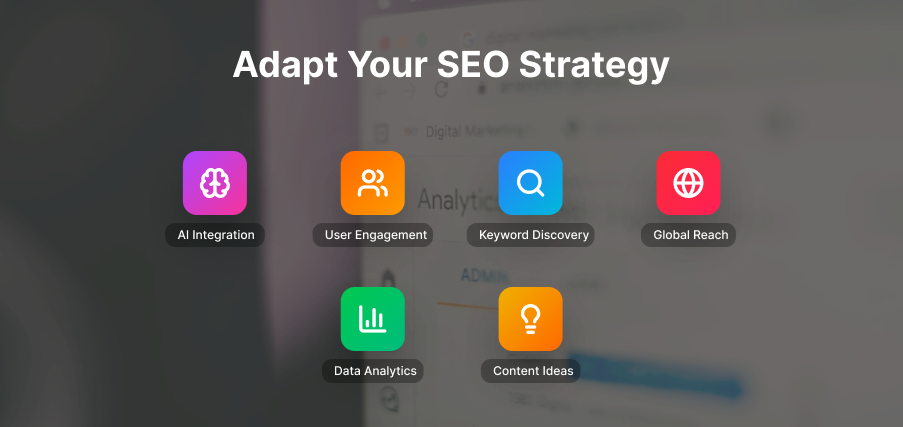
Here is a practical action plan:
1. Create Experience-Based Content
Add examples, data, and real-world insights.
2. Optimize for AI Readability
Use headings, short paragraphs, and structured formatting.
3. Build Topic Clusters
Cover one niche deeply instead of many topics lightly.
4. Improve Technical Health
Monitor speed, mobile usability, and site structure.
5. Update Old Content
Refresh statistics and improve outdated sections.
6. Focus on Trust Signals
Add author bios, contact details, and transparent information.
AEO-Friendly FAQ Section
What are Google algorithm changes in 2026?
Google algorithm changes in 2026 focus on AI-driven search, improved user intent understanding, stronger E-E-A-T signals, and structured content visibility. These updates reward helpful, trustworthy, and well-organized content.
How do AI search updates affect SEO?
AI search updates reduce reliance on traditional blue links and highlight summarized answers. Websites must structure content clearly to be featured in AI-generated responses.
What is the difference between SEO, AEO, and GEO?
- SEO focuses on ranking in search results.
- AEO optimizes content for direct answers and snippets.
- GEO optimizes content for AI-generated search systems.
All three work together in modern digital marketing.
Is keyword research still important in 2026?
Yes, but it should focus on search intent and long-tail queries rather than keyword density alone. Intent-driven content performs better than keyword-heavy pages.
How can I future-proof my website against algorithm updates?
- Publish high-quality content consistently.
- Maintain technical SEO health.
- Optimize for AI and structured answers.
- Build authority in your niche.
- Focus on user experience.
Final Thoughts
Google algorithm changes in 2026 confirm one major shift: search is becoming smarter, faster, and more user-focused.
Success now depends on:
- Creating helpful, experience-driven content
- Structuring information clearly
- Building authority and trust
- Optimizing for AI search systems
- Maintaining technical excellence
If your strategy combines SEO, AEO, and GEO effectively, you will not just survive future updates you will lead in your industry.
Search is evolving. The opportunity belongs to those who evolve with it.