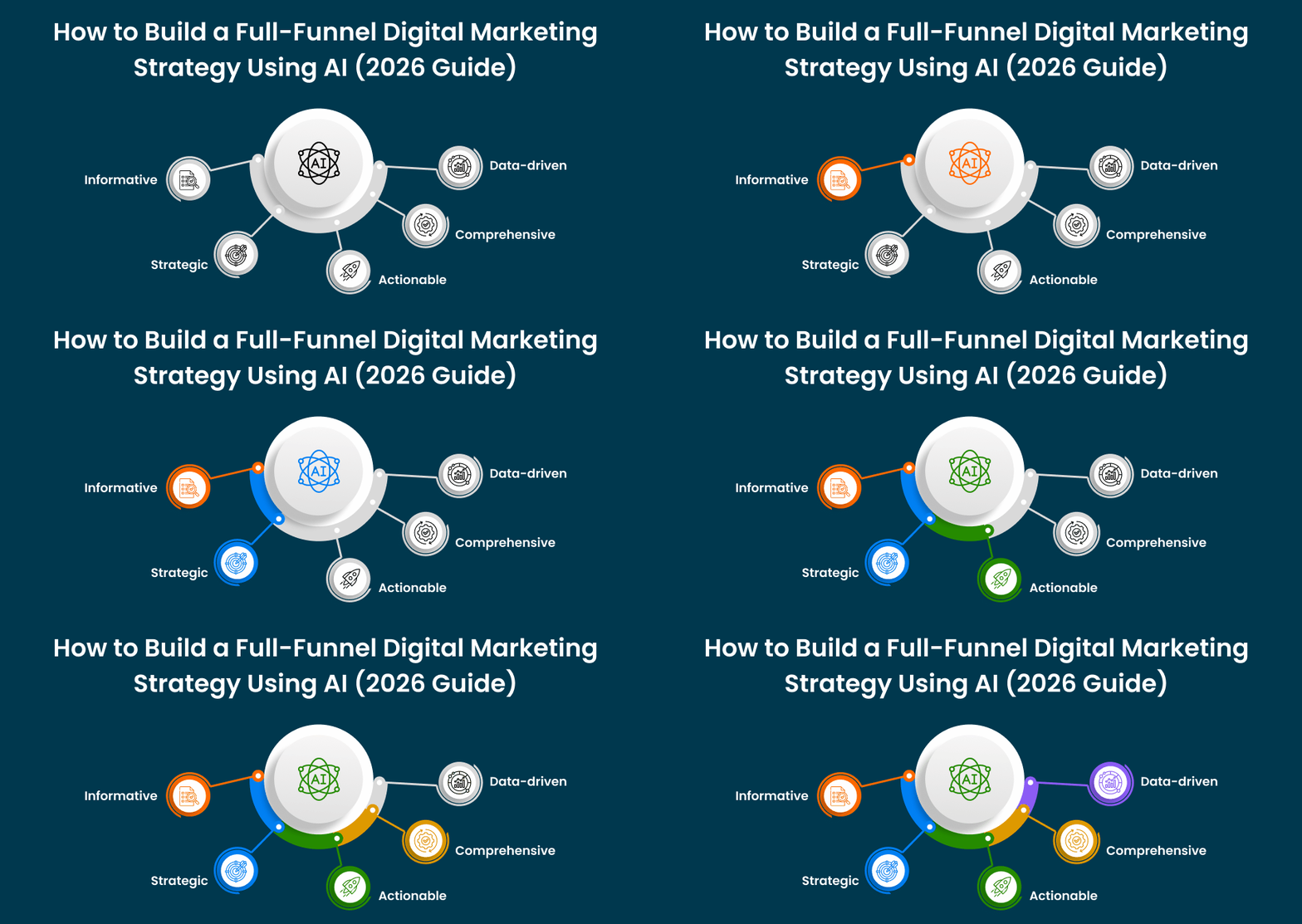
Artificial Intelligence (AI) is transforming digital marketing in 2026. Businesses are no longer relying on guesswork; they are using AI to automate workflows, personalize customer journeys, and maximize ROI.
A full-funnel digital marketing strategy using AI helps you target users at every stage of their journey from awareness to retention using data-driven insights and smart automation.
A full-funnel digital marketing strategy using AI integrates artificial intelligence across all stages of the marketing funnel awareness, consideration, conversion, and retention—to improve targeting, automate processes, and deliver personalized experiences that increase conversions and customer lifetime value.
What is a Full-Funnel Digital Marketing Strategy?
A full-funnel strategy focuses on guiding potential customers through four key stages:
- Awareness (TOFU): Attract new users
- Consideration (MOFU): Engage and nurture leads
- Conversion (BOFU): Turn leads into customers
- Retention: Build loyalty and repeat purchases
AI enhances each stage by enabling predictive analytics, automation, and personalization at scale.
Why Use AI in Digital Marketing?
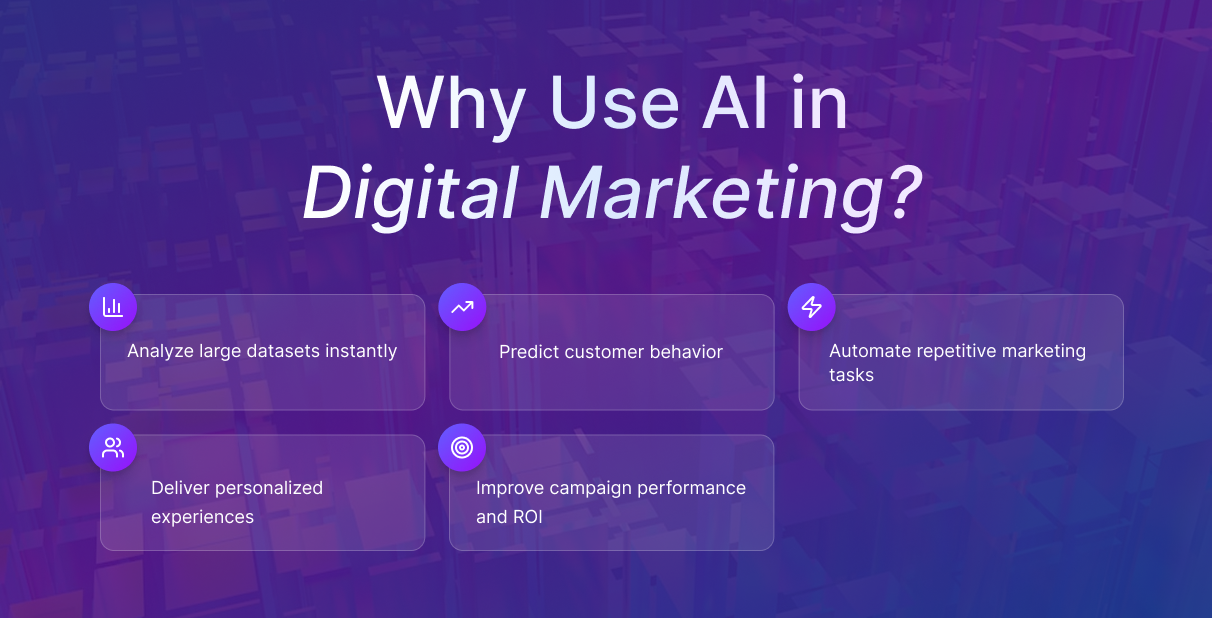
AI allows businesses to:
- Analyze large datasets instantly
- Predict customer behavior
- Automate repetitive marketing tasks
- Deliver personalized experiences
- Improve campaign performance and ROI
Businesses using AI in marketing often see 30–40% higher conversion rates.
Step-by-Step Guide to Building an AI Marketing Funnel
Awareness Stage (TOFU)
Goal:
Drive traffic and brand visibility
AI Strategies:
- Create SEO-optimized blog content using AI
- Use predictive keyword research tools
- Identify high-intent audiences
Example:
AI tools can analyze search trends and help you create content that ranks on Google and AI search engines.
Consideration Stage (MOFU)
Goal:
Engage and nurture potential customers
AI Strategies:
- Personalized email campaigns
- AI chatbots for real-time interaction
- Dynamic website content
Example:
AI recommends relevant products or services based on user behavior, increasing engagement.
Conversion Stage (BOFU)
Goal:
Convert leads into paying customers
AI Strategies:
- Predictive lead scoring
- AI-powered ad optimization
- Automated A/B testing
Result:
Higher conversions with reduced acquisition costs.
Retention Stage
Goal:
Increase customer lifetime value
AI Strategies:
- Behavior-based recommendations
- Automated follow-ups and feedback
- AI-powered CRM systems
Result:
Stronger customer relationships and repeat business.
Best AI Tools for Full-Funnel Marketing
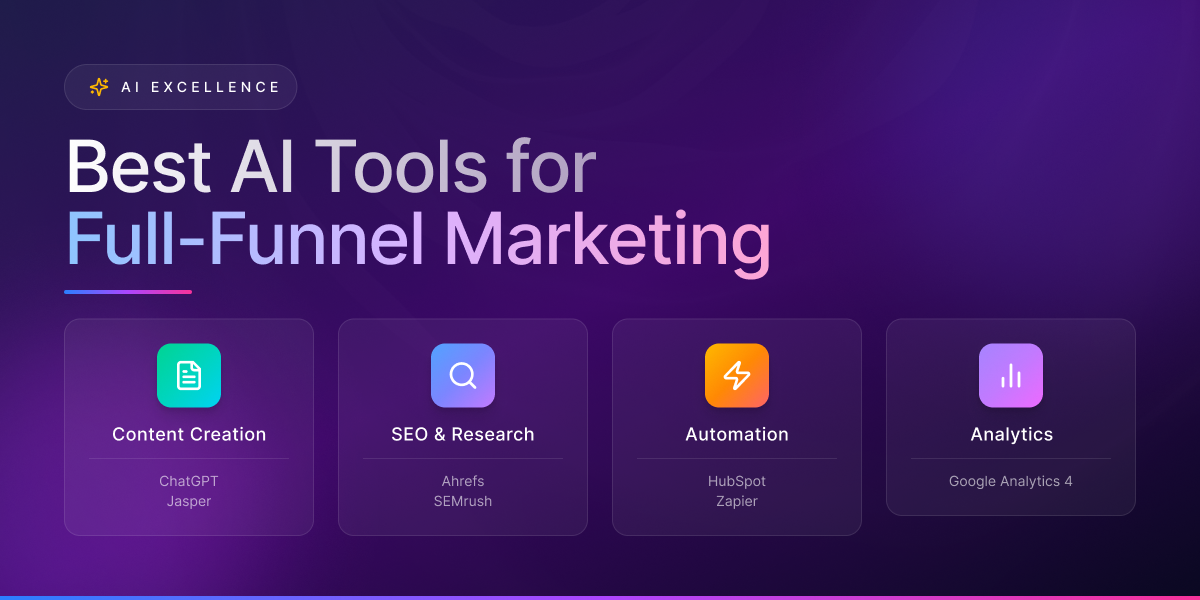
- Content Creation: ChatGPT, Jasper
- SEO & Research: Ahrefs, SEMrush
- Automation: HubSpot, Zapier
- Analytics: Google Analytics 4
Key Metrics to Track
| Funnel Stage | Metrics |
| Awareness | Traffic, Impressions, CTR |
| Engagement | Bounce Rate, Time on Site |
| Conversion | Conversion Rate, Cost per Acquisition |
| Retention | Customer Lifetime Value, Repeat Purchases |
Common Mistakes to Avoid
- Using AI without a clear strategy
- Ignoring data quality and insights
- Over-automating without human creativity
- Not optimizing content for AI search and SGE
Future of AI in Marketing
- AI-generated video and creative assets
- Voice and conversational search optimization
- Real-time personalization
- Predictive and autonomous marketing systems
Conclusion
Building a full-funnel digital marketing strategy using AI is essential in 2026. By integrating AI across awareness, engagement, conversion, and retention, businesses can create smarter campaigns, improve customer experiences, and achieve sustainable growth.
Frequently Asked Questions (FAQs)
What is a full-funnel digital marketing strategy?
A full-funnel strategy targets users at every stage of the customer journey, from awareness to retention, to maximize conversions and long-term value.
How does AI improve digital marketing?
AI improves marketing by automating tasks, analyzing data, predicting behavior, and delivering personalized experiences that increase engagement and ROI.
Which AI tools are best for marketing?
Popular tools include ChatGPT, SEMrush, Ahrefs, HubSpot, and Google Analytics for content, SEO, automation, and analytics.
What is the role of AI in the marketing funnel?
AI enhances every stage of the funnel by improving targeting, personalization, optimization, and customer retention through data-driven insights.
How can beginners start using AI in marketing?
Start with AI tools for content creation, SEO, and analytics, then gradually expand to automation and personalization across your marketing funnel.