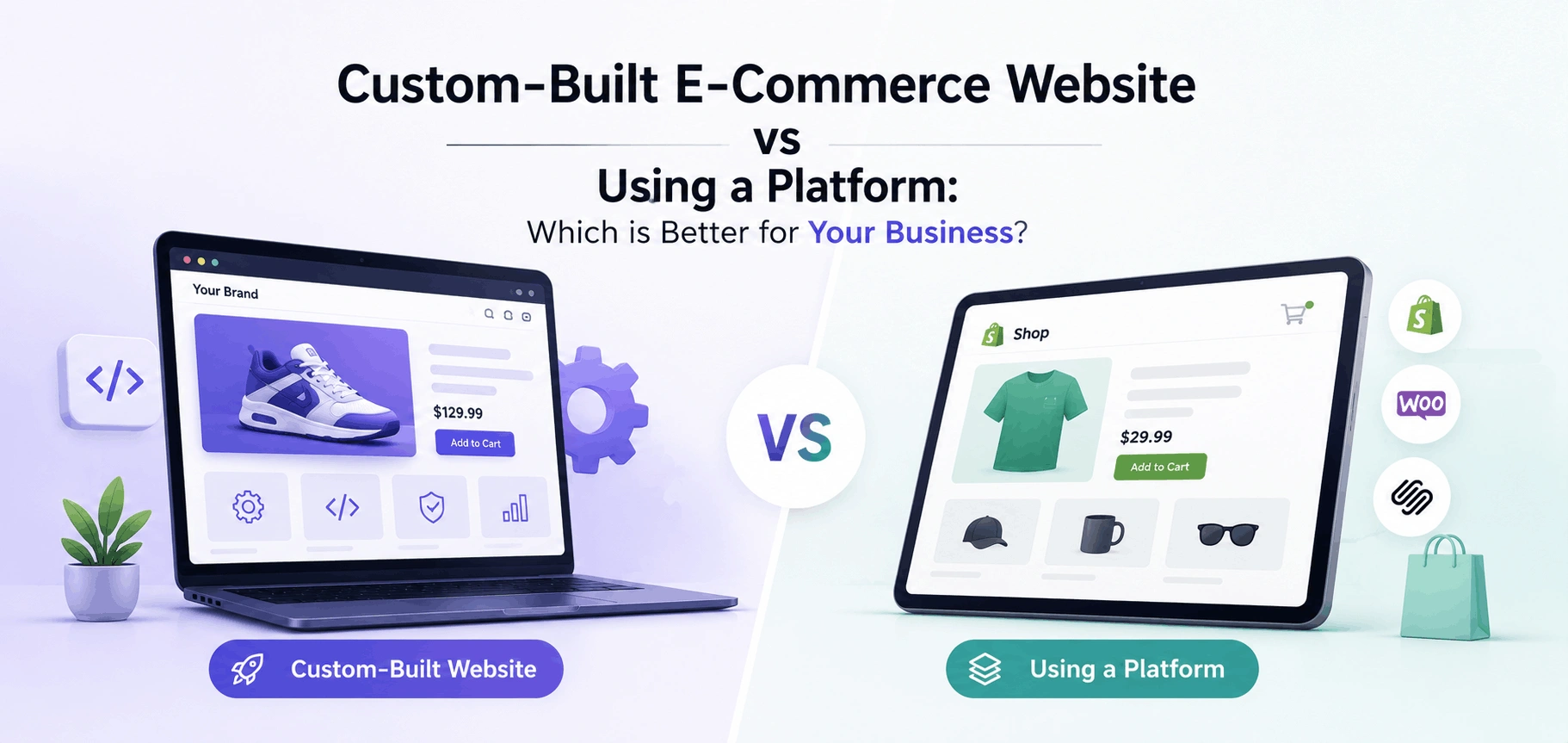
Both options offer advantages, but the right choice depends on your business goals, scalability needs, budget, and long-term vision.
In this guide, we’ll explore the key differences, benefits, and limitations of custom-built e-commerce websites and off-the-shelf platforms to help you make the best decision for your online business.
What is a Custom-Built E-Commerce Website?
A custom-built e-commerce website is developed from scratch to match a business’s specific requirements. Every feature, design element, and functionality is tailored to create a unique shopping experience.
Unlike template-based solutions, custom websites provide complete flexibility and allow businesses to build advanced features, personalized workflows, and scalable infrastructure.
Custom development is ideal for businesses that want full control over branding, customer experience, integrations, and long-term scalability.
What is an Off-the-Shelf E-Commerce Platform?
Off-the-shelf e-commerce platforms are pre-built solutions designed for quick online store setup. Platforms like Shopify, WooCommerce, Magento, and BigCommerce offer ready-made templates, plugins, and built-in features that simplify the launch process.
These platforms are popular among startups and small businesses because they reduce development time and require lower upfront investment.
However, pre-built platforms may come with limitations in customization, scalability, and performance as your business grows.
Key Differences Between Custom E-Commerce Websites and Platforms
| Feature | Custom-Built Website | E-Commerce Platform |
| Development | Built from scratch | Pre-built solution |
| Customization | Fully customizable | Limited by platform capabilities |
| Scalability | Highly scalable | May require upgrades later |
| Ownership | Full ownership and control | Dependent on platform policies |
| Cost | Higher initial investment | Lower upfront cost |
| Flexibility | Unlimited flexibility | Restricted customization |
| Performance | Optimized for business needs | Generalized performance |
| Security | Custom security implementation | Standard platform security |
| Integrations | Advanced integrations possible | Limited integration support |
| Branding | Unique brand identity | Template-based designs |
Benefits of a Custom-Built E-Commerce Website
Complete Design Freedom
Custom development allows businesses to create a unique online store that reflects their brand identity. Every layout, feature, and user interaction can be tailored to match customer expectations.
This helps businesses stand out in a competitive market.
Better Scalability
As your business grows, your website needs to handle more traffic, products, and transactions. Custom websites are designed to scale according to business demands without relying on third-party limitations.
Enhanced User Experience
Custom-built websites focus on user behavior and customer journeys. Businesses can optimize:
- Navigation
- Checkout flow
- Product filtering
- Mobile responsiveness
- Page speed
A better user experience can increase conversions and customer retention.
Advanced Integrations
Custom websites integrate seamlessly with:
- CRM systems
- ERP software
- Payment gateways
- Inventory systems
- Marketing automation tools
This creates a more efficient business ecosystem.
Greater Security and Control
Custom-built e-commerce websites offer more control over security measures and data management. Businesses can implement advanced security protocols based on their industry requirements.
This is especially important for enterprises handling sensitive customer data.
Drawbacks of a Custom-Built Website
While custom development offers flexibility, it also comes with challenges.
Higher Initial Investment
Custom e-commerce development requires a larger upfront budget for design, development, testing, and deployment.
Longer Development Time
Building a website from scratch takes more time compared to using a ready-made platform.
Ongoing Maintenance
Businesses need regular updates, security monitoring, and technical maintenance to keep the website running smoothly.
Benefits of Using an E-Commerce Platform
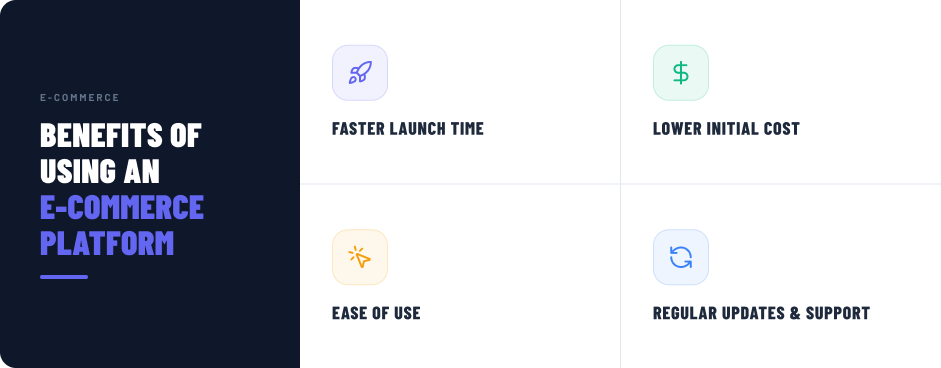
Faster Launch Time
Pre-built platforms allow businesses to launch their online stores quickly using templates and drag-and-drop builders.
This is ideal for startups that want to enter the market fast.
Lower Initial Cost
Most e-commerce platforms offer affordable monthly pricing plans, making them budget-friendly for small businesses.
Ease of Use
Platforms like Shopify and Wix are designed for non-technical users. Businesses can manage products, payments, and orders without advanced coding knowledge.
Built-In Features
Most platforms include:
- Payment gateways
- SEO tools
- Inventory management
- Marketing integrations
- Analytics dashboards
This reduces the need for additional development.
Regular Updates and Support
Platform providers handle software updates, maintenance, and security patches automatically.
Limitations of E-Commerce Platforms
Limited Customization
Although templates and plugins are available, businesses often face restrictions when trying to create unique functionality or design experiences.
Scalability Challenges
As traffic and business operations increase, some platforms may struggle to support advanced requirements.
Ongoing Subscription Costs
Monthly fees, app subscriptions, transaction charges, and plugin costs can increase significantly over time.
Dependency on the Platform
Businesses rely heavily on the platform provider’s rules, updates, and ecosystem.
Changes in pricing or policies can directly impact operations.
Which Option is Best for Your Business?
Choose a Custom-Built E-Commerce Website If:
- You need unique features and functionality
- Your business requires advanced integrations
- You expect rapid long-term growth
- You want complete ownership and control
- Branding and user experience are top priorities
Choose an E-Commerce Platform If:
- You have a limited budget
- You need to launch quickly
- Your business is small or new
- You prefer simple management tools
- You do not require advanced customization
Final Thoughts
Both custom-built e-commerce websites and ready-made platforms offer valuable benefits. The best choice depends on your business size, budget, growth strategy, and operational requirements.
A custom-built e-commerce website provides flexibility, scalability, and full control, making it ideal for businesses planning long-term growth and unique customer experiences.
On the other hand, e-commerce platforms offer affordability, speed, and ease of use, making them suitable for startups and smaller businesses looking for a quick launch solution.
Before making a decision, carefully evaluate your business goals, technical requirements, and future expansion plans. Choosing the right e-commerce solution today can shape the success of your online business for years to come.