That is exactly why low-code platforms are gaining serious momentum.
Instead of building every feature from scratch, low-code platforms use visual builders, reusable components, workflows, and integrations to speed up development. What once took months can now take weeks—or sometimes days.
So the big question is:
Could mobile app development truly be revolutionized by low-code platforms?
In many cases, yes. But there are important limitations businesses should understand.
Recent industry reporting notes that low-code tools are moving from simple prototypes to production-grade app development environments.
What Are Low-Code Platforms?
Low-code platforms allow users to build applications using drag-and-drop tools, templates, automation logic, and minimal hand-written code.
Instead of coding every screen manually, teams can visually create:
- App interfaces
- User flows
- Forms
- Database logic
- Notifications
- Integrations
- Admin dashboards
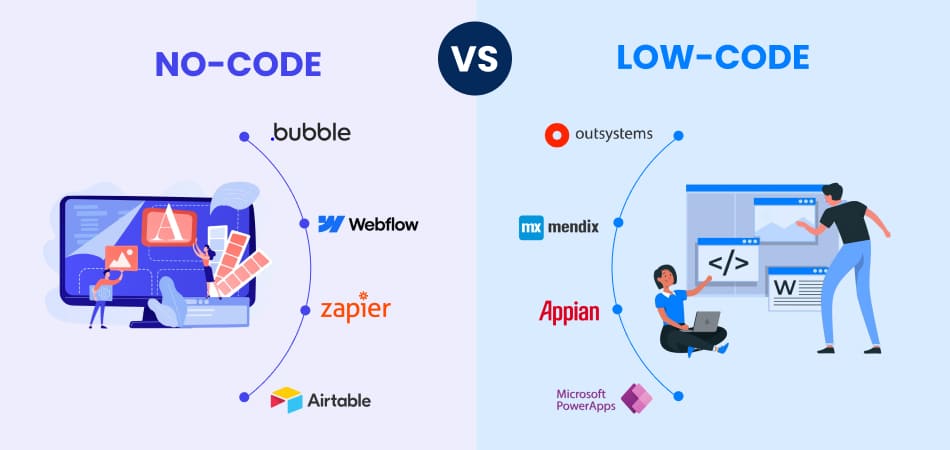
Popular examples often include OutSystems, Mendix, Microsoft Power Apps, Zoho Creator, FlutterFlow, Bubble, and Glide.
Why Low-Code Is Growing Fast
Businesses are adopting low-code because traditional app development can be expensive, slow, and resource-heavy.
Key reasons for growth:
- Faster time to market
- Lower upfront cost
- Shortage of skilled developers
- Easier MVP testing
- Faster internal tool creation
- Easier business-team involvement
Companies increasingly use low-code to speed digital transformation and reduce development bottlenecks.
How Low-Code Could Revolutionize Mobile App Development
Faster App Launches
Traditional mobile apps may take months to design, code, test, and release.
Low-code can dramatically shorten timelines through pre-built components and rapid iteration.
Best for:
- Startup MVPs
- Pilot products
- Internal employee apps
- Event or campaign apps
Lower Development Costs
Hiring full native mobile teams can be expensive.
Low-code helps reduce cost by:
- Smaller teams
- Less repetitive coding
- Faster delivery cycles
- Easier maintenance
This is especially attractive for startups and SMEs.
Cross-Platform Development
Many low-code tools help deploy apps across Android and iOS from one workflow.
That means:
- Faster releases
- Lower maintenance effort
- Consistent design
- Broader reach
Business Teams Can Contribute
Low-code allows product managers, operations teams, and founders to participate in app creation.
They can prototype flows, test ideas, and request changes faster.
This democratization of development is one reason adoption keeps rising.
Easier Updates & Iteration
Need to update a form, workflow, or UI?
Low-code platforms often allow faster changes than traditional release cycles.
This helps businesses respond quickly to user feedback.
Where Low-Code Works Best
Great Use Cases
- Booking apps
- Delivery tracking apps
- Field service apps
- CRM apps
- Internal business tools
- Customer portals
- Marketplace MVPs
- Event apps
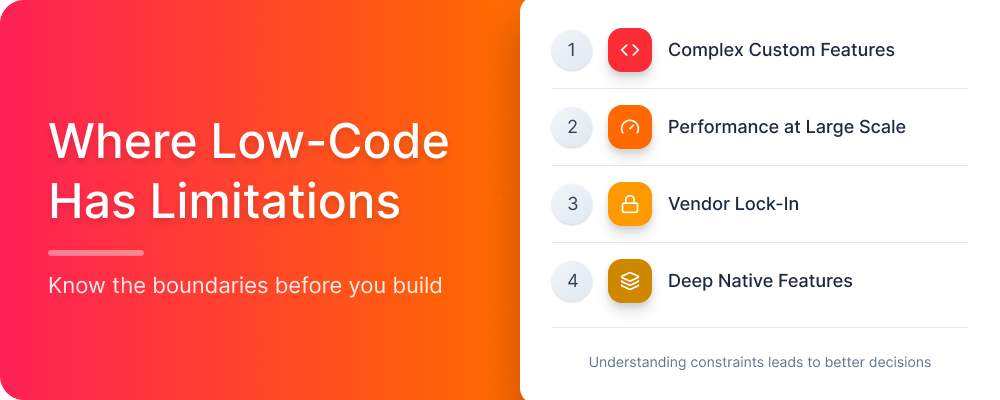
Where Low-Code Has Limitations
Low-code is powerful, but not perfect.
1. Complex Custom Features
Highly unique functionality may still require traditional coding.
2. Performance at Large Scale
Some platforms struggle with heavy traffic or advanced architecture.
3. Vendor Lock-In
Moving away from one platform can be difficult.
4. Deep Native Features
Advanced camera, Bluetooth, AR/VR, or hardware integrations may need custom development.
Researchers have found recurring challenges around customization, integrations, and testing in low-code ecosystems.
Low-Code vs Traditional Mobile Development
| Factor | Low-Code | Traditional Development |
| Speed | Fast | Slower |
| Cost | Lower | Higher |
| Flexibility | Medium | High |
| Scalability | Medium to High | High |
| Custom Features | Limited to Medium | Full |
| Best For | MVPs & business apps | Complex products |
Are Low-Code Replacing Developers?
No.
Low-code is changing how developers work—not eliminating them.
Developers are still needed for:
- Custom integrations
- Security architecture
- Scaling systems
- Complex business logic
- Performance optimization
- Native app features
Many successful teams now combine low-code + custom code strategically.
Best Low-Code Platforms for Mobile Apps in 2026
FlutterFlow
Great for Flutter-based mobile UI apps.
OutSystems
Strong for enterprise-grade applications.
Mendix
Popular in large organizations.
Power Apps
Excellent for Microsoft ecosystem businesses.
Zoho Creator
Strong for operations and internal tools.
Glide
Fast prototypes and lightweight apps.
Industry lists in 2026 continue to rank these among leading platforms.
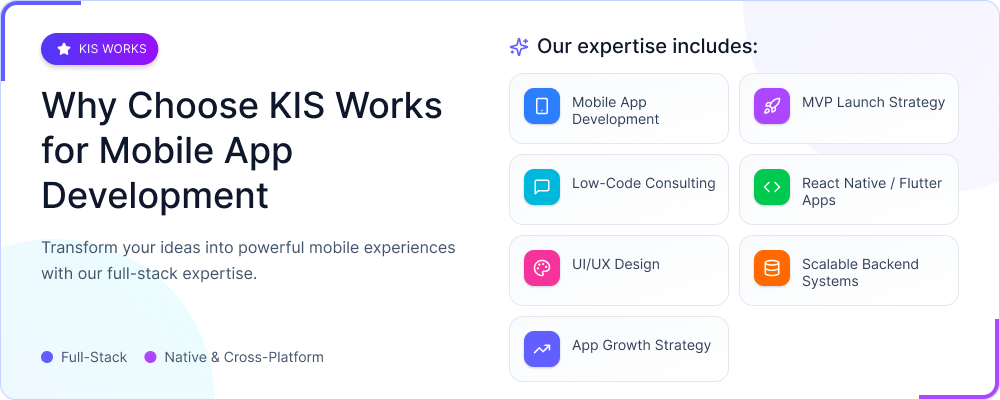
Why Choose KIS Works for Mobile App Development
At KIS Works, we help businesses choose the right development path—low-code, hybrid, or fully custom.
Our expertise includes:
- Mobile App Development
- MVP Launch Strategy
- Low-Code Consulting
- React Native / Flutter Apps
- UI/UX Design
- Scalable Backend Systems
- App Growth Strategy
We recommend technology based on business outcomes, not hype.
Final Thoughts
Yes—low-code platforms are revolutionizing mobile app development.
They make app creation faster, cheaper, and more accessible than ever before.
But low-code is not the answer for every project.
For simple to medium-complexity apps, it can be a game changer. For highly custom or large-scale products, a hybrid or custom approach is often smarter.
The future is not low-code vs traditional development. It is knowing when to use each.