PPC advertising can bring quick traffic to a website, but getting good results from paid ads is not always easy. A campaign may get plenty of clicks and still fail to generate enough leads or sales. Marketers have to keep an eye on keywords, budgets, bids, audiences, ad copy and landing pages. When several campaigns are running together, this can become a lot of work.
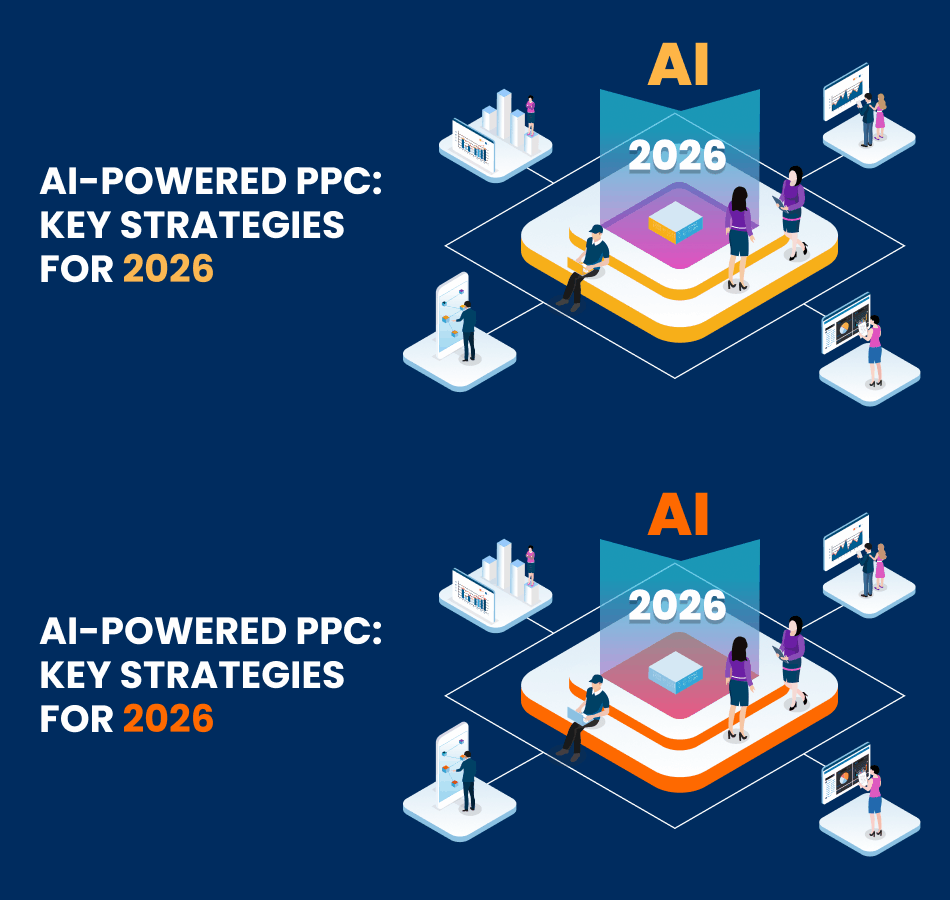
This is one reason AI has become part of PPC marketing. Advertising platforms can now use machine learning to study campaign data and make changes automatically. Marketers can also use AI tools for research, writing, reporting and finding useful information in their campaign data.
But AI is not a replacement for a PPC marketer. It is better to think of it as another tool that can make certain parts of the job easier. The marketer still needs to decide what the business wants, who it wants to reach and what counts as a successful result.
Why AI Is Becoming Important in PPC
A PPC campaign creates a large amount of information. Every search, click and conversion adds something to the campaign data. There are also differences between users based on location, device, time, search behaviour and previous interactions with a website.
Looking at all these details manually can take a lot of time. AI can process the information much faster and find patterns that may be difficult to notice during a normal campaign review.
For example, imagine a company running Google Ads for a software service. The campaign may receive visitors from different cities and devices. After looking at the data, the marketer may notice that mobile users from one location are producing more enquiries than other groups. That information can be useful when deciding where to focus the campaign.
The important thing is that AI gives the marketer information to work with. It does not know everything about the business.
Automated Bidding Can Save Time
Bid management is one of the areas where automation can make a noticeable difference. Marketers used to spend a lot of time checking individual keywords and adjusting bids based on campaign performance. Automated bidding can now handle many of these decisions.
The system can look at available signals and adjust bids according to the campaign goal. For example, a business focused on leads may use a conversion based bidding strategy, while an online store may focus on getting more value from its sales.
This can be useful for larger campaigns where manually changing every bid would be difficult. However, automated bidding should still be monitored. If conversion tracking is incorrect, the system may be working with poor information. The same applies when a business changes its goals or target audience.
Automation can reduce the amount of manual work, but it does not remove the need for regular campaign checks.
Getting the Right Audience Matters
More traffic does not always mean better results. A PPC campaign can receive thousands of clicks and still bring very little business if the advertisements are being shown to the wrong people.
AI can help marketers understand how different users behave after interacting with an advertisement. This can be useful when looking at audience groups, remarketing and customer journeys.
For instance, someone who visits a pricing page is probably showing a different level of interest from someone who only reads a general article. If the first visitor leaves without contacting the business, a relevant remarketing ad may give them a reason to return.
This kind of information can help marketers create campaigns that are based on actual user behaviour instead of treating every visitor in exactly the same way.
Creating PPC Ad Copy
Writing different versions of PPC ads is another job that can take time. Marketers often need several headlines and descriptions for testing, and coming up with new ideas for every campaign is not always easy.
AI can be useful here as a starting point. A marketer can provide information about a product or service and ask for different ideas for headlines, descriptions or calls to action.
The important part is reviewing those ideas before using them. AI may produce copy that sounds too generic or does not match the actual offer. Sometimes it may also make a claim that a business cannot support.
A good PPC ad needs to sound natural and give people a clear reason to click. The final copy should therefore be checked and edited by someone who understands the brand.
Making Better Use of Campaign Data
PPC reports contain a lot of numbers, but numbers alone do not always tell the full story.
Suppose one campaign receives 1,000 clicks and another receives 500. At first, the first campaign may appear to be performing better. But if the first campaign produces only five useful leads and the second produces twenty, the situation looks very different.
AI can help marketers find these kinds of differences in campaign data. It can highlight changes in conversion rates, spending, traffic and other performance metrics.
The marketer then needs to investigate what is behind the numbers. Maybe the first campaign is targeting broad keywords. Maybe the landing page is not relevant enough. Perhaps the second campaign is reaching people who are already closer to making a purchase.
This is where human analysis becomes important. A tool can identify a change, but understanding the business reason behind that change still requires experience.
PPC Does Not End With the Ad
Getting someone to click an advertisement is only one part of the customer journey. What happens when that person reaches the website can have a major effect on the final result.
A landing page should match what the advertisement promised. If an ad promotes a free consultation but the visitor cannot easily find a way to request it, some of the paid traffic may be wasted.
AI can help marketers study website behaviour and find areas that may need attention. It can also help generate ideas for landing page content, headlines and calls to action.
Still, the basic question should always be asked from the customer’s point of view: “Did I find what I expected after clicking this ad?”
If the answer is no, improving the PPC settings alone may not solve the problem.
AI Can Help With Reporting
PPC reporting can also take up a considerable amount of time, particularly for agencies managing campaigns for several clients.
Instead of manually going through every number, marketers can use AI tools to organise information and identify noticeable changes. This can make it easier to prepare regular reports and spend more time thinking about what should happen next.
For example, a report may show that the cost per lead has increased during the month. That is useful information, but the marketer still needs to find the reason. It could be increased competition, a change in search behaviour, weaker keywords or a problem somewhere on the website.
The report should not simply present numbers. It should help the client understand what those numbers mean for the business.
Do Not Rely Too Much on Automation
There is a temptation to automate everything once AI becomes available. That can create problems.
Businesses change. Their services change, prices change and customer needs change. A campaign that worked well a few months ago may need adjustments today.
This is why PPC campaigns should still be reviewed regularly. Marketers should check where the money is going, which leads are coming in and whether those leads are actually useful.
Good campaign management is not about removing people from the process. It is about removing unnecessary manual work so marketers can spend more time on important decisions.
How Businesses Can Start Using AI in PPC
There is no need to change an entire PPC strategy overnight. Businesses can start with one task that is taking too much time.
For some companies, that may be bid management. For others, it could be reporting, audience research or creating ad variations. Start with one area, test it and see whether it actually improves the workflow or campaign performance.
It is also important to have proper conversion tracking before depending heavily on automated systems. If the campaign does not know which actions are valuable, automation may not produce useful results.
The purpose of using AI should be practical. If it saves time or helps the marketing team understand the campaign better, it can be useful. There is no need to use an AI tool simply because it is available.
Final Thoughts
AI is changing PPC advertising by making some parts of campaign management faster and easier. It can help with bidding, audience analysis, ad ideas, reporting and understanding large amounts of campaign data.
At the same time, the basics of PPC have not changed. Businesses still need a clear goal, relevant keywords, a suitable audience, useful advertisements and a landing page that gives visitors what they expect.
AI can handle data and repetitive tasks, but marketers still bring the understanding that connects advertising with real business goals.
The best approach is to use the technology where it genuinely adds value and keep human judgment involved where it matters most. A PPC campaign should not simply aim for more clicks. It should aim to bring the right people to the business and turn that traffic into meaningful results.