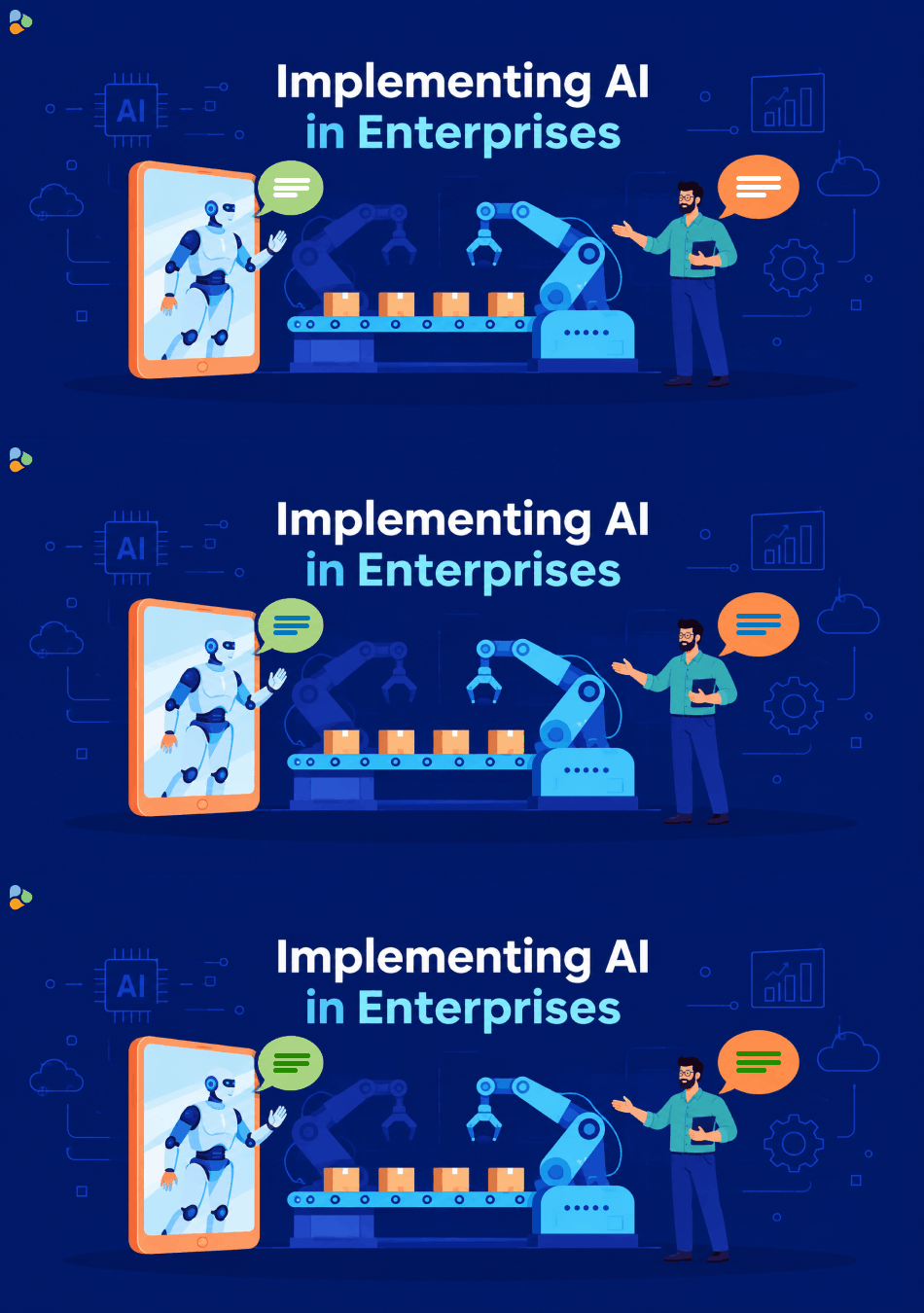
However, implementing AI in an enterprise is not as simple as choosing an AI tool and adding it to an existing system. Large organizations often have complex software, large amounts of data, strict security requirements, different teams, and processes that have been built over many years.
For this reason, successful AI implementation requires more than technology. Businesses need a clear strategy, reliable data, the right infrastructure, proper security controls, and people who understand how to use AI effectively.
This article explains the common challenges enterprises face when implementing AI and the practical ways to address them.
What Does AI Implementation in an Enterprise Mean?
AI implementation in an enterprise means integrating artificial intelligence into business processes, applications, and workflows to solve specific business problems.
AI can be used in many areas, including:
- Customer support and virtual assistants
- Document processing
- Sales and lead qualification
- Business data analysis
- Marketing automation
- Fraud detection
- Predictive analytics
- Software development
- Internal knowledge management
- Workflow automation
The right use case depends on the organization’s goals, data, existing systems, and operational requirements.
The purpose should not be to use AI simply because it is becoming popular. The purpose should be to solve a real business problem and create measurable value.
Why Are Enterprises Investing in AI?
Traditional business processes often involve repetitive tasks, manual data entry, large amounts of documentation, and information spread across multiple systems.
AI can help reduce some of this workload.
For example, an enterprise could use an AI assistant to help employees find information from internal documents. A customer service team could use AI to handle common questions before sending complex issues to human agents. A sales team could use AI to summarize customer interactions and identify potential leads.
When implemented correctly, these applications can help employees spend more time on work that requires human judgment and less time on repetitive activities.
Common Challenges of AI Implementation in Enterprises
1. Lack of a Clear AI Strategy
One of the first problems businesses face is starting with technology instead of a business problem.
An organization may experiment with several AI tools without deciding what it actually wants to achieve. This can result in disconnected projects, unnecessary costs, and limited business impact.
The solution is to identify specific problems first.
Businesses should ask:
- What process needs improvement?
- How much time or money does the current process require?
- Can AI realistically improve it?
- What result would make the project successful?
- How will the result be measured?
Starting with these questions creates a clearer direction for AI adoption.
2. Poor Data Quality
AI systems depend heavily on data. If enterprise data is incomplete, outdated, duplicated, inconsistent, or difficult to access, the quality of the AI solution can suffer.
Many organizations also have information stored across databases, spreadsheets, cloud applications, CRM systems, ERP platforms, and internal documents.
Before implementing AI, businesses should review their data sources and establish processes for data cleaning, organization, access, and governance.
Good data preparation may not be the most exciting part of an AI project, but it is often one of the most important.
3. Integrating AI With Existing Systems
Enterprises rarely start with a completely new technology environment. They may already use CRM, ERP, HR, finance, customer support, and legacy applications.
An AI solution must often work with these existing systems.
For example, an AI customer support assistant may need access to customer information from a CRM and product information from another database. An AI reporting system may need data from several business applications.
APIs, middleware, cloud services, databases, and secure integration layers can help connect AI applications with existing enterprise systems.
4. Security and Privacy Concerns
Enterprise AI systems may process customer information, financial data, employee records, business documents, or other sensitive information.
This creates important security and privacy considerations.
Businesses need to define who can access AI systems, what data can be processed, where information is stored, and how data is protected.
Access controls, encryption, authentication, monitoring, audit logs, and secure APIs should be considered during the design stage rather than added after deployment.
5. Lack of AI Skills
AI implementation requires different skills depending on the project. These may include software development, data engineering, cloud infrastructure, AI engineering, cybersecurity, and product management.
Some businesses may not have all these skills internally.
Instead of trying to build everything from scratch, companies can combine existing internal expertise with specialized AI development partners when necessary.
At the same time, employees should receive practical training so they understand how AI tools work and how they should be used within the organization.
6. Employee Adoption
Even a technically strong AI solution can fail if employees do not use it.
People may worry that AI will replace their jobs, or they may simply be unfamiliar with a new workflow.
Organizations should explain why the AI system is being introduced, what tasks it will support, and where human decision making remains important.
Training, clear communication, and gradual adoption can make the transition easier.
AI should often be presented as a tool that helps employees work more efficiently rather than as a replacement for every human task.
7. Measuring AI ROI
Another common challenge is proving whether an AI project is actually delivering business value.
A company may launch an AI assistant, automation workflow, or analytics system but fail to define what success means.
Before implementation, businesses should establish measurable KPIs.
Depending on the use case, these could include:
- Reduction in processing time
- Lower operational costs
- Faster customer response
- Higher lead conversion
- Reduced manual work
- Improved employee productivity
- Better customer satisfaction
- Increased revenue
The metrics should match the business problem being solved.
A Practical Approach to Enterprise AI Implementation
A structured approach can make AI implementation easier to manage.
Step 1: Identify a Business Problem
Start with a process that is repetitive, time consuming, expensive, or difficult to manage manually.
Step 2: Evaluate Data and Systems
Identify the data required for the AI solution and check whether it is available, accurate, secure, and accessible.
Step 3: Select the Right AI Approach
Not every problem requires a large language model or generative AI. Depending on the use case, the right solution could involve machine learning, predictive analytics, an AI assistant, automation, or a combination of technologies.
Step 4: Build a Small Proof of Concept
Instead of implementing AI across the entire organization immediately, start with a focused use case.
A proof of concept allows the business to test the technology, understand limitations, collect feedback, and estimate the expected value.
Step 5: Integrate With Existing Workflows
Once the solution has been validated, connect it with the applications and processes employees already use.
Step 6: Test and Secure the System
Test the AI application with realistic data and different scenarios. Review accuracy, security, access permissions, performance, and failure cases before wider deployment.
Step 7: Monitor and Improve
AI implementation does not end after launch. Businesses should monitor performance, user feedback, costs, and business results.
The system can then be improved as requirements and business needs change.
The Role of AI Agents in Enterprise Automation
AI agents are becoming another area of interest for enterprises. Unlike a basic chatbot that mainly responds to questions, an AI agent can be designed to perform tasks using connected tools and systems.
For example, an enterprise AI agent could receive a customer request, check information in a CRM, create a support ticket, update a record, and notify the appropriate team.
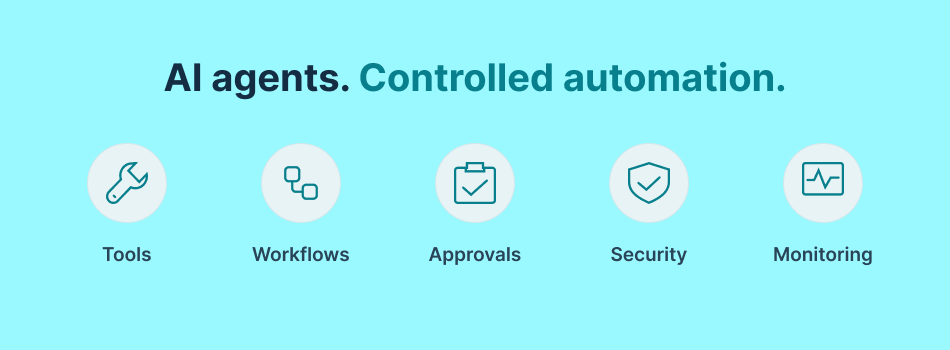
However, these systems require careful design. Businesses need to define permissions, workflows, human approval points, security controls, and monitoring.
The goal should be controlled automation, not giving an AI system unlimited access to business operations.
Best Practices for Successful AI Implementation
Businesses can improve their chances of success by following a few practical principles:
- Start with a clear business problem
- Define measurable goals before development
- Prepare and govern enterprise data
- Choose technology based on the use case
- Start small and expand gradually
- Integrate AI with existing systems
- Keep security and privacy in the design
- Provide employee training
- Maintain human oversight where needed
- Monitor performance and business results
- Review and improve the solution regularly
Conclusion
AI can create significant opportunities for enterprises, but successful implementation requires careful planning.
The biggest challenge is not simply choosing an AI model or tool. Businesses need to understand their processes, prepare their data, connect AI with existing systems, protect sensitive information, train employees, and measure real business outcomes.
A practical approach is to start with one clear problem, build a focused solution, test its results, and then expand when there is a strong reason to do so.
When AI is implemented as part of a well planned business strategy, it can become more than an experimental technology. It can become a useful part of everyday enterprise operations, helping teams automate work, use information more effectively, and create better experiences for customers and employees.