That’s exactly what your visitors do too.
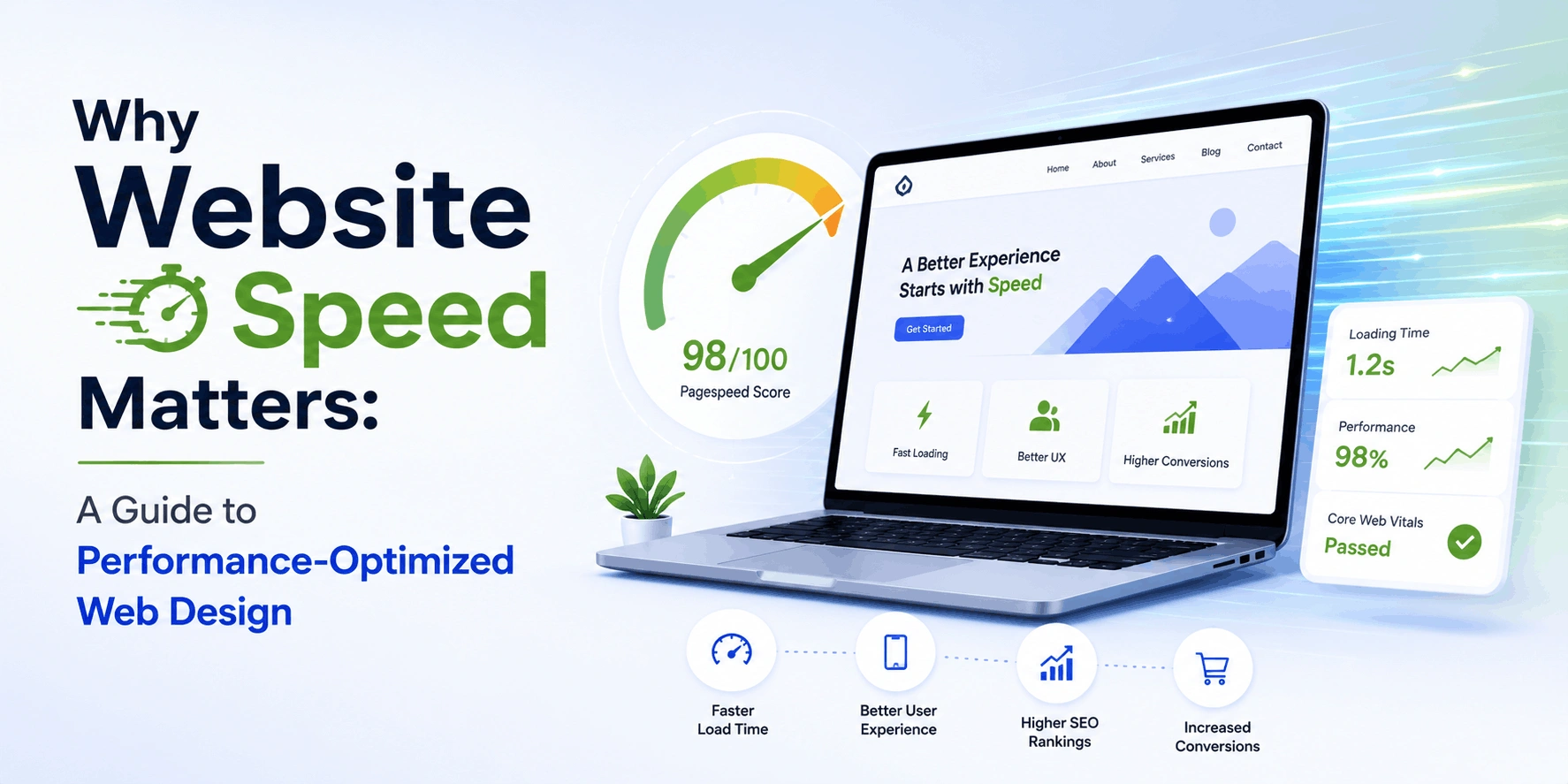
Website speed is no longer just a technical issue. It directly affects how users feel about your brand, how long they stay, and whether they convert into customers or not. A slow website quietly hurts your business every single day.
In this blog, we’ll understand why speed matters and how you can improve it in a practical way.
What Website Speed Really Means
Website speed is simply how quickly your website loads and becomes usable for a visitor.
But it’s not just about “page opening fast.” It also includes:
- How quickly users can interact with buttons
- How smooth scrolling feels
- How fast images and content appear
- Whether the page responds without delay
A good website feels instant. A bad one feels stuck.
Why Website Speed Matters So Much
Users don’t wait anymore
People today are impatient online.
If your website takes more than a few seconds to load, most users will leave without even seeing your content. That means you lose traffic before the experience even begins.
Fast websites feel professional. Slow ones feel unreliable.
It directly affects SEO rankings
Google wants to show users the best experience, and speed is a big part of that.
If your website is slow, it can struggle to rank well even if your content is good. Faster websites have a better chance of appearing higher in search results.
So yes speed and SEO are closely connected.
Faster websites convert better
Speed doesn’t just bring traffic — it brings results.
When a website loads quickly, users are more likely to:
- Fill out contact forms
- Make purchases
- Explore more pages
- Trust your brand
Even a small delay can reduce conversions noticeably.
Mobile users are even more sensitive
Most users today browse websites on mobile phones.
Mobile users expect things to load instantly. If your site is slow on mobile, they won’t wait — they will simply switch to another website.
So mobile performance is just as important as desktop speed.
Speed builds trust
Think about it when a website loads fast, it feels modern and well-built.
But when it loads slowly, users often assume:
- The website is outdated
- The business is not professional
- The experience may not be reliable
Speed creates a silent impression about your brand.
What makes websites slow?
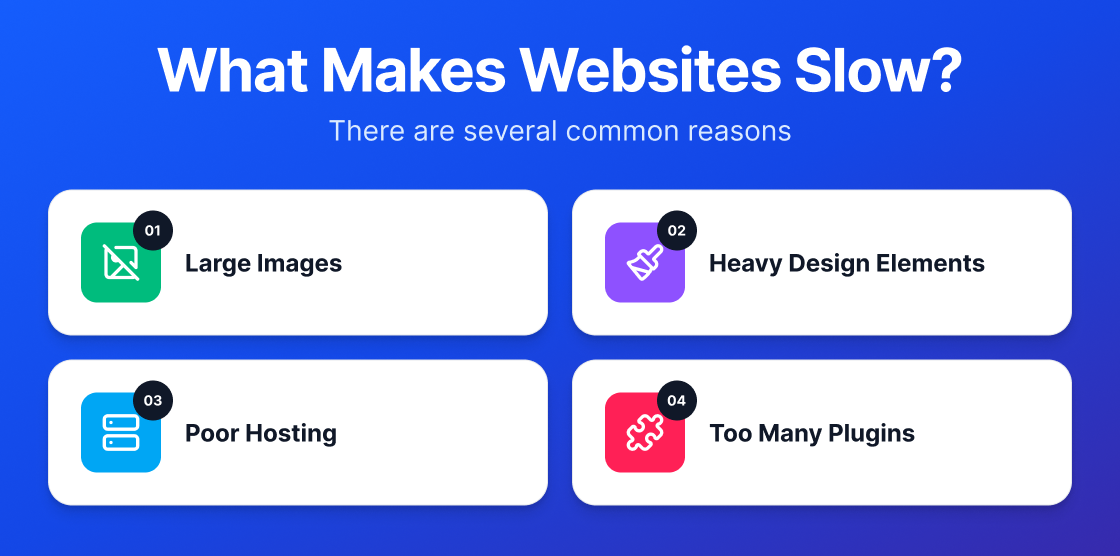
Large images
Uncompressed images are one of the biggest reasons for slow websites.
Heavy design elements
Too many animations, sliders, and effects can slow everything down.
Poor hosting
Cheap or low-quality hosting can reduce performance significantly.
Too many plugins
Extra plugins add extra load time and unnecessary scripts.
Unoptimized code
Messy or heavy code affects how fast pages load.
How to improve website speed
The good news is you can fix most speed issues without rebuilding your website.
Here are simple improvements that make a big difference:
- Compress images before uploading
- Use lightweight themes and clean design
- Enable caching to store data for faster loading
- Remove unnecessary plugins and scripts
- Use a reliable hosting provider
- Reduce heavy animations and effects
- Use a CDN to load content faster globally
Even small improvements here can noticeably boost performance.
Common mistakes businesses make
Many businesses unknowingly ignore website speed.
Some common mistakes include:
- Designing a website without thinking about performance
- Adding too many visual elements
- Not testing mobile speed
- Ignoring speed after launch
- Focusing only on design, not usability
The problem is, users feel these issues even if you don’t notice them.
Future of web performance
Website speed will become even more important in the future.
With Google’s Core Web Vitals and user expectations increasing, fast websites will have a clear advantage in:
- SEO rankings
- User engagement
- Conversion rates
- Overall brand trust
Speed is becoming a basic requirement, not an option.
Conclusion
Website speed plays a major role in how successful your website is.
It affects user experience, search rankings, conversions, and even how people perceive your brand.
A fast website keeps users happy, engaged, and more likely to take action. A slow website does the opposite.
If you want better performance from your website, improving speed is one of the most important steps you can take.