Many businesses invest heavily in website development but overlook the factors that actually influence conversions. They focus on appearance while ignoring user experience, performance, mobile responsiveness, and search engine optimization. As a result, they attract visitors but fail to turn those visitors into customers.
A high converting website is designed with one goal in mind: helping users find what they need quickly and encouraging them to take the next step. Whether that means requesting a quote, booking a consultation, downloading a brochure, or making a purchase, every element of the website should support that goal.
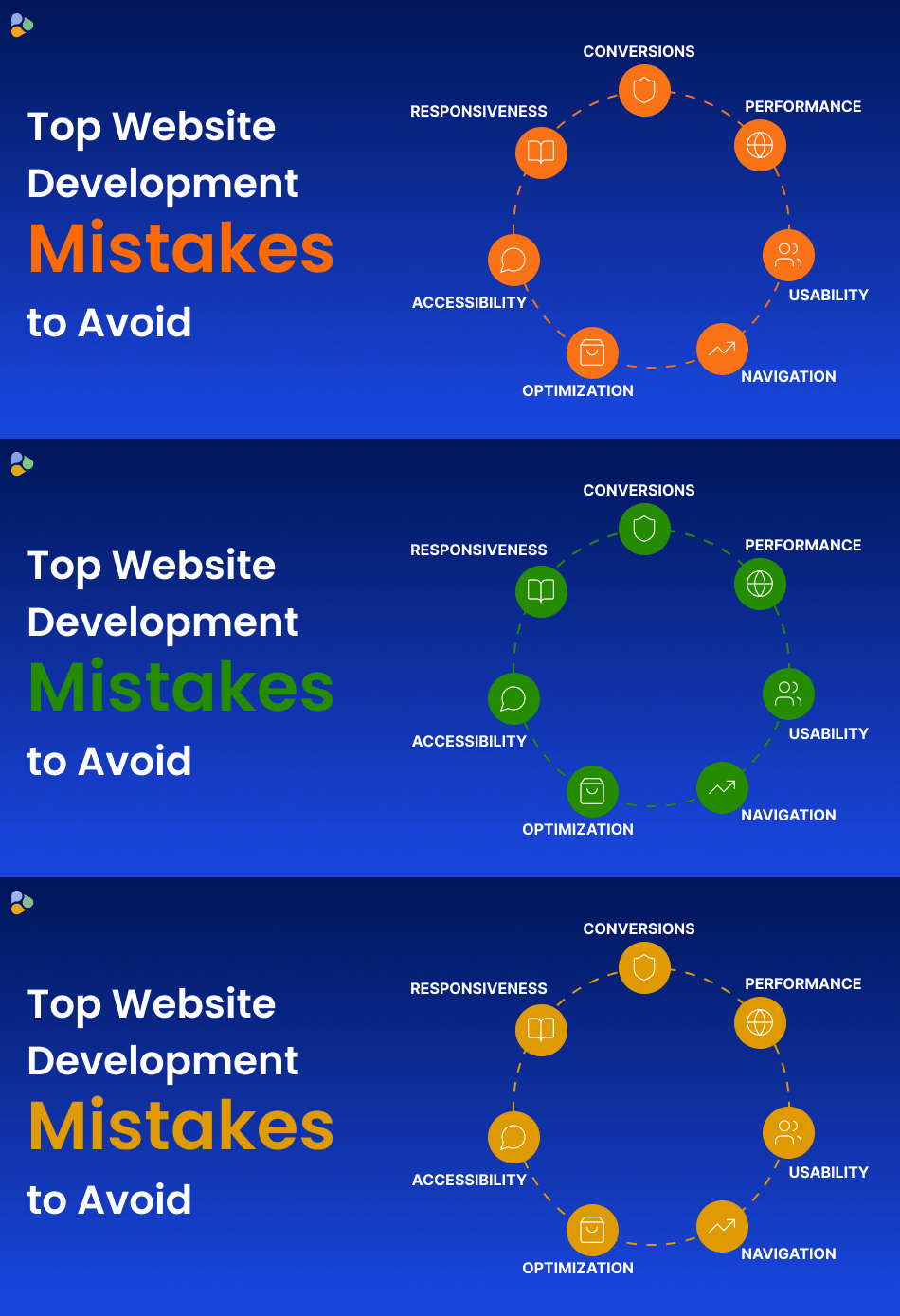
In this blog, we’ll explore the most common website development mistakes that hurt conversions and how your business can avoid them.
Slow Website Loading Speed
Website speed has a direct impact on user experience and conversion rates. Modern users expect a website to load almost instantly. If your pages take too long to appear, visitors are likely to leave before they even see your products or services.
Slow websites are often caused by unoptimized images, unnecessary plugins, poor coding practices, large JavaScript files, and low quality hosting. Besides frustrating visitors, slow loading pages also affect your search engine rankings, making it harder for potential customers to find your business online.
Improving page speed through image optimization, code optimization, browser caching, and reliable hosting creates a smoother user experience and significantly increases the chances of converting visitors into customers.
Poor Mobile Experience
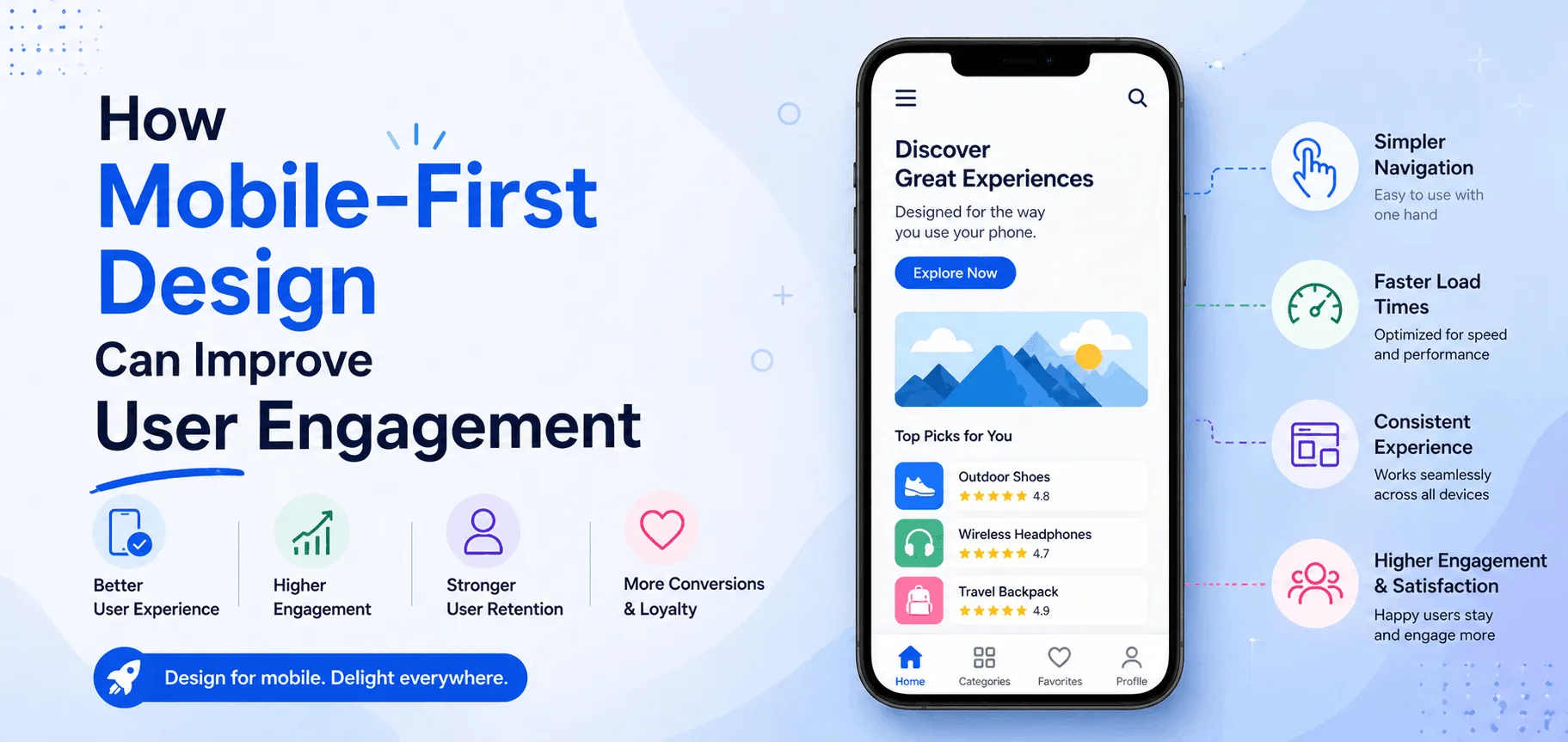
Today, most users browse websites from their smartphones. If your website is difficult to navigate on a mobile device, you are likely losing a large percentage of potential customers.
Common mobile issues include tiny text, buttons that are difficult to tap, slow loading pages, overlapping content, and forms that are frustrating to complete.
A responsive website automatically adjusts to different screen sizes, providing users with a consistent experience across desktops, tablets, and smartphones. Businesses that prioritize mobile friendly development not only improve customer satisfaction but also benefit from better search engine visibility.
Confusing Website Navigation
Visitors should never have to guess where to find important information. Complicated menus, too many navigation options, or poorly organized content often cause users to leave before completing their journey.
A well structured navigation system guides users naturally through your website. Service pages, pricing, contact information, case studies, and blogs should be easy to locate within a few clicks.
Simple navigation improves engagement, increases page views, and helps visitors move closer to becoming customers.
Weak Call to Action
Many websites provide useful information but fail to tell visitors what to do next. Without a clear call to action, users may leave even if they are interested in your services.
Every important page should include action oriented buttons such as “Request a Quote,” “Book a Free Consultation,” “Schedule a Demo,” or “Contact Our Team.” These calls to action should stand out visually and appear naturally throughout the page instead of being hidden at the bottom.
Clear guidance helps users take the next step with confidence.
Poor User Experience
A visually attractive website does not always provide a great user experience. Visitors want clean layouts, readable content, fast interactions, and an intuitive browsing experience.
Cluttered pages, distracting animations, inconsistent fonts, and poor spacing often overwhelm users and reduce trust. Every design decision should focus on making information easier to understand rather than making the website look complicated.
Good user experience builds confidence and encourages visitors to spend more time exploring your business.
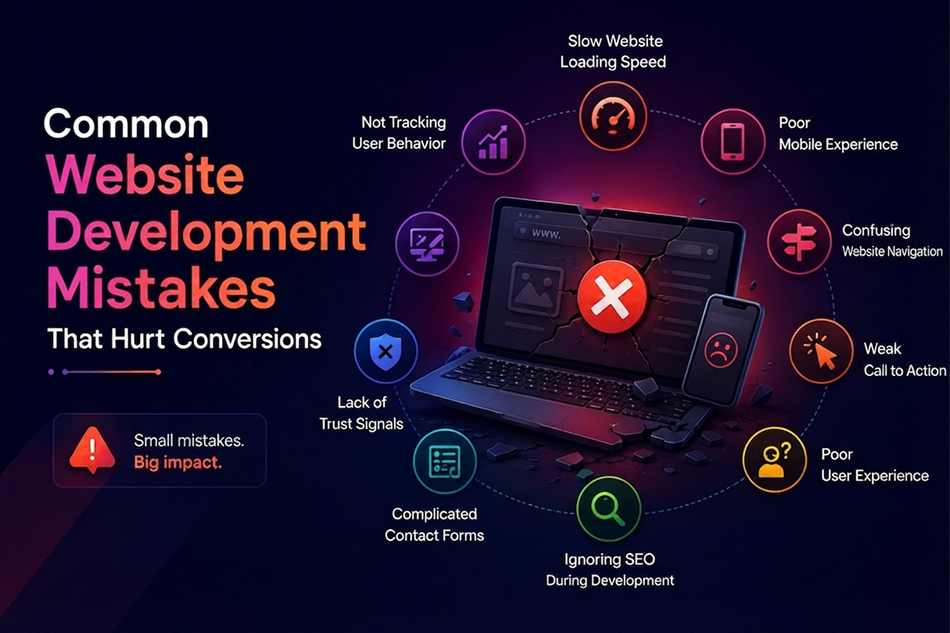
Ignoring SEO During Development
Many businesses think SEO begins after a website is launched. In reality, search engine optimization starts during the development process.
Missing title tags, poor URL structures, duplicate pages, broken internal links, missing schema markup, and slow page speed all reduce your website’s ability to rank on Google.
Building SEO into your website from day one helps search engines understand your content while improving visibility for potential customers searching for your services.
Complicated Contact Forms
Long contact forms often discourage visitors from reaching out. Asking for unnecessary information creates friction and reduces conversions.
Instead, keep forms simple by requesting only essential details such as name, email address, phone number, and project requirements. The easier it is for users to contact your business, the more inquiries you are likely to receive.
Adding multiple contact options, including phone numbers, email addresses, and live chat, further improves accessibility.
Lack of Trust Signals
Visitors are unlikely to do business with a company they do not trust. If your website lacks testimonials, client logos, certifications, awards, or case studies, potential customers may hesitate to contact you.
Displaying genuine customer reviews, project success stories, industry certifications, and recognizable client partnerships helps build credibility. Security features such as HTTPS encryption and clear privacy policies also reassure visitors that their information is safe.
Trust is one of the biggest factors influencing online conversions.
Outdated Website Design
A website that looks outdated can create the impression that the business itself is outdated. Even if your services are excellent, an old design can reduce customer confidence.
Modern websites use clean layouts, consistent branding, professional typography, high quality visuals, and interactive elements that improve user engagement without creating distractions.
Refreshing your website regularly ensures it reflects your brand and meets current user expectations.
Not Tracking User Behavior
One of the biggest mistakes businesses make is launching a website and never analyzing how visitors interact with it.
Without tools like Google Analytics, Google Search Console, and heatmaps, it becomes difficult to understand where users drop off, which pages perform best, or what improvements are needed.
Monitoring user behavior helps businesses make informed decisions that improve conversion rates over time.
How to Build a Website That Converts
Creating a successful business website requires much more than attractive visuals. It involves understanding user behavior, optimizing performance, implementing SEO best practices, and designing clear conversion paths.
A high converting website should:
- Load in just a few seconds.
- Work perfectly on every device.
- Offer simple and intuitive navigation.
- Include strong calls to action.
- Follow SEO best practices.
- Build trust through testimonials and case studies.
- Make it easy for visitors to contact your business.
- Continuously improve based on real user data.
When all these elements work together, your website becomes a powerful business growth tool rather than simply an online presence.
Why Choose KIS Works for Website Development?
At KIS Works, we build websites that do more than look professional. Our focus is on creating fast, secure, SEO friendly, and conversion driven websites that help businesses generate more leads and achieve measurable growth.
Our experienced developers, designers, and digital marketing specialists work together to deliver websites that combine exceptional user experience with modern technology. From responsive web design and custom development to performance optimization and ongoing support, we help businesses create digital experiences that drive real results.
Whether you’re launching a new website or improving an existing one, our team ensures every element is designed with your business goals in mind.

Final Thoughts
Your website should be one of your strongest sales and marketing assets. However, even small development mistakes can reduce conversions, increase bounce rates, and negatively impact customer trust. Slow loading pages, poor mobile experiences, confusing navigation, weak calls to action, and missing SEO are common issues that prevent businesses from achieving their full online potential.
By identifying and fixing these problems, you can create a website that not only attracts visitors but also converts them into loyal customers. Investing in professional website development is not just about improving design. It is about building a platform that supports long term business growth, strengthens your brand, and delivers measurable results. A well planned, user focused website is one of the smartest investments any business can make in today’s competitive digital landscape.