The Shift from Treatment to Prevention
Traditional healthcare focuses on diagnosing and treating diseases after symptoms appear. However, many serious conditions—such as cancer, heart disease, and neurological disorders—develop silently over time. By the time symptoms show, the disease may already be advanced.
AI changes this approach by enabling early detection and prediction, allowing doctors to intervene much earlier. This not only improves patient outcomes but also reduces the burden on healthcare systems.
How AI Predicts Diseases Early
AI uses large datasets, advanced algorithms, and machine learning models to identify patterns that are often invisible to humans.
1. Data Analysis at Scale
AI can analyze massive amounts of patient data, including:
- Medical records
- Lab reports
- Genetic information
- Lifestyle data (sleep, diet, activity)
By processing this data, AI can identify subtle changes that may indicate the early stages of a disease.
2. Pattern Recognition
Machine learning models are trained on historical data to recognize patterns associated with specific conditions. For example:
- Identifying early signs of heart disease through ECG data
- Detecting cancer risks from imaging scans
- Predicting diabetes based on lifestyle and genetic factors
3. Continuous Monitoring
With wearable devices and health apps, AI can monitor patients in real time:
- Early alerts for abnormal heart rates
- Detection of irregular sleep patterns
- Identification of sudden health changes
Real-World Applications
AI is already making a difference in several areas of healthcare:
- Cancer Detection: AI can analyze medical images to detect tumors at very early stages.
- Cardiovascular Diseases: Predictive models assess the risk of heart attacks using patient history and live data.
- Neurological Disorders: Early signs of conditions like Alzheimer’s can be detected through behavior and speech analysis.
- Infectious Diseases: AI helps predict outbreaks and identify high-risk individuals.
Benefits of AI in Predictive Healthcare
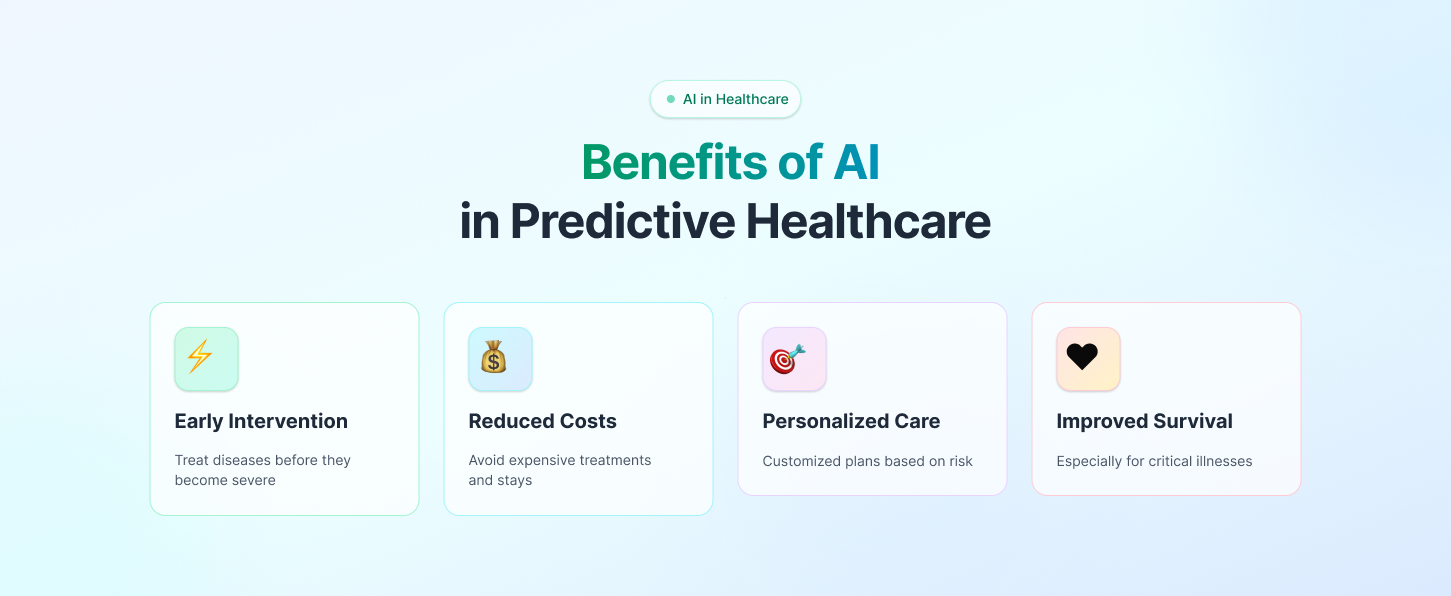
- Early Intervention: Treat diseases before they become severe
- Reduced Healthcare Costs: Avoid expensive treatments and hospital stays
- Personalized Care: Customized treatment plans based on individual risk
- Improved Survival Rates: Especially for critical illnesses
Challenges and Considerations
- Data Privacy: Ensuring secure handling of sensitive patient data
- Accuracy & Bias: Avoiding errors due to incomplete or biased datasets
- Integration: Adapting healthcare infrastructure to support AI
- Trust & Adoption: Building confidence among healthcare professionals and patients
Key Insights
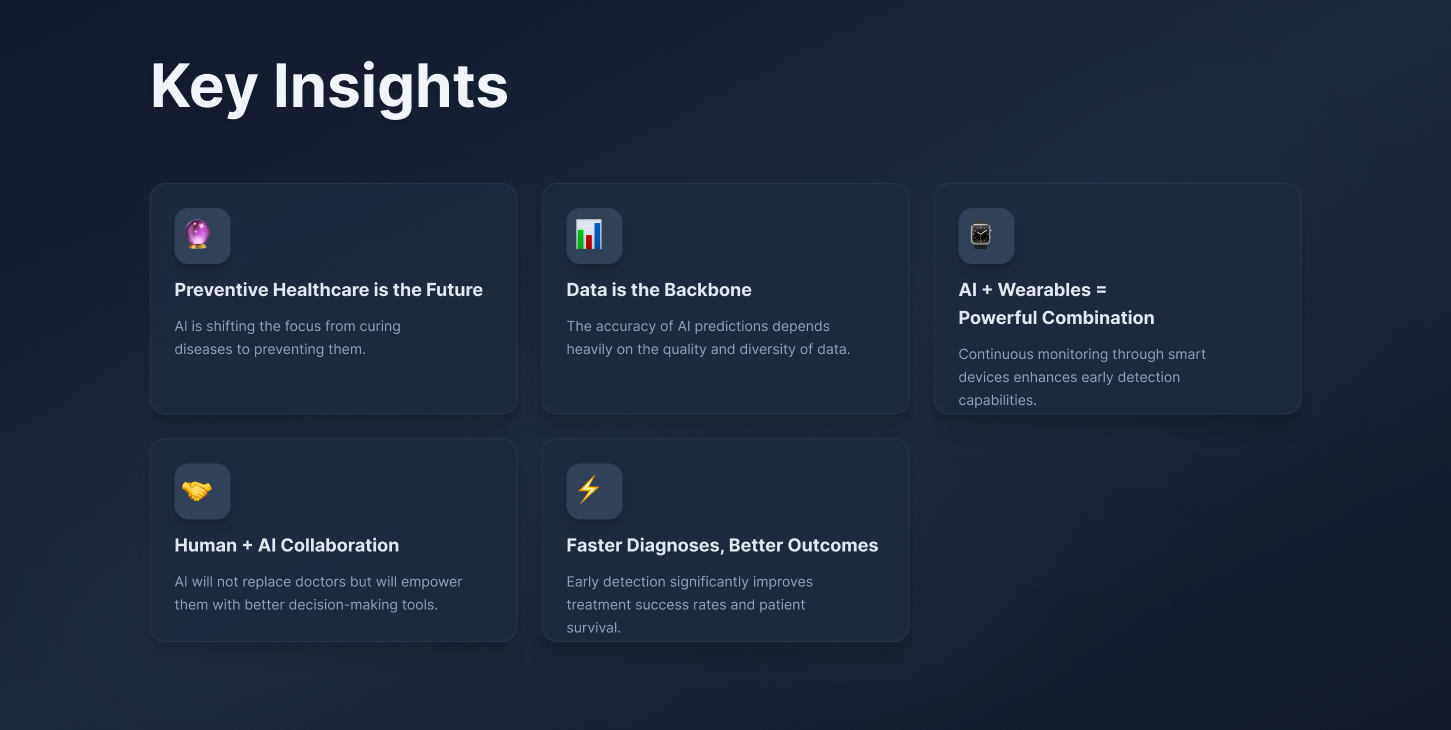
- Preventive Healthcare is the Future: AI is shifting the focus from curing diseases to preventing them.
- Data is the Backbone: The accuracy of AI predictions depends heavily on the quality and diversity of data.
- AI + Wearables = Powerful Combination: Continuous monitoring through smart devices enhances early detection capabilities.
- Human + AI Collaboration: AI will not replace doctors but will empower them with better decision-making tools.
- Faster Diagnoses, Better Outcomes: Early detection significantly improves treatment success rates and patient survival.
Frequently Asked Questions (FAQs)
1. How does AI detect diseases before symptoms appear?
AI analyzes large datasets, including medical history, genetics, and lifestyle data, to identify hidden patterns and early warning signs that humans may miss.
2. Is AI in healthcare accurate?
AI can be highly accurate, especially when trained on high-quality data. However, it works best when combined with human expertise rather than replacing doctors.
3. What types of diseases can AI predict early?
AI can help predict conditions like cancer, heart disease, diabetes, Alzheimer’s, and even infectious diseases.
4. Are wearable devices important for AI healthcare?
Yes, wearable devices play a crucial role by providing real-time health data, enabling continuous monitoring and faster detection of abnormalities.
5. Is patient data safe with AI systems?
Data security is a major priority. Advanced encryption and compliance with healthcare regulations help protect patient information, but ongoing improvements are still needed.
6. Will AI replace doctors in the future?
No, AI is designed to assist doctors, not replace them. It enhances decision-making and improves efficiency in diagnosis and treatment.
Conclusion
AI is redefining healthcare by making it predictive rather than reactive. The ability to detect diseases before symptoms appear opens new possibilities for early intervention, better outcomes, and more efficient healthcare systems.
As technology continues to evolve, embracing AI in healthcare will not just be an advantage—it will be a necessity for a healthier future.