What Is AI Supply Chain Risk Management?
AI Supply Chain Risk Management uses artificial intelligence technologies such as machine learning, predictive analytics, and real-time data processing to identify, assess, and mitigate risks across the supply chain.
Unlike traditional systems that rely on historical data and delayed reporting, AI continuously monitors internal and external signals to detect early warning signs. This allows businesses to respond before small issues escalate into costly disruptions.
Why Real-Time Risk Management Matters

Modern supply chains are complex and global. A single disruption in one region can trigger delays, shortages, and financial losses across multiple markets. Real-time risk management enables organizations to:
- Detect potential disruptions early
- Act immediately on changing conditions
- Reduce downtime and operational losses
- Maintain customer trust and service levels
AI provides the speed and intelligence required to manage these risks effectively.
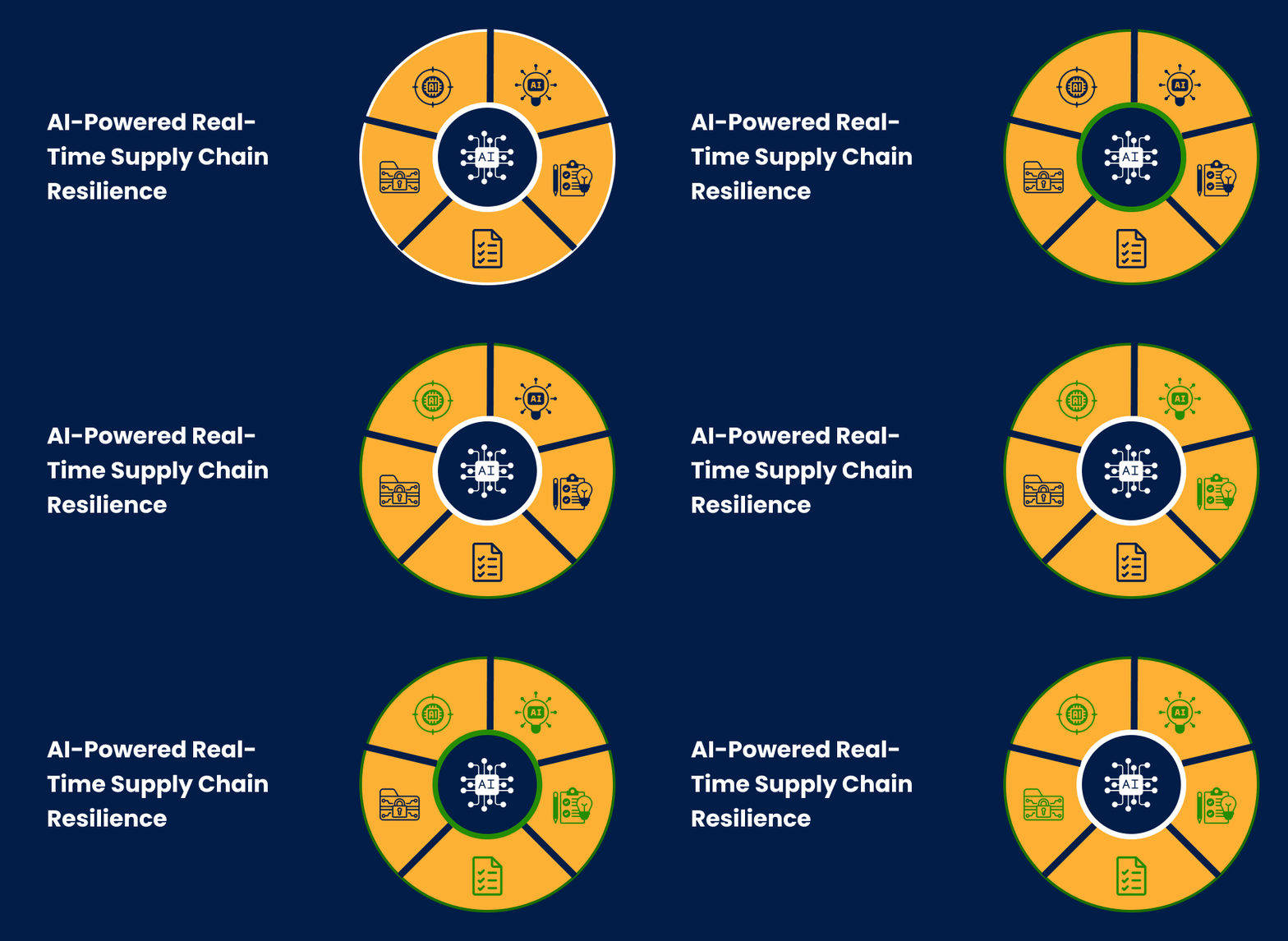
How AI Enables Real-Time Supply Chain Risk Management
Continuous Data Monitoring
AI systems ingest live data from suppliers, logistics providers, IoT sensors, weather reports, traffic updates, and global news sources to create a real-time view of supply chain health.
Predictive Risk Analytics
Machine learning models analyze patterns in historical and real-time data to predict risks such as supplier delays, transport bottlenecks, or demand volatility before they occur.
Dynamic Risk Scoring
AI assigns continuously updated risk scores to suppliers, routes, and facilities, helping teams prioritize the most critical issues.
Automated Alerts and Decision Support
When risks are detected, AI generates instant alerts with actionable recommendations—such as rerouting shipments or adjusting inventory levels.
Key Benefits of AI Supply Chain Risk Management

- End-to-end visibility across the supply chain
- Faster, data-driven decision-making
- Reduced disruption impact and recovery time
- Lower operational and logistics costs
- Improved supplier risk management
Real-Time Example
AI-Driven Logistics Risk Management in Action
A global retail company operating across 12 countries implemented AI Supply Chain Risk Management to monitor its transportation network in real time. The AI system analyzed live data from weather forecasts, port congestion reports, GPS-enabled trucks, and traffic updates.
During a peak sales season, AI detected increasing congestion at a major shipping port handling nearly 35% of the company’s inbound inventory. Based on predictive analysis, the system flagged a 72-hour delay risk before shipments were impacted.
AI-recommended actions included:
- Rerouting 18% of shipments to alternative ports
- Shifting inventory from low-demand regions to high-demand locations
- Adjusting delivery schedules automatically
Results within 30 days:
- Delivery delays reduced by 22%
- Logistics costs lowered by 15%
- Stockout incidents dropped by 18%
This real-time, AI-driven response helped the company maintain service levels and avoid significant revenue loss during a critical period.
AI vs Traditional Supply Chain Risk Management
| Traditional Approach | AI-Powered Approach |
| Reactive | Proactive and predictive |
| Manual monitoring | Automated real-time insights |
| Static risk assessments | Dynamic risk scoring |
| Limited data sources | Multi-source live data |
Challenges to Consider When Implementing AI
While AI delivers powerful capabilities, successful implementation requires:
- Clean, integrated data across systems
- Alignment with business processes
- Skilled teams and change management
- Strong data security and governance
A clear strategy ensures long-term value and scalability.
Frequently Asked Questions (FAQs)
What is AI Supply Chain Risk Management?
It is the use of artificial intelligence to detect, predict, and mitigate supply chain risks in real time.
How does AI reduce supply chain disruptions?
AI identifies early warning signals and recommends proactive actions, reducing the impact of disruptions.
Can AI help with supplier risk management?
Yes, AI continuously evaluates supplier performance and risk exposure to prevent unexpected failures.
Is AI Supply Chain Risk Management scalable?
Yes, AI solutions can be scaled for small, mid-sized, and large enterprises.
What types of data does AI analyze?
AI analyzes logistics data, supplier performance, weather forecasts, market trends, and real-time operational data.
Conclusion
In an era of constant disruption, resilience is no longer optional. AI Supply Chain Risk Management empowers businesses to move from reactive problem-solving to proactive risk prevention.
By leveraging real-time data, predictive analytics, and intelligent automation, AI enables organizations to detect risks early, respond faster, and maintain continuity in an uncertain world. Companies that adopt AI-driven risk management today are not just protecting their supply chains they are future-proofing them.